
A Maricopa County warrant search shows whether a person has an active warrant issued by local courts or law enforcement agencies in Arizona. These records come from official court systems and law enforcement databases linked to criminal cases, missed court appearances, or judicial orders within Maricopa County. It helps confirm if a warrant is active, cleared, or still in enforcement status.
People often check warrants in Maricopa County AZ, records to confirm the legal status associated with a name or case number. An arrest warrant search helps identify active warrants, court-issued directives, and enforcement actions recorded in county-level criminal justice systems. These records may include charge details, issue dates, and case references from court filings.
What is the Maricopa County Warrant Search?
A Maricopa County warrant search shows whether a court-issued warrant exists in Maricopa County, Arizona.
It helps reveal warrants tied to active warrants, arrest records, and criminal warrants.
What warrants are in Maricopa County
Warrants are legal orders issued by a judge. They allow authorities to take specific action, such as an arrest or search. In Maricopa County, warrants often relate to unpaid court obligations, missed hearings, or criminal cases.
Common types include:
- Arrest warrants linked to suspected criminal activity
- Bench warrants are issued after missed court appearances
- Criminal warrants tied to ongoing case actions
Active warrants stay in force until resolution or service. Court records and sheriff databases store these entries for official tracking.
Why Maricopa County warrant search matters and lookup methods
A Maricopa County warrant search supports background checks, court compliance, and personal record checks. It helps identify open legal matters tied to a name in official systems.
Lookup options include:
- Maricopa County Sheriff’s Office warrant listings
- Court case record systems
- Clerk of court public records
- Verified public arrest record databases
These sources compile warrant data with arrest records and case filings. Searches often use names, case numbers, or filing details to locate relevant entries linked to warrants, Maricopa County, AZ.
How to Perform a Maricopa County Warrant Search
A Maricopa County warrant search checks law enforcement records for active arrest orders linked to a person. Most searches start with the official database maintained by the Maricopa County Sheriff’s Office, where the public can review current warrant listings. A structured arrest warrant search helps confirm if a record appears in the county law enforcement database. The process usually involves entering a name, checking match results, and then reviewing the listed agency or case details.
Online Warrant Lookup Tool
The fastest method uses the official online warrant lookup tool provided by the Maricopa County Sheriff’s Office. This public search tool connects to a law enforcement database that lists active warrants issued within the county. The tool typically works through a simple search form. A visitor enters a name, then the system scans its database for matches. Results usually appear within seconds.
Common features of the lookup tool include:
- https://www.mcso.org/TechnoCop
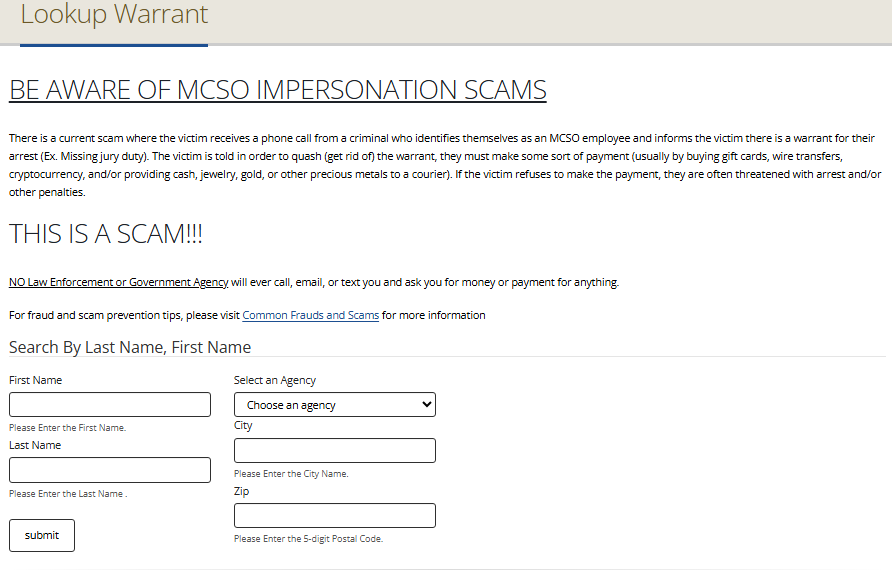
- Name-based search field for quick record checks
- Active warrant listings tied to law enforcement records
- Case or booking reference numbers
- Agency or jurisdiction details
- Status notes connected to the warrant record
This type of warrant lookup system pulls information directly from official law enforcement sources. That connection makes it one of the most reliable starting points for a Maricopa County warrant search.
Search by Name
Most arrest warrant searches begin with a name-based query. The system compares the entered name against records stored in the county law enforcement database.
Users usually enter:
- First name
- Last name
Some systems accept partial matches. A search for “John” may display multiple results. That result list may include similar spellings or close name matches. Name matching works through pattern comparison inside the database.
The system scans record fields such as:
| Search Field | Purpose |
|---|---|
| First Name | Primary identification field |
| Last Name | Main record match factor |
| Middle Initial | Helps narrow results |
| Date of Birth (if available) | Improves accuracy |
Accurate spelling often reduces false matches. A broader search can help if the exact spelling remains unknown.
Why Checking for Active Warrants Is Important
Checking for active warrants helps a person stay aware of any open legal actions in the system. It reduces the chance of an unexpected arrest during routine encounters with law enforcement.
Risk of Unexpected Arrest from Active Warrants
An arrest warrant search can reveal whether a person is listed in a law enforcement database for unresolved cases. If a warrant stays active, law enforcement may act during traffic stops, workplace visits, or home contact. This situation often leads to sudden detention. Many people only find out during direct police interaction. The criminal records linked to warrants can stay in the system until resolved through court action.
Risks linked to active warrants include:
- Detention during routine checks
- Limited ability to travel freely
- Possible jail booking without warning
- Added stress from unknown legal status
Law enforcement database entries may remain active across multiple counties. This increases the chance of cross-jurisdiction enforcement. Background checks used by employers or agencies may also show unresolved warrant data.
Legal Consequences and Background Check Impact
Active warrants can affect legal standing and personal records. Courts treat unresolved warrants seriously, and they may lead to penalties or added charges if ignored over time. A structured arrest warrants search supports awareness before situations escalate. It also helps during background checks for housing, employment, or licensing, where criminal records are reviewed.
Common legal outcomes linked to active warrants:
- Court appearance orders
- Fines or additional penalties
- Possible custody until the hearing
- Record updates in official systems
Law enforcement systems share warrant data across agencies, which increases enforcement reach. This makes early awareness a practical step for managing legal risk and avoiding sudden legal action.
Types of Warrants in Maricopa County
Maricopa County courts issue different warrants based on the situation in a criminal case. The most common types include bench warrants, arrest warrants, and probation violation warrants. Each type signals that a judge has authorized law enforcement to take action under specific legal conditions. Courts use warrants to enforce court orders and maintain the criminal justice process. In many cases, a warrant appears after a missed court hearing, new criminal charges, or a violation of probation terms. Residents searching for a Maricopa County warrant search often see terms such as bench warrants, arrest warrants, or failure to appear warrants in official records. Below are the main warrant types seen in Maricopa County court systems.
Bench Warrants
A bench warrant is issued directly by a judge during a court proceeding. This type often appears after a person fails to attend a scheduled court hearing. In many cases, courts classify this as a failure to appear warrant. The judge authorizes law enforcement to locate the person and bring them before the court.
Common reasons for a bench warrant include:
- Missing a court hearing
- Ignoring a subpoena
- Failing to pay court-ordered fines
- Violating a court order
Bench warrants often appear in criminal cases, traffic cases, and misdemeanor charges. Once issued, the warrant stays active until the court resolves the matter.
Arrest Warrants
An arrest warrant allows law enforcement to take a person into custody after a judge reviews evidence of a suspected crime. Police officers request this warrant after presenting facts or witness statements to a judge. The judge reviews the information and decides if probable cause exists. If the evidence supports the claim, the court signs the warrant.
Details included in an arrest warrant:
- Name of the person charged
- Description of the alleged offense
- Court authorization for arrest
- Instructions for law enforcement
Arrest warrants often appear in cases involving felony charges, criminal investigations, and active law enforcement cases.
Probation Violation Warrants
Courts issue a probation violation warrant after someone breaks the terms of court-ordered probation. Judges expect people on probation to follow strict rules set during sentencing.
A violation may occur if the person:
- Misses a probation meeting
- Fails a drug test
- Commits a new criminal offense
- Ignores required counseling or classes
At times, courts issue a probation violation warrant after a probation officer reports the issue. The judge may order the person to appear in court or allow law enforcement to detain them.
Using Court Resources to Verify Warrants
Court resources provide reliable ways to confirm active felony warrants and other legal orders. Public court tools and case records help check court warrant information linked to a criminal case or pending charge. Court systems keep detailed criminal case records that track hearings, charges, and warrant activity. These records often appear inside a court docket system, which lists updates for each case. A docket entry may show when a judge issued a warrant, the reason for it, and the related court case number. Checking court sources helps confirm whether a warrant remains active or if the court resolved it. Many courts publish case information online through searchable databases, while others provide records through clerk offices.
Court Docket Systems and Warrant Verification
A court docket system records every step in a legal case. It includes filings, hearings, judge orders, and warrant actions tied to criminal cases.
Users can search a docket database using basic details such as:
- https://superiorcourt.maricopa.gov/departments/superior-court/criminal/warrant-information/
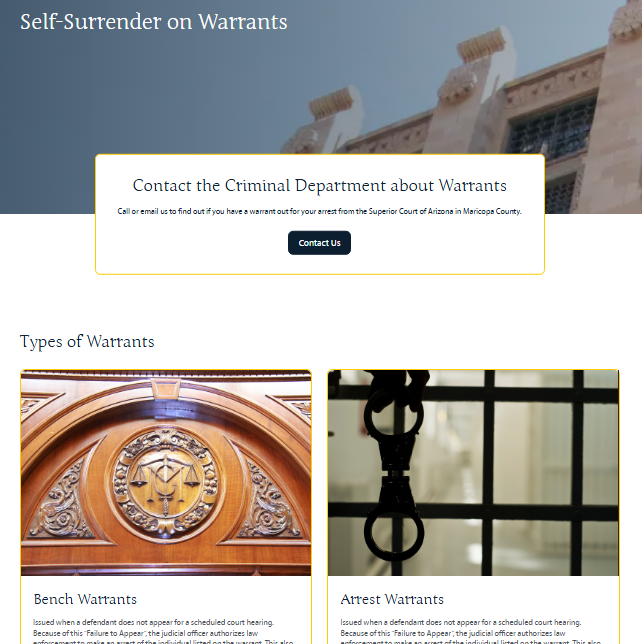
- Full name of the subject
- Case number
- Date of birth
- Court location
Once a record appears, the docket page often lists warrant updates under case events.
Example of typical docket entries related to warrants
| Docket Entry | Meaning |
|---|---|
| Bench Warrant Issued | The court canceled the warrant |
| Failure to Appear | Missed scheduled court hearing |
| Warrant Recalled | Court canceled the warrant |
| Arrest Recorded | Law enforcement executed the warrant |
These entries help confirm whether a warrant still exists or if the court resolved it after a hearing.
Criminal Case Records and Court Warrant Information
Courts store detailed criminal case records that support warrant verification. These records contain legal filings, hearing schedules, and warrant orders linked to the case.
Important details found in court warrant information records include:
- Type of warrant
- Case status
- Charge description
- Issuing court
- Scheduled hearing dates
Court clerks maintain these files as part of the public record system. Many county courts allow searches through online portals that connect to the docket database. These systems update frequently after hearings, filings, or judicial orders.
Checking Criminal Case Records
Criminal case records help confirm if a warrant relates to an active or past court case. A court case lookup allows the public to view case status, filings, charges, and warrant-related court activity. Many warrant records connect directly to court proceedings. Reviewing these records gives context about charges, hearing dates, and judicial actions linked to a warrant.
How Criminal Case Records Connect to Warrants
A warrant rarely exists on its own. Courts issue warrants during criminal cases, often after a missed hearing, failure to comply with court orders, or when law enforcement files charges. A court case lookup helps identify whether a warrant appears in an existing case file. The record may show the timeline of events, including arrest warrants, bench warrants, and related court filings.
Common details found in criminal case records include:
- http://www.superiorcourt.maricopa.gov/docket/CriminalCourtCases/caseSearch.asp
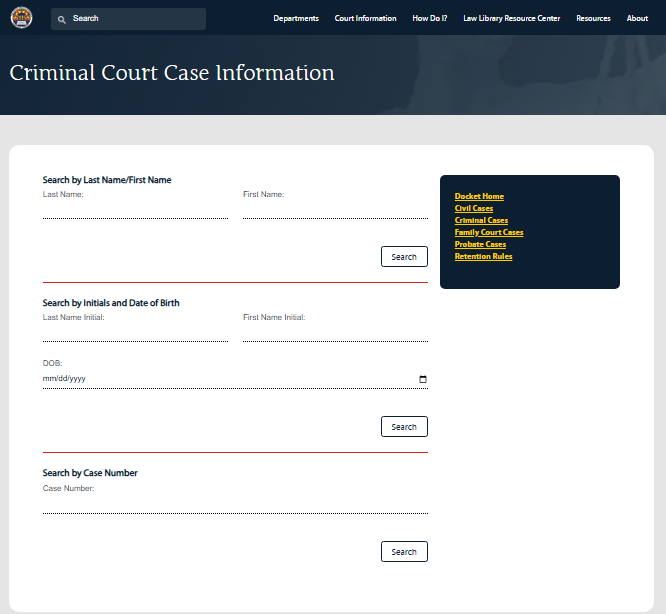
- Case number search results tied to the defendant
- Charges filed by prosecutors
- Court hearing dates and schedules
- Bench warrants issued for missed court appearances
- Judicial orders and case updates
These records help confirm whether a warrant remains active or if the court resolved the case.
Information Found in Court Case Records
Criminal court systems maintain detailed documentation for each case. Public records often display the following fields:
| Record Detail | Description |
|---|---|
| Case Number | Unique identifier used for a case number search |
| Defendant Name | Person linked to the criminal case |
| Charges Filed | Offense listed by the prosecutor |
| Court Filings | Motions, complaints, and official documents |
| Case Status | Open, closed, dismissed, or pending |
| Warrant Activity | Arrest warrants or bench warrants tied to the case |
These records often update after each hearing or filing. That record trail gives a clear picture of the case progression.
What to Do If You Find an Active Warrant
If a warrant appears during a search, the safest step is to confirm the record and contact a warrant lawyer for legal help. Quick action can help resolve warrant issues, plan a court appearance, and avoid an unexpected arrest. An active warrant means a judge has approved law enforcement to detain a person linked to a legal matter. Many warrants relate to missed hearings, unpaid fines, probation issues, or unresolved charges. A clear plan helps reduce risk and prepares the person for the next legal step.
Actions often include:
- https://www.maricopa.gov/538/Public-Defense-Services
- Checking official warrant records
- Speaking with legal counsel
- Preparing for a court appearance
- Filing documents to resolve warrant status
Each step helps move the case forward and may reduce penalties or custody risk.
Contact an Attorney
A warrant lawyer can review the case and explain available legal options. Early legal advice often leads to better outcomes, especially if the warrant came from a missed hearing or an unpaid citation.
Legal counsel can help with:
- Reviewing court records
- Contacting the court or clerk’s office
- Requesting a hearing date
- Filing motions to clear or recall the warrant
Attorneys may arrange a voluntary court appearance, which often shows good faith to the judge. Courts tend to respond better when a person addresses the issue instead of waiting for law enforcement contact.
Handling Probation-Related Warrants
A probation violation warrant is issued when a person breaks probation rules set by the court. These cases often connect with missed check-ins or failed conditions under a probation officer. A probation violation warrant often starts after a report from a probation officer. The officer tracks compliance with court-ordered terms such as meetings, work rules, or treatment programs. When a supervision violation occurs, the officer may submit a report to the court. This can lead to a warrant for arrest if the violation is serious or repeated.
Common triggers linked to probation-related warrants include:
- Missed appointments with a probation officer
- Failure to complete community service
- Drug or alcohol rule violations
- Leaving the county without permission
- Ignoring court-ordered programs
Courts in Maricopa County treat probation compliance seriously. A violation may result in stricter supervision, fines, or jail time. Acting early after noticing a warrant record helps reduce legal risk and supports faster resolution through the court system.
Avoiding Warrant Scams
A warrant scam often tricks people into believing they have an active warrant. These scams use fear tactics and fake authority claims to demand money or personal details. Most fake warrant calls come from scammers pretending to be law enforcement. They may claim immediate arrest is pending unless payment is made. These fake sheriff calls often sound urgent and pressure victims into quick action without verification.
Common scam patterns include:
- Fake claims of unpaid fines or missed court dates
- Demands for payment through gift cards or wire transfer
- Threats of arrest within hours
- Caller ID spoofing to look like a sheriff’s office number
- Requests for sensitive personal data
These scams often fall under impersonation scam activity and are tracked under fraud alerts by law enforcement agencies. Real officers never request payment over the phone. The Maricopa County Sheriff’s Office does not collect fines through phone threats or instant payments.
Maricopa County Departments That Handle Warrants
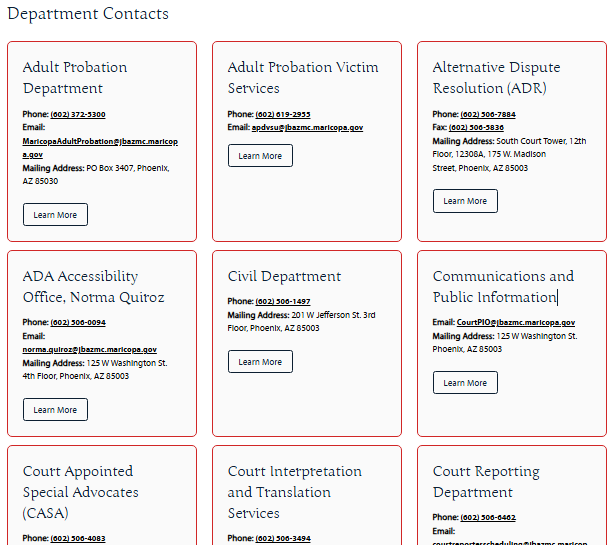
Warrant matters in Maricopa County involve several official departments that work together during enforcement and case processing.
- https://superiorcourt.maricopa.gov/about/contact/#3590
- Sheriff Office
- The sheriff’s office handles warrant enforcement and arrests across the county. Deputies act on active warrants issued by the court system.
- Criminal Court
- The criminal court issues warrants after reviewing case violations, missed hearings, or legal non-compliance. Judges decide when a warrant becomes active.
- Probation Department
- The probation department monitors individuals under supervision. It reports violations that may lead to a warrant request through the court.
Roles include:
- Sheriff’s office: Executes arrest warrants and performs field enforcement
- Criminal court: Issues and approves warrants based on case records
- Probation department: Tracks supervision terms and reports violations
These departments work in coordination to manage warrant status, enforcement actions, and probation compliance across Maricopa County.
FAQs – Maricopa County Warrant Search
The Maricopa County warrant search helps confirm whether a person has an active warrant through official court and law enforcement records. These records stay active until a judge closes the case or law enforcement carries out the warrant. Most checks rely on court databases, sheriff records, and case files linked to criminal proceedings.
How do I check warrants in Maricopa County, AZ?
Warrant checks in Maricopa County, AZ, are done through official public records tied to the court system and sheriff databases. A person can search by name or case number using court case lookup tools. The Maricopa County Sheriff’s Office may also show active warrant lists. Court clerks can confirm warrant status if contacted directly.
What happens if I have an arrest warrant?
An arrest warrant allows law enforcement to take a person into custody at any time. This may happen during a traffic stop, home visit, or routine interaction with police. After arrest, the person is usually booked into jail and scheduled for a court hearing. The judge may set bail or release conditions based on the case details.
Can I clear a warrant online?
Some warrant-related issues can be resolved through online court systems, especially for minor violations or missed court dates. Payments, case updates, or attorney filings may help start the process of resolving the warrant. However, many warrants still require in-person court action or an appearance before a judge. The final clearance always depends on court approval.
Do warrants expire in Arizona?
Warrants in Arizona do not expire on their own and remain active until the court recalls them. Law enforcement can enforce them at any time, even years later. Only a judge can cancel or close a warrant after the case is resolved. This applies to both misdemeanor and felony warrants.
Can I search someone else’s warrant?
Yes, warrant records in Maricopa County are generally part of public court information. A person can search another individual’s warrant using official court case search tools or sheriff records. However, some sensitive details may be limited depending on the case type. Access rules may vary based on privacy and legal restrictions.