
The maricopa county family court mesa az system handles legal cases related to family disputes such as divorce, child custody, and child support. These matters move through the Family Department of the Superior Court in Maricopa County, where judges manage domestic relations cases and supervise formal legal proceedings.
Within Maricopa County, the Maricopa County Family Court processes petitions involving marriage dissolution, parenting plans, child support orders, and related domestic relations disputes. Court staff record filings, maintain case records, and schedule hearings through the domestic relations court system that serves Mesa and nearby communities. Each case moves through structured legal procedures that include document filing, service of papers, court review, and judicial orders. Judges evaluate case details, review financial and parenting information, and issue rulings that address custody arrangements, financial support, and family responsibilities under Arizona family law.
What is the Maricopa County Family Court System?
The Maricopa County Superior Court Family Court manages legal disputes that involve families, children, and marital relationships. This division handles domestic relations court matters, processes court filings, and conducts judicial hearings https://superiorcourt.maricopa.gov/departments/superior-court/family/ for many types of family law cases. Within the Maricopa County Family Court, judges and court staff review family law disputes and issue legally binding orders. The system operates through a structured process that moves a case from filing to a final decision. Court procedures follow the rules of the Arizona Judicial Branch, which sets policies for family law cases across the state.
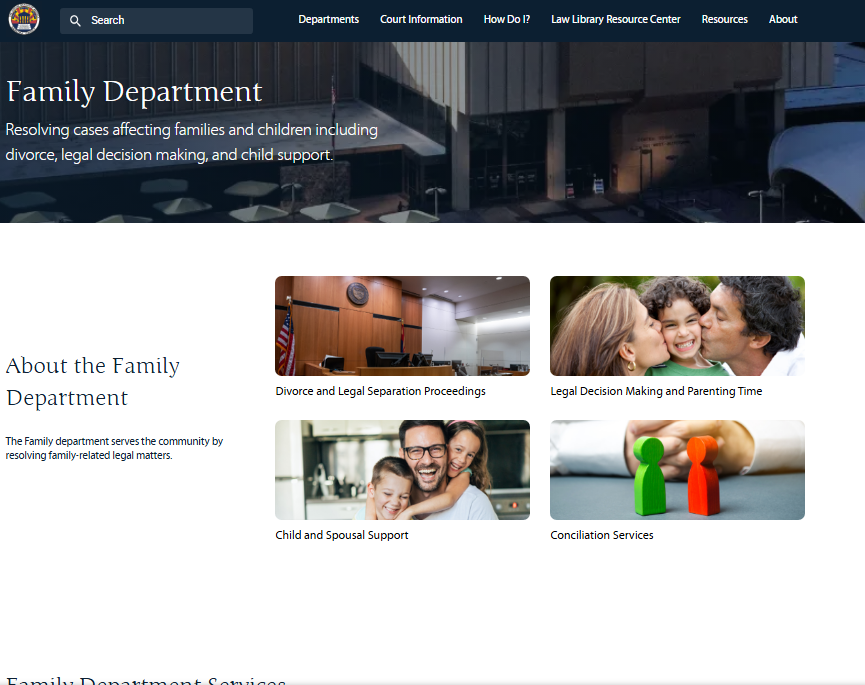
Role of the Family Department
The Family Department manages court activity linked to domestic relations matters. It handles court filings, case management, judicial hearings, and final rulings for family law cases. Court staff record filings, schedule hearings, and maintain official records. Judges review evidence, listen to both parties, and apply Arizona family law.
Duties of the family department include:
- Processing family court petitions and motions
- Scheduling judicial hearings
- Managing case records and filings
- Issuing court orders and judgments
- Handling compliance with child support and custody rulings
This department helps move each case through the legal process in an organized manner.
Types of Cases Handled
The domestic relations court in Maricopa County hears many family-related disputes. These matters involve parents, spouses, and children.
Common family law cases include:
| Case Type | Description |
|---|---|
| Divorce cases | Legal dissolution of a marriage and division of property |
| Custody disputes | Decisions about parenting time and legal decision-making |
| Legal separation | Couples remain married but live separately under court orders |
| Child support | Financial support orders for children |
| Paternity cases | Establishing the legal father of a child |
Courts may review parenting plans, financial records, and testimony before issuing rulings. Many cases include multiple hearings before a final order.
How to Search Family Court Case Records
Family court case records in Maricopa County are found through official online case search tools and public court calendars. These systems show divorce records maricopa county az along with case docket details, minute entries, and hearing dates. Family court records in Maricopa County are stored in court databases that organize divorce, custody, and support matters. Each case shows progress through a structured case docket and recorded minute entries. Updates appear as the court clerk records filings, orders, and hearing results.
Using Online Case Search
Online case search tools display case numbers, party names, and filing activity. Users can review divorce records maricopa county az along with motions, rulings, and judgments.
Details shown in search results include:
- https://www.superiorcourt.maricopa.gov/docket/familycourtcases/caseSearch.asp
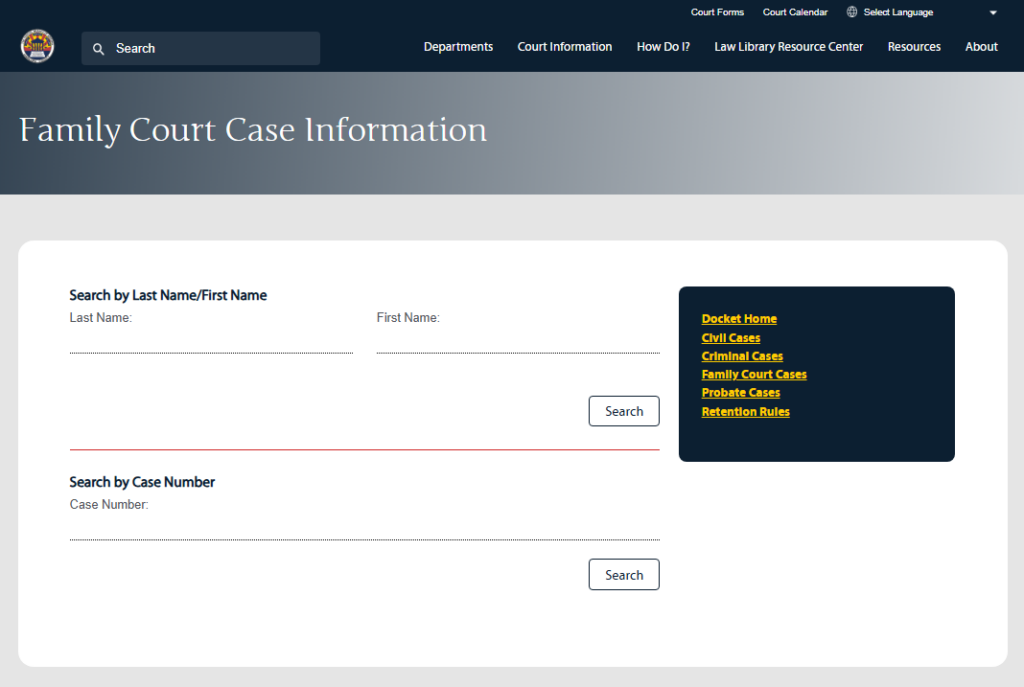
- Case docket history for each filing step
- Party and attorney information
- Minute entries from court actions
These records help track case status without delay.
Finding Hearing Schedules
Court calendars list upcoming hearings, custody reviews, and settlement conferences. Each entry shows date, time, courtroom, and assigned judge. The court calendar system helps confirm when a hearing is set. Minute entries may also reflect rescheduled dates or completed hearing notes recorded by the clerk.
Obtaining Court Documents
Court documents include petitions, orders, decrees, and final judgments. These records are stored within official case files tied to the case docket.
How Family Cases Are Processed
Family law cases in Maricopa County Family Court follow a standard legal path. Each stage builds toward a final court decision.
Typical process for family court cases:
- Court Filing: One party submits a petition to start the case. Documents enter the court system and receive a case number.
- Service of Papers: The other party receives official notice of the case through legal service.
- Judicial Hearings: The court reviews evidence, motions, and arguments from both sides. Judges may schedule several hearings.
- Final Order: The judge issues a written ruling that resolves the dispute and sets legal obligations.
Court procedures may include mediation sessions, parenting conferences, or temporary orders before the final decision. This structured process helps the court manage family disputes and protect the legal rights of both parties and the children involved.
Divorce and Legal Separation in Maricopa County
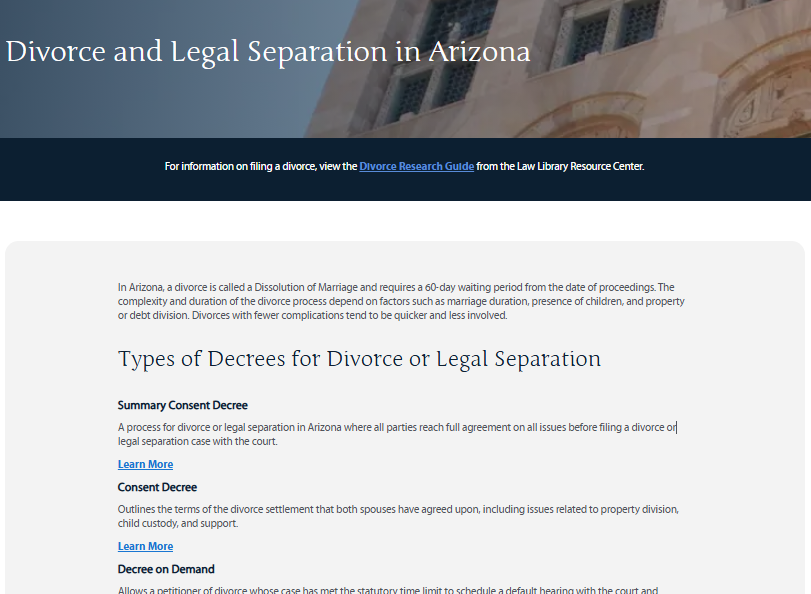
Divorce and legal separation cases in Maricopa County involve a formal court process that handles the dissolution of marriage or legal separation between spouses. Many residents search for divorce records maricopa county az to https://superiorcourt.maricopa.gov/departments/superior-court/family/divorce-legal-separation/ track case status, filings, or outcomes through court records. The process includes filing paperwork, meeting state waiting rules, and receiving a divorce decree that finalizes the case. Court records also reflect Maricopa County divorce filings, which show each step taken from start to final judgment.
How to File Divorce Papers
Filing for divorce in Maricopa County begins with submitting legal documents to the Superior Court. This step starts the dissolution of marriage process and opens a case file for court review. One spouse (petitioner) files the initial forms, then serves papers to the other spouse (respondent). The filing package usually includes a petition, summons, and financial disclosure forms.
Filing steps include:
- Complete divorce petition and related court forms
- File documents with the Clerk of the Superior Court
- Pay filing fees or request a fee waiver
- Serve legal papers to the other spouse
- Wait for response or default action
After filing, the court assigns a case number linked to public Maricopa County divorce filings. This record tracks hearings, motions, and final orders.
Required Waiting Periods
Arizona law sets a mandatory waiting period before a divorce decree can be issued. This period starts once divorce papers are served to the other spouse. The minimum waiting time is 60 days. The court cannot finalize the case before this time ends, even if both spouses agree.
Timeline points:
- Day 1: Papers served to the respondent
- Day 60: Earliest possible final judgment date
- Extra time may apply if disputes arise
During this stage, spouses may negotiate terms like property division, child custody, or support. If agreement is reached, the case moves faster toward final approval. If no response is filed, the court may proceed with a default ruling.
Types of Divorce Decrees
Maricopa County courts issue different types of final orders depending on the case outcome and the agreement level. These orders finalize the legal separation or divorce process.
- Summary Consent Decree
- This applies when both spouses agree on all terms from the start. No court hearing is usually required, and paperwork is reviewed for approval.
- Consent Decree
- This occurs when both parties reach an agreement after filing. Terms are submitted to the court for approval before final judgment.
- Default Decree
- This applies when one spouse does not respond after being served. The court may grant the requesting spouse the requested terms based on submitted documents.
Child Custody and Parenting Time Cases
Child custody and parenting time cases in Maricopa County Family Court decide where a child lives and how each parent participates in daily life. These custody cases focus on legal decision-making authority and a structured parenting https://superiorcourt.maricopa.gov/departments/superior-court/family/child-custody-support/ plan that supports child welfare and stability. The court reviews each situation under Arizona family law standards. Judges aim to set arrangements that support safe, stable, and consistent parenting time for the child.
Legal Decision-Making Authority
Legal decision-making refers to which parent has authority over major decisions for the child. This includes education, healthcare, and religious upbringing. In many Maricopa County custody cases, the court may assign joint or sole authority based on case facts.
Forms of legal decision-making:
- Joint legal decision-making: Both parents share decisions
- Sole legal decision-making: One parent holds full authority
- Hybrid orders: Shared parenting plan with limited control areas
Courts review communication patterns between parents. They also examine conflict levels and willingness to cooperate. When strong cooperation exists, joint arrangements become more likely. When conflict affects child welfare, sole authority may be assigned.
Parenting Time Schedules
Parenting time defines the schedule each parent follows for time with the child. This structure forms the core of most custody cases in Maricopa County.
Common parenting time patterns include:
- Weekly rotation schedules
- Alternating weekends
- Holiday-sharing plans
- Summer break extensions
A parenting plan sets clear rules for pickup, drop-off, and communication. Courts prefer plans that reduce conflict and support consistent routines.
| Schedule Type | Description | Use Case |
|---|---|---|
| Equal Time | Balanced time with both parents | Cooperative parents |
| Primary Parent | One main household | Stability-focused cases |
| Flexible Plan | Custom schedule | Older children or unique needs |
Child Support Orders and Payment System
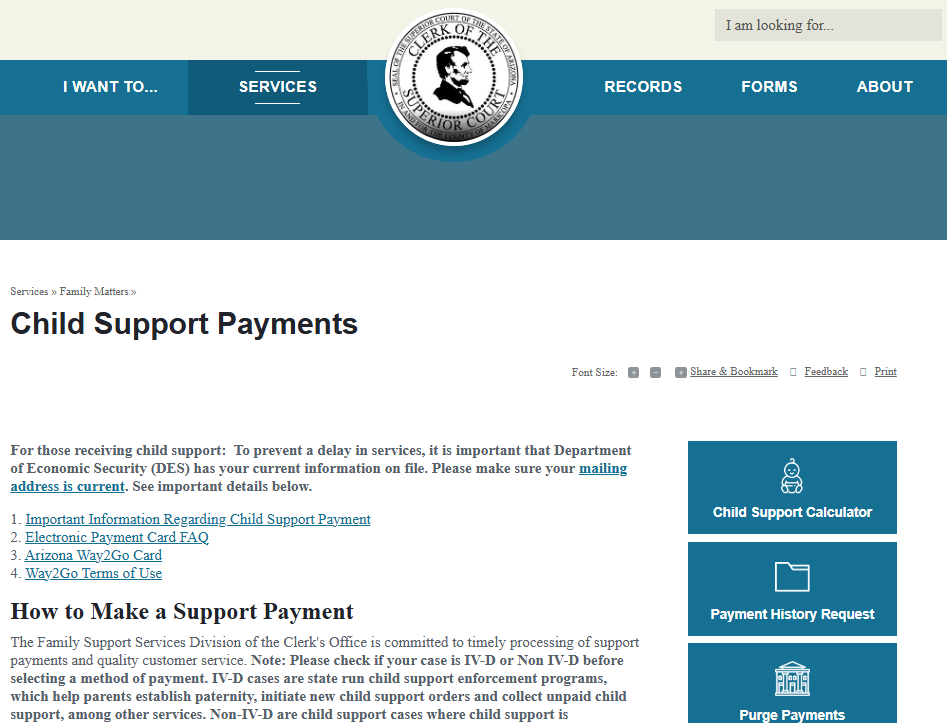
Child support orders in Maricopa County set monthly payment amounts based on Arizona rules and each parent’s financial situation. Payments move through a centralized system that records every transaction and balance. The Maricopa County child support court handles these orders under the Arizona child support guidelines. Each case reviews income, custody time, and child-related costs. The system also applies payment enforcement when obligations are missed or delayed.
How Support Is Calculated
Child support calculation follows Arizona child support guidelines that use a set formula. Income from both parents is reviewed first. Then, custody time and child-related costs are added into the formula.
Factors used in calculation:
- https://www.clerkofcourt.maricopa.gov/services/family-matters/child-support-payments
- Income from both parents
- Number of children involved
- Parenting schedule
- Health insurance coverage costs
- Childcare and school-related expenses
This method helps set a monthly amount based on shared responsibility. Courts review financial documents before setting final support figures.
Modifying Child Support Orders
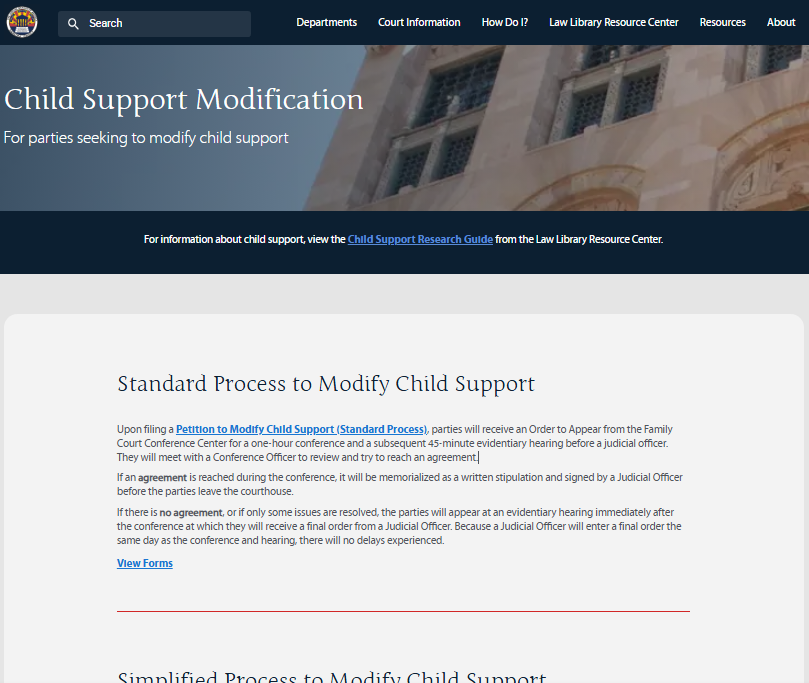
Support modification happens when a parent’s situation changes in a meaningful way. A parent may file a request through the Maricopa County child support court for review of the current order.
Common reasons for support modification:
- Job loss or steady income change
- Change in custody or parenting time
- New medical or childcare expenses
- Long-term shift in financial conditions
The court reviews updated records and compares them with existing orders. If the change meets legal standards, the support amount is adjusted based on updated child support.
Mediation, Conciliation, and Parenting Programs
Family court mediation in Maricopa County helps parents resolve disputes without long court fights. These services support safer communication, child-focused decisions, and faster case resolution through structured programs. Maricopa County Family Court provides mediation, conciliation services, and parenting programs for families dealing with custody or parenting disagreements. These programs focus on reducing conflict and supporting child-centered outcomes.
Conciliation Services
Conciliation services support parents who face disagreement over custody, visitation, or parenting plans. A trained conciliator works with both parties in a neutral setting to support discussion and agreement. These sessions focus on family mediation, communication improvement, and reducing conflict during court involvement. The goal is to support healthier co-parenting arrangements.
Points in conciliation services:
- https://superiorcourt.maricopa.gov/departments/superior-court/family/conciliation-services/
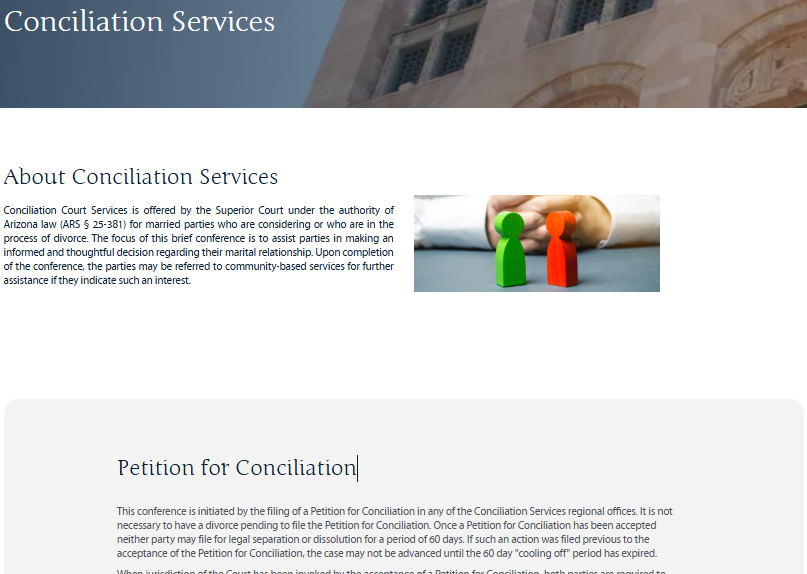
- A neutral facilitator helps both parents speak calmly
- Focus stays on the child’s needs and daily routines
- Written parenting plan suggestions may be shared
- Sessions may be ordered during custody disputes
Conciliation also supports emotional balance during stressful family court cases. Many cases use these services before trial steps begin.
Parent Information Program
The Parent Information Program supports parents involved in custody or visitation cases. It explains how court decisions affect children and family relationships. This program often connects with parenting classes that focus on child behavior, communication, and conflict reduction. Parents get tools to reduce stress during co-parenting.
Program focus areas:
| Area | Details |
|---|---|
| Child impact | Effects of conflict on children |
| Co-parenting | Communication methods between parents |
| Court role | Basic structure of custody decisions |
| Behavior support | Positive parenting methods |
The program supports better decision-making in family court matters and helps parents focus on stable routines for children.
Early Resolution Conferences
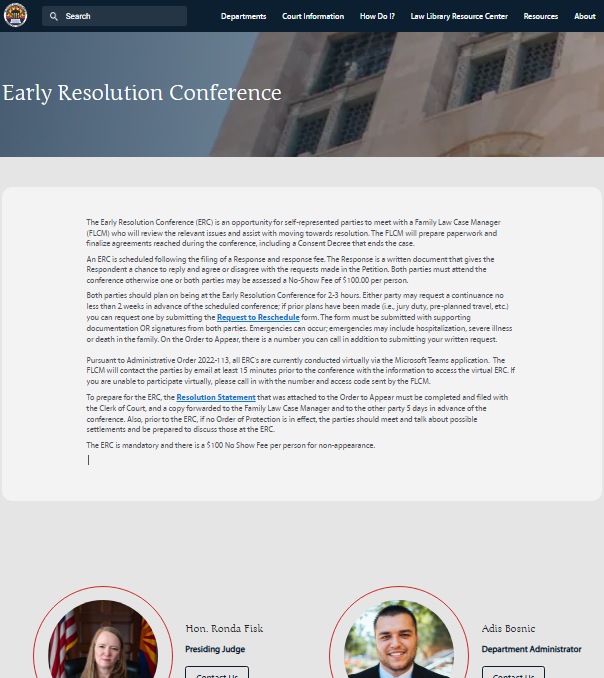
Early Resolution Conferences bring both parties together early in the case process. A judicial officer or facilitator reviews issues and encourages agreement before full hearings. These conferences often reduce delays in custody and support cases. They also help narrow disputed points, which can simplify later court steps.
Common topics covered include:
- Parenting time schedules
- Custody arrangements
- Communication plans between parents
- Temporary orders for children
These conferences support quicker resolution in family court mediation Maricopa County cases and reduce extended court involvement for families.
Family Court Forms and Filing Resources
Family Court Forms and Filing Resources provide standardized paperwork used for divorce, custody, and child support cases in Maricopa County. These documents support correct filing with the court system and help reduce delays in case processing. Court users rely on structured packets that match each case type and filing need. Maricopa County court services and the law library resource center supply these materials in organized sets. Each set includes legal document packets designed for specific family matters. These packets support accurate completion of paperwork for filing at the Superior Court.
Divorce Filing Packets
Divorce filing packets contain core documents required for dissolution cases in Arizona courts. These forms start the legal process for marriage termination and financial disclosure.
Common items in family court forms, Maricopa County divorce packets include:
- https://superiorcourt.maricopa.gov/departments/superior-court/family/early-resolution-conference/
- Petition for Dissolution of Marriage
- Response to Petition
- Preliminary Financial Disclosure
- Sensitive Data Cover Sheet
The law library resource center provides printed and digital packet formats for self-represented parties. These legal document packets help align filings with court formatting rules and submission steps. Many users select packet versions based on whether minor children or property division applies.
Custody and Parenting Forms
Custody and parenting forms focus on child-related arrangements after separation. These documents address decision-making rights and parenting time schedules.
Typical forms include:
- Parenting Plan Agreement
- Legal Decision-Making Request
- Parenting Time Schedule
- Child Information Affidavit
These forms help set structured parenting arrangements within family court cases. Courts review submitted details to align custody orders with child welfare requirements. Packet versions from the law library resource center support different custody situations, including joint and sole arrangements.
Support Modification Forms
Support modification forms apply when financial circumstances change after a court order. These forms request updates to child support or spousal support amounts.
Documents include:
- Request for Child Support Modification
- Financial Statement
- Proof of Income Records
- Spousal Maintenance Adjustment Request
These legal document packets allow parties to present updated financial information to the court. Family court forms Maricopa County support packets, help track income changes, employment updates, or custody adjustments that affect support calculations.
Orders of Protection and Family Safety
Orders of protection in Maricopa County give legal safety from threats, abuse, or harassment within family or household situations. The court issues these as a protective court order to help stop contact and reduce the risk of harm.
An order of protection in Maricopa County is used in cases involving domestic violence protection, harassment, or unsafe behavior. It sets clear legal limits on contact and behavior between the protected person and the restrained party.
How Orders of Protection Work in Maricopa County
The court reviews claims of abuse, threats, or fear of harm and may issue a restraining order. These orders fall under family safety court actions and can apply to spouses, partners, or close relatives. A judge may issue the order the same day in urgent situations. After filing, law enforcement delivers the order to the other party. Once served, all listed restrictions become legally active.
Common restrictions include:
- https://superiorcourt.maricopa.gov/llrc/orders-of-protection/
- No contact through phone, text, or social media
- No coming near home, work, or school locations
- No harassment, threats, or stalking behavior
- Temporary removal from shared residence
These conditions support domestic violence protection and reduce direct risk.
Family Court Locations Serving Mesa, Arizona
Family court services for Mesa residents are handled through several Maricopa County Superior Court Family Department locations across the East Valley, Phoenix, and nearby regions. The closest location for most Mesa family law matters is the Southeast Justice Center, which serves a high volume of custody, support, and divorce-related filings. Mesa residents deal with family law matters such as divorce, child custody, parenting time, and child support through multiple assigned courthouses. Each facility handles specific hearings, filings, and case support services depending on case type and scheduling.
Southeast Justice Center – Mesa Area Family Court
The Southeast Justice Center is located at 222 E. Javelina Avenue, Mesa, AZ 85210.
This is the main East Valley courthouse for family court matters involving Mesa residents.
Service coverage includes:
- Mesa
- Gilbert
- Chandler
- Apache Junction
- Queen Creek
This location handles family law hearings, temporary orders, custody disputes, and child support modifications for East Valley cases.
Central Court Building – Phoenix Family Department
The Family Department – Central Court Building is located at 201 W. Jefferson Street, Phoenix, AZ 85003.
Information Center: 602-506-3204
This courthouse manages:
- Countywide family law hearings
- Trial settings for complex cases
- Case management conferences
Northeast Regional Center – North Phoenix
The Family Department – Northeast Regional Center sits at 18380 N. 40th Street, Phoenix, AZ 85032.
It serves scheduled hearings and assigned family law cases for Maricopa County residents, including Mesa filings.
Northwest Regional Center – Surprise Area
The Family Department – Northwest Regional Center is located at 14264 W. Tierra Buena Lane, Surprise, AZ 85374.
This center handles selected family court calendars and regional hearings for assigned cases.
Support and Resource Locations
Additional family court support services include:
- Law Library Resource Center – Central Court Building
201 W. Jefferson Street, Phoenix, AZ 85003
Information Center: 602-506-3204
Provides self-help forms and legal information for family cases - Clerk of the Superior Court – Family Support Services
620 West Jackson Street, Phoenix, AZ 85003
Office Telephone: 602-372-5375
Handles child support processing and related case services
These locations collectively support Mesa residents through filing, hearings, and ongoing family case management across Maricopa County.
Maricopa County Family Court FAQs
Maricopa County Family Court handles divorce, child custody, support, and other family law matters under the Maricopa County Superior Court system. Most users search for filing steps, case timelines, divorce record lookup, and custody changes. These FAQs explain the most common family court questions in simple terms.
Filing Divorce Papers in Maricopa County?
Divorce cases in Maricopa County start by filing a petition at the Maricopa County Superior Court. One spouse submits the required forms to begin the legal process. After filing, the other party must be officially served with papers. Court fees apply, but fee waiver options exist for qualifying applicants.
Family Court Case Time and Records?
Family court case time depends on the complexity of the dispute. Uncontested divorces may finish in a few months, while custody battles take longer. Cases with disagreements often require multiple hearings before final orders. Divorce and family records can be searched through the Maricopa County Clerk of the Superior Court. Custody orders may be changed later by filing a modification request when circumstances shift significantly.
Where to File in Mesa, AZ Family Court?
Mesa residents usually go to the Southeast Regional Court Center for family law matters. This location handles divorce, custody, and support hearings for the East Valley area. It serves as a key Maricopa County Family Court facility for filings and court appearances.
How can custody orders be changed later?
Custody orders in Maricopa County can be changed through a formal modification request filed at the Maricopa County Family Court. A parent must show a significant change in circumstances, such as relocation, safety concerns, or changes in the child’s needs. The court reviews evidence before approving or denying any custody update.
How can divorce records be searched in Maricopa County, AZ?
Divorce records in Maricopa County can be searched through the Maricopa County Clerk of the Superior Court. Searches are usually done using a case number, full name, or filing date. Some basic case details may be available online, while certified copies often require a request at the clerk’s office or official court portal.