The Maricopa County Health Department operates as a public health agency serving Maricopa County, Arizona, residents with organized health programs. It manages public health services focused on disease prevention, health monitoring, and community wellness support across local areas. The department works with clinics and local centers that provide routine care and health screenings. It also tracks health patterns to respond to outbreaks and reduce risks in communities. Public programs support long-term health safety across Phoenix and the surrounding regions.
Maricopa County, AZ Health Department delivers services that include STD testing at Phoenix, AZ Maricopa County locations for confidential screening and treatment support. Immunizations are provided for children, adults, and travel-related needs across county clinics. Vital records services handle birth and death documentation for official use within Arizona systems. WIC support offers nutrition assistance for eligible women, infants, and children through approved programs. These public health services focus on disease prevention and support healthier community conditions across Maricopa County.
What is the Maricopa County Health Department?
The Maricopa County Health Department is a local public agency focused on protecting community health across the county. It works to reduce disease spread, support safer living conditions, and improve access to health services. It operates within a public health system that tracks health risks, manages disease control efforts, and supports community health protection programs across Arizona communities. The department plays a direct role in monitoring outbreaks, promoting prevention programs, and supporting vaccination efforts. It also works with schools, workplaces, and local groups to spread health awareness.
Mission of the public health system
The mission centers on improving population health and reducing preventable illness. Teams focus on disease control, early detection of health threats, and long-term prevention programs.
Core work includes:
- https://www.maricopa.gov/5302/Public-Health
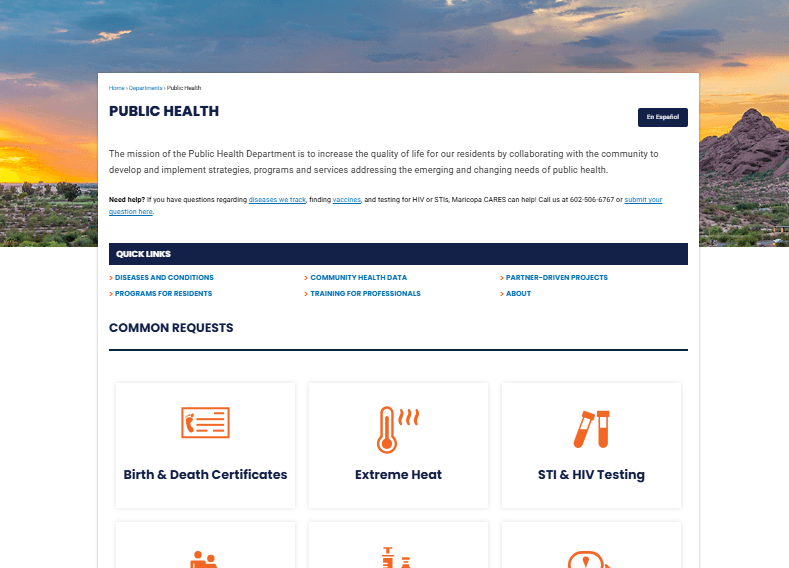
- Infectious disease monitoring and reporting
- Immunization support programs
- Chronic illness prevention efforts
- Health education in community settings
Outreach programs connect with schools and local organizations to support healthier choices and safer environments. Health data collection helps identify risks before they spread widely across the county.
Community health protection role
The department protects residents through inspections, alerts, and emergency response actions. This role supports community health protection across food services, water systems, and public spaces.
Functions include:
- Food safety inspections in restaurants and markets
- Water quality monitoring
- Communicable disease reporting systems
- Public health alerts during outbreaks
Rapid response teams act during disease outbreaks and coordinate public notifications. These actions reduce transmission risks and support safer community conditions.
Coordination with clinics and hospitals
The department works closely with hospitals, clinics, and healthcare providers across Maricopa County. Shared reporting systems help track infections and health concerns in real time. Data sharing improves response speed and supports better case management across facilities. Hospitals report infectious cases, which helps public health teams monitor trends and respond quickly when needed.
Public Health vs Environmental Health
Public health focuses on people, disease prevention, and health programs. Environmental health focuses on conditions in the surroundings that affect human health.
Both areas often work together but address different risk sources.
| Public Health | Environmental Health |
|---|---|
| Disease prevention programs | Water safety monitoring |
| Vaccination and health education | Waste and sanitation control |
Both support community health protection across Maricopa County through coordinated safety efforts and risk reduction activities.
Core Public Health Services in Maricopa County
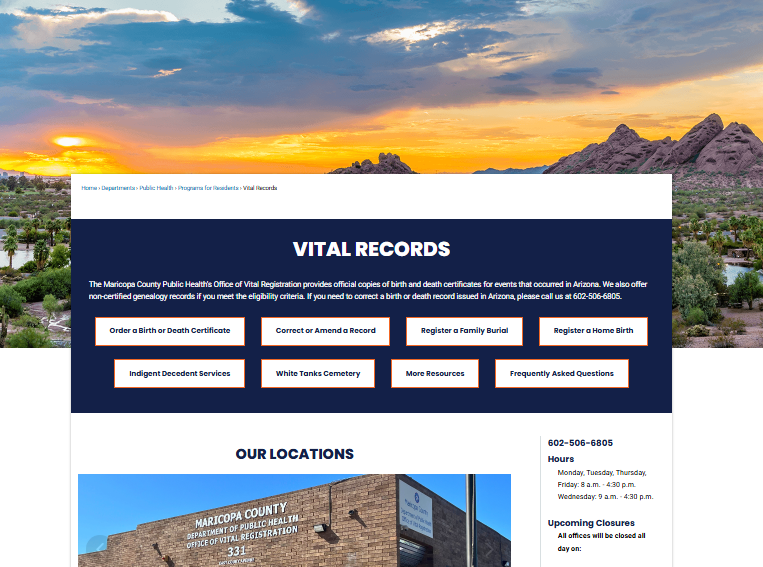
Maricopa County Health Department provides a broad range of public health services that focus on disease prevention, family support, and community wellness. Services are delivered through https://www.maricopa.gov/2770/Vital-Records, multiple Maricopa County clinics, and local health centers to support residents with accessible preventive healthcare options.
Immunization Programs and Vaccine Services
Immunization services protect residents from preventable diseases through routine vaccines for children, adults, and seniors. Vaccines such as flu shots, childhood immunizations, and travel-related doses are available at county health locations and partner clinics. These services support school readiness, workplace safety, and wider community protection by reducing the spread of infectious diseases.
STD and HIV Testing Services
STD and HIV services focus on early detection and treatment support. Testing is offered in a private setting with counseling support available at many locations.
Services include:
- HIV screening
- Chlamydia and gonorrhea testing
- Syphilis testing
- Treatment referrals and partner notification support
Testing programs help reduce transmission rates and support timely medical care. Many services are low-cost or free based on eligibility.
WIC Nutrition Program Support
The WIC program supports nutrition for pregnant people, infants, and young children. It focuses on healthy food access, nutrition education, and growth monitoring.
Program support includes:
- Healthy food vouchers
- Breastfeeding support services
- Nutrition counseling sessions
- Health screenings for young children
This program helps improve diet quality and supports healthy development during early life stages.
Birth and Death Records Services
The department manages official records such as birth and death certificates. These documents are used for school enrollment, legal identification, and family records.
Services include:
- Certified birth certificate copies
- Certified death certificate copies
- Record correction requests
- Verification services for legal use
Processing times vary based on request type and submission method.
Maternal and Child Health Programs
Maternal and child health services support families during pregnancy and early childhood through prenatal care assistance, infant wellness checks, parenting education, and developmental screenings. These services work closely with Maricopa County clinics to improve health outcomes for mothers and children and promote safe, healthy growth from pregnancy through early development.
STD Testing Phoenix, AZ Maricopa County
STD testing services in Phoenix within Maricopa County include confidential screening for common infections such as chlamydia, gonorrhea, syphilis, and HIV. Many public health and community clinics provide same-day testing with private results delivery.
Residents can choose walk-in visits or scheduled appointments based on clinic availability and urgency.
Where to Get STD Testing in Maricopa County
STD testing Phoenix AZ Maricopa County services are offered at public health clinics, community health centers, and select nonprofit locations. These sites provide sexual health services focused on early detection and prevention of infectious diseases.
Common testing locations include:
- Public health clinics operated by Maricopa County
- Community health centers in Phoenix and the surrounding areas
- Planned Parenthood clinics
- Mobile health units during outreach events
- Select urgent care facilities offering STI clinics in Phoenix services
Most clinics provide testing for multiple infections in one visit. Some locations also offer preventive care, counseling, and treatment referrals if results show infection.
HIV Testing Centers, Walk-In Options, and Confidential Process
HIV testing in Maricopa County services are available at specialized centers and general STD clinics. These tests often use rapid finger-prick or blood sample methods, with results ready in minutes or a few days, depending on the test type.
Testing options include:
- Walk-in clinics: No prior appointment needed in many locations
- Appointment-based clinics: Scheduled visits for faster processing
- Mobile testing units: Set up at community events or outreach programs
Confidential testing remains a core feature across most facilities. Personal details stay private, and results are shared directly with the patient through secure systems or in-person consultation.
Cost, Eligibility, and Service
Costs for STD testing in Phoenix, AZ, Maricopa County services vary by clinic type and income level. Many public clinics offer free or low-cost testing based on eligibility programs. Insurance may also cover part or all of the testing fee.
Typical cost structure:
| Service Type | Cost Range | Notes |
|---|---|---|
| Public health clinic testing | Free – Low cost | Income-based options available |
| Community clinics | Low to moderate | Sliding fee scale used |
| Private urgent care | Higher cost | Insurance often accepted |
| HIV rapid test | Free – Low cost | Often supported by public health funding |
Eligibility for reduced-cost services usually depends on income, residency, or participation in public health programs. Some clinics prioritize high-risk groups, including individuals with symptoms or known exposure.
Immunization Clinics & Vaccination Programs
Immunization clinics in Maricopa County provide vaccines for children and adults across multiple locations. These services support disease prevention, outbreak control, and stronger community vaccine coverage. Residents can use vaccination programs for routine shots, seasonal protection, and travel-related immunizations. Services also support public health efforts across Phoenix and nearby areas, including flu shots in Phoenix, AZ.
Childhood Vaccines at immunization clinics, Maricopa County
Childhood vaccination services focus on early protection against serious diseases such as measles, polio, and whooping cough. These vaccines are part of standard immunization schedules used across vaccination programs in the county. Clinics often follow age-based schedules that start from infancy through the teenage years. This supports long-term disease prevention and helps reduce outbreak control risks in schools and community settings. Many clinics also coordinate with schools for record checks tied to vaccine coverage.
Common childhood vaccines include:
- Measles, Mumps, Rubella
- DTaP (Diphtheria, Tetanus, Pertussis)
- Polio vaccine
- Hepatitis B series
Adult Immunization Schedule in vaccination programs
Adult vaccine services focus on ongoing protection as immunity changes over time. Immunization clinics in Maricopa County provide routine boosters and new vaccines based on age and health conditions. Adults often receive tetanus boosters every 10 years. Shingles and pneumonia vaccines are also offered for older adults or high-risk groups. These vaccination programs support long-term health stability and reduce the spread within households and workplaces.
| Vaccine Type | Recommended Group | Purpose |
|---|---|---|
| Tetanus booster | Adults every 10 years | Injury protection |
| Shingles vaccine | Age 50+ | Nerve infection prevention |
| Pneumococcal vaccine | 65+ or high-risk | Lung infection control |
Flu & COVID Season Protection in Phoenix, AZ
Seasonal vaccines play a strong role in lowering illness rates during peak infection months. Flu shots in Phoenix, AZ, are widely offered before winter seasons to reduce flu-related complications. COVID-19 vaccines and boosters are also provided based on current health recommendations. These services help reduce severe illness, hospital visits, and community spread. Together, they strengthen outbreak control efforts across Maricopa County.
Common seasonal options include:
- Annual flu shot for all age groups
- Updated COVID-19 boosters
- Combination visits for multiple vaccines
Appointment Booking Process for immunization clinics in Maricopa County
Most clinics use simple scheduling systems for vaccination visits. Residents can book appointments online, by phone, or through walk-in availability at select locations.
Typical steps include:
- Select a clinic location in Maricopa County
- Choose vaccine type or vaccination programs needed
- Pick an available date and time slot
- Provide basic health and contact details
- Attend appointment with ID and vaccine records
Appointment systems help manage patient flow and improve vaccine coverage across the region. This setup supports timely care and reduces waiting time at clinics.
Disease Control & Public Health Monitoring
Disease control services in Maricopa County focus on early detection and tracking of infectious illnesses across communities. Public health teams use disease surveillance systems to monitor spread patterns and respond quickly to threats. This work supports infection control efforts and helps reduce outbreaks through fast reporting and coordinated action. Data from clinics, hospitals, and labs flows into centralized public health monitoring systems.
Disease Surveillance and Illness Tracking in Maricopa County
Maricopa County tracks several communicable diseases through ongoing disease surveillance programs. These systems collect reports from healthcare providers, laboratories, and emergency care facilities.
Common conditions under surveillance include:
- Influenza (Flu): seasonal tracking for spread and severity
- COVID-19: case counts, variants, and hospitalization trends
- Measles: rapid response monitoring due to high contagion risk
- Tuberculosis (TB): long-term case tracking and contact follow-up
- STIs (Sexually Transmitted Infections): such as chlamydia, gonorrhea, and syphilis
Public health teams analyze infection patterns using outbreak monitoring tools. These tools help identify clusters in schools, workplaces, and neighborhoods.
Reporting System for Healthcare Providers
Doctors, clinics, and hospitals play a key role in disease reporting. They submit confirmed and suspected cases through secure electronic systems.
Typical reporting steps include:
- Lab confirms infectious disease
- Provider submits report to health surveillance system
- Public health staff review and validate data
- Case gets added to the monitoring database
This reporting structure strengthens disease surveillance accuracy. It also helps detect unusual increases in cases at an early stage.
Outbreak Response and Public Health Action
When unusual disease activity appears, outbreak response teams take action quickly. They investigate the source and stop further spread.
Common response activities include:
- Contact tracing for exposed people
- Testing recommendations in affected zones
- Vaccination clinics during vaccine-preventable outbreaks
- Public health alerts shared with schools and workplaces
Infection control teams also work with hospitals to manage patient care safely. This coordinated system reduces transmission risks and supports community health protection.
WIC Nutrition & Family Support Program
The WIC program in Maricopa County provides nutrition support for pregnant women, new mothers, infants, and young children. It focuses on healthy food access, nutrition education, and early family health support. This program also supports maternal health services through counseling, breastfeeding assistance, and food benefits.
Who Qualifies for the WIC Program in Maricopa County
Eligibility for the WIC program in Maricopa County is based on nutrition risk, income level, and family status. The program serves:
- Pregnant women
- Breastfeeding mothers
- Postpartum women up to one year after birth
- Infants and children up to age five
Household income must fall within federal WIC income limits. Families receiving Medicaid, SNAP, or TANF may also qualify automatically.
Benefits Provided Through WIC Services
The program offers several benefits that support healthy growth and maternal well-being:
- Monthly food benefits for approved nutritious items
- Fresh fruits, vegetables, dairy, and whole grains
- Infant formula support when required
- Nutrition counseling sessions
- Referrals to health and social services
These benefits help reduce food insecurity and support early childhood development.
Breastfeeding and Maternal Health Services
WIC places a strong focus on breastfeeding support. Certified counselors and peer educators assist new mothers with feeding techniques and infant nutrition.
Support services include:
- One-on-one breastfeeding counseling
- Breast pumps for qualifying participants
- Feeding plans for newborn care
- Nutrition education for maternal recovery
These maternal health services help improve infant health outcomes and support healthy growth during early life stages.
Application Process for WIC Enrollment
Enrollment in WIC follows a simple process through local clinics.
Steps include:
- Appointment scheduling at a WIC clinic
- Income and identity verification
- Nutrition screening evaluation
- Enrollment approval and benefit activation
Once approved, participants receive monthly food benefits and ongoing support from nutrition staff.
Vital Records Services: Birth & Death Certificates
Birth certificates, death certificates, and marriage records are managed through civil registration services in Maricopa County. These documents support identity documentation for legal, personal, and administrative needs. The Maricopa County Health Department provides certified copies of these records for residents who need official proof of life events. These records play a key role in civil registration systems used for school enrollment, benefits, inheritance matters, and identity verification across agencies.
Birth Certificates
Birth certificates confirm identity, date of birth, and parentage details. They are commonly used for:
- School enrollment
- Passport applications
- Social services enrollment
- Legal identification processes
Death Certificates
Death certificates document date, place, and cause of death. These records are often required for:
- Estate settlement
- Insurance claims
- Property transfer matters
- Legal reporting purposes
Marriage Records
Marriage records verify legal marital status. They support:
- Name change requests
- Insurance updates
- Family legal documentation
- Court-related processes
How to Apply for Vital Records
Applicants can request records through in-person visits, mail requests, or approved online services.
Common steps include:
- Completing a vital records application form
- Presenting valid identity documentation
- Paying the required record fees
- Submitting requests at authorized county offices or approved channels
Processing times vary based on request type and verification checks. Certified copies are issued only after identity verification.
Clinic Locations & Public Health Centers
Maricopa County Health Department operates multiple clinics and public health centers that provide medical and preventive services across the region. These facilities serve residents through routine care, vaccinations, and community health programs. Public health centers in Phoenix, Glendale, and Goodyear deliver services designed for families, children, and adults. Many Maricopa County clinics also focus on preventive care, disease control, and health screenings for local communities.
Clinic Locations and Services
Phoenix Clinics
- Immunizations and vaccines
- STI testing and treatment
- Family planning services
- Tuberculosis screening
Glendale Clinics
- Child and adult vaccinations
- Maternal and infant health support
- Health education programs
- Basic lab services
Goodyear Clinics
- Chronic disease support services
- Preventive screenings
- Community wellness programs
- Referral coordination for specialty care
Hours and Contact Information
Most public health centers in Phoenix and surrounding clinics operate during weekday business hours. Some locations offer limited extended hours for vaccination clinics and seasonal programs. Contact numbers are listed per clinic for appointment scheduling and service inquiries.
Walk-in vs Appointment Services
Certain services accept walk-ins, especially immunizations and basic screenings. However, appointment-based visits are common for:
- Family planning services
- Specialty screenings
- Counseling and follow-up care
Walk-in availability depends on clinic capacity and daily demand. Appointment scheduling helps reduce wait times and improve service flow across facilities.
Maternal & Child Health Programs
Maricopa County supports maternal and child health programs that focus on safe pregnancies, healthy births, and early childhood care. These services help pregnant people, infants, and families receive timely support and medical attention. These programs include nurse-led support, home visits, and care for high-risk pregnancies. They focus on improving maternal healthcare and strengthening infant health programs across the country.
Nurse-Family Partnership Support
The Nurse-Family Partnership connects registered nurses with first-time pregnant people who may need extra care. Nurses provide regular home visits during pregnancy and continue support until the child reaches early childhood.
Support areas include:
- Healthy pregnancy education and nutrition support
- Child growth tracking during the early months
- Parenting skills for newborn care
- Emotional support during early parenting stages
This program improves long-term outcomes for both parent and child through consistent early support.
High-Risk Pregnancy Support Services
High-risk pregnancy care focuses on pregnancies with medical or social risk factors. These services connect patients with specialized care teams, clinics, and counseling support.
Common support areas include:
- Monitoring chronic health conditions during pregnancy
- Coordination with obstetric specialists
- Nutrition planning for safer pregnancy outcomes
- Early identification of complications
This structured support reduces risks and improves birth outcomes across communities.
Home Visiting Programs
Home visiting services bring trained professionals directly to homes. These visits support families with newborn care, safety checks, and early development tracking.
Core focus areas:
- Infant feeding and sleep safety
- Developmental milestone tracking
- Parent coaching for daily care routines
- Health education for disease prevention
These programs strengthen maternal healthcare systems and support early child development in local communities.
Health Data, Research & Community Programs
Maricopa County runs data-driven health programs that track population health and support community planning. These efforts use public health data analysis to improve services and address local health needs. These programs bring together researchers, local partners, and health staff to shape better community health planning strategies.
County Health Statistics and Data Systems
County health teams collect and study health statistics across different populations. This data helps identify disease trends, service gaps, and risk patterns.
Common data areas include:
- Birth and infant health rates
- Chronic disease tracking
- Vaccination coverage levels
- Emergency health trends
This structured reporting supports informed decisions for public services and resource planning.
Community Partnerships and Collaboration
Health programs work with schools, clinics, and local organizations to improve outreach. These partnerships support health education and service delivery at the community level.
Collaboration areas include:
- School-based health awareness programs
- Local clinic support networks
- Outreach for underserved areas
- Preventive care campaigns
These efforts improve health awareness and service reach across different neighborhoods.
Training Programs and Workforce Development
Training programs support health staff and partner organizations with updated skills and practices. These programs help maintain strong service quality in public health work.
Focus areas include:
- Disease prevention training
- Emergency response preparation
- Data reporting and analysis skills
- Community outreach methods
Medical Reserve Corps
The Medical Reserve Corps includes volunteers from medical and non-medical backgrounds. They support public health operations during emergencies and community health events.
Their roles include:
- Emergency medical assistance support
- Vaccination and clinic event staffing
- Health education outreach
- Disaster response coordination
This volunteer network strengthens county readiness and supports long-term community health stability.
How to Contact Maricopa County Health Department
Contact with the Maricopa County Department of Public Health is available through multiple office locations, clinic centers, and dedicated phone lines. Each service area handles specific public health needs such as immunizations, vital records, disease control, and family health programs. Residents can reach the right department faster by using the correct phone number or visiting the nearest office based on service type.
Main Offices and Public Health Phone Numbers
The administration office handles general public health coordination and county-wide services. Staff assists with program details, referrals, and department-related questions.
- Maricopa County Department of Public Health Administration
4041 N. Central Ave., Phoenix, AZ 85012
602-506-6900 - Maricopa CARES Help Line and Public Health Clinic
1645 E. Roosevelt St., Phoenix, AZ 85006
602-506-6767
These numbers support general inquiries, clinic scheduling, and public assistance services
Specialty Clinics and Program Contacts
Several health programs operate through dedicated clinics across Maricopa County.
- Office of Vital Registration (Vital Records)
331 E. Coury Ave., Mesa, AZ 85210
602-506-6805 - STI / HIV Services Clinic
5141 W. Lamar Rd., Glendale, AZ 85301
602-506-1678 - Women, Infants & Children (WIC) Program
14130 W. McDowell Rd., Goodyear, AZ 85395
602-506-9333 - South Phoenix Healthy Start
3230 E. Broadway Rd., Suite 200, Phoenix, AZ 85040
602-372-1166
Program Hotlines and Support Services
Some services are handled through direct phone hotlines without walk-in requirements:
- Tuberculosis Control & Prevention: 602-372-1407
- Medical Records Requests: 602-506-6018
- Nurse-Family Partnership: 602-506-0610
- High Risk Perinatal Program: 602-506-6783
These lines support case management, follow-ups, and health record assistance
Emergency vs Non-Emergency Contact
Different situations require different contact methods:
- Emergency medical situations: Call 911 immediately
- Urgent health concerns: Visit emergency rooms or urgent care centers
- Routine public health services: Use clinic numbers or program hotlines listed above
Using the correct contact route helps direct requests to the right department and reduces waiting time for critical cases.
(FAQs) About the Maricopa County Health Department
The Maricopa County Health Department provides key public health services across Phoenix and the surrounding areas. These FAQs explain testing, vaccines, records, disease tracking, nutrition support, and clinic locations in simple terms for residents. Each answer focuses on practical details so people can quickly find the right service.
Where can STD testing in Phoenix, AZ, Maricopa County be done?
STD testing in Phoenix is available at Maricopa County public health clinics and approved community health centers. These locations provide confidential screening for HIV, chlamydia, gonorrhea, and syphilis. Some mobile testing events also operate in Phoenix neighborhoods for easier local reach. Many clinics offer low-cost or free testing based on eligibility. Walk-in visits and scheduled appointments are both supported.
Are vaccines free in Maricopa County?
Vaccines are offered at no cost or reduced cost at county health clinics for eligible residents. Programs often support children, uninsured adults, and certain high-risk groups. Common vaccines include flu shots, COVID-19 vaccines, and routine childhood immunizations. Some travel vaccines may also be available depending on the clinic’s services. Availability may vary by location and appointment schedule.
How do I get a birth certificate?
Birth certificates in Maricopa County are issued through the vital records office. Requests can be made online, by mail, or in person, depending on eligibility. Required details usually include full birth name, date of birth, and place of birth. A valid ID is needed for identity verification before release. Processing time depends on the request method and demand levels.
What diseases are tracked?
The Maricopa County Health Department tracks reportable diseases to monitor public health trends. This includes flu, COVID-19, tuberculosis, and foodborne illnesses like Salmonella. Sexually transmitted infections and vaccine-preventable diseases are also monitored. Healthcare providers submit reports to help identify outbreaks early. This system supports rapid public health response and prevention efforts.
What is included in the WIC program?
The WIC program supports pregnant women, new mothers, infants, and young children with nutrition needs. It provides monthly food benefits for approved healthy food items. Participants also receive nutrition counseling and breastfeeding support services. Health screenings are part of the program to support early child development. Eligibility is based on income level and nutritional risk criteria.