
Animal control in Maricopa County, Arizona, refers to the public system that manages stray animals, pet safety, and community animal services across Phoenix and surrounding areas. It works through Maricopa County Animal Care & Control (MCACC), which handles animal intake, shelter care, and field response for lost or roaming pets.
MCACC operates as the main animal services authority for the county, combining shelter operations with a structured pet control system. It supports stray animal management by responding to public reports, housing animals in shelters, and helping reunite lost pets with owners. Services include stray dog pickup, pet adoption, dog licensing, and animal incident reporting, which together support safer neighborhoods and organized animal care across Maricopa County.
What Is Maricopa County Animal Control?
Maricopa County Animal Control refers to the county-run system that handles stray animals, pet safety concerns, and public animal-related issues across Maricopa County, Arizona. It operates through MCACC, which focuses on shelter care, enforcement support, and community services connected to animal welfare and public safety. The MCACC system works as a government-managed structure that responds to animal-related situations across cities and unincorporated areas in the county. It handles stray animals, reports of injured pets, and cases where animals may pose a risk to the community. The system connects field officers, shelter teams, and public service staff under one coordinated framework.
Its mission centers on two main priorities. One is protecting public safety through proper animal control response. The other is supporting humane care through an organized animal welfare system. This includes intake, shelter care, medical attention, and adoption services when possible. The system also supports education efforts for responsible pet ownership and safe community interaction with animals.
MCACC system and public safety role
The MCACC system functions through coordinated county services that respond to animal-related incidents every day. Field officers handle calls about loose pets, aggressive behavior, and welfare concerns in neighborhoods. These services work as pet control services that help reduce risks in public areas while supporting animal safety.
Roles include:
- Response to stray animals across residential and public zones
- Handling reports of neglected or injured pets
- Enforcing local animal regulations and safety rules
- Supporting humane treatment through structured animal care procedures
- Coordinating with law enforcement when needed
This structure supports both community safety and controlled handling of animal cases. It also helps reduce repeated stray animal incidents through tracking and intake systems.
Shelter operations and services in Phoenix, AZ
Shelter operations in Phoenix, AZ, run through MCACC facilities that receive animals from field officers, public drop-offs, and rescue calls. These shelters manage intake, temporary housing, and medical evaluation for animals brought in from across the county.
Core services include:
- Intake of stray animals and lost pets
- Health checks and vaccination support
- Temporary shelter housing and care
- Reunification of pets with owners
- Adoption programs for rehoming animals
These shelter operations connect directly with the wider animal welfare system in Maricopa County. They support both short-term care and long-term placement solutions, depending on each animal’s condition and situation.
How Animal Control Works in Maricopa County, AZ
Maricopa County animal control operates through a structured intake and shelter management system that prioritizes public safety and animal welfare. The flow begins when animals are reported, then moves through intake, evaluation, and placement steps based on available space and urgency. The animal control process Arizona uses a managed intake system that limits overcrowding and directs animals into the right care pathway. Stray dog intake, pet surrender process, and shelter capacity rules all work together to organize daily operations.
Intake Process at Maricopa County Animal Control
At intake, officers or shelter staff receive reports of stray or owned animals. Calls often come from residents, law enforcement, or field officers. Then, each animal is logged into the system with basic details such as location, condition, and behavior. A quick health and safety check follows to identify urgent medical needs or aggressive behavior.
Steps include:
- https://www.maricopa.gov/5268/Animal-Care-and-Control
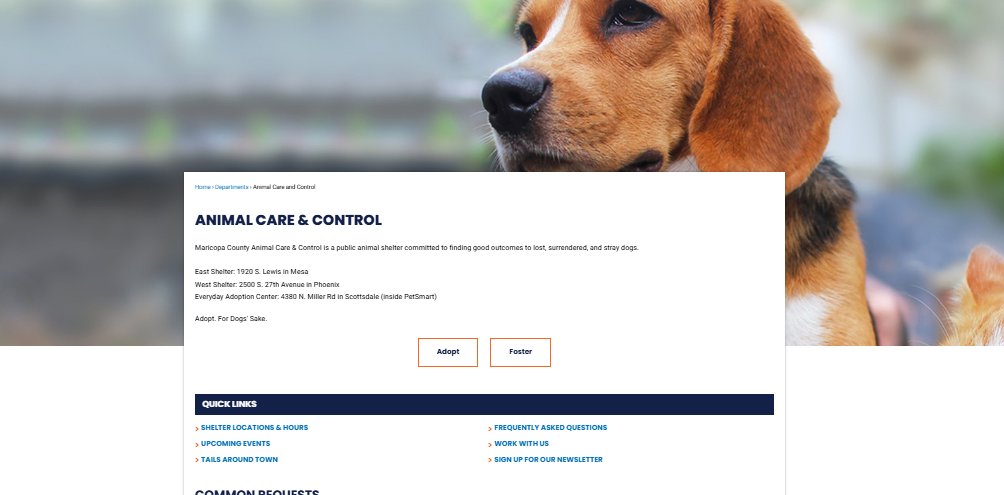
- Animal pickup from streets or reported locations
- Basic health and behavior screening
- Entry into the shelter tracking system
- Temporary holding assignment
After intake, animals move into evaluation areas where the next steps are decided.
Managed Intake System in Daily Operations
Maricopa County uses a managed intake system to control shelter flow. This approach helps balance incoming animals with available space and staff capacity. Instead of unlimited drop-offs, intake often follows scheduling or priority-based entry. Emergency cases still receive immediate attention, such as injured animals or dangerous situations.
Main features include:
- Scheduled pet surrender process for owned animals
- Priority handling for injured or at-risk animals
- Behavioral assessment before placement decisions
- Coordination with rescue partners when possible
This structure reduces overcrowding and keeps shelter conditions stable for animals already housed.
Shelter Capacity Rules and Housing Limits
Shelters operate under strict capacity limits. These limits affect how many animals can be housed safely at any time. When capacity reaches high levels, intake may slow for non-urgent cases. Transfer agreements with rescue groups help relieve space pressure.
| Category | Action Taken |
|---|---|
| Space available | Regular intake continues |
| Near capacity | Limited intake, priority cases only |
| Full capacity | Redirects to partner shelters or delayed intake |
These rules support the controlled movement of animals and prevent overcrowding in kennels.
Stray Dog Handling Workflow and Pet Surrender Process
Stray dog handling begins once a dog is picked up or brought in by field officers. Each dog is scanned for identification and checked for signs of ownership. Next, the animal is placed in a holding kennel for observation. Staff evaluates temperament, health status, and possible return-to-owner options.
Stray dog intake steps:
- ID scan and visual check
- Holding period assignment
- Behavior monitoring
- Owner contact attempt if tagged or microchipped
For owned animals, the pet surrender process follows a scheduled intake format. Owners may complete intake forms before surrender, which helps staff prepare housing and assessment plans.
How to Report a Stray Animal in Phoenix, AZ
A stray animal in Phoenix, AZ, can be reported through Maricopa County Animal Control by phone or an online reporting system. The response process depends on whether the situation is an emergency or a non-emergency case. Residents who report a stray dog Phoenix encounter help local officers respond faster and improve public safety. Clear details help animal services track, locate, and assist the animal properly.
When to Call Animal Control in Phoenix, AZ
Maricopa County Animal Control responds to cases involving loose, injured, or aggressive animals. Calls should be made when a stray animal is roaming public streets, parks, or neighborhoods without supervision.
Common situations include:
- A dog running in traffic or on busy roads
- Animal showing signs of injury or distress
- Aggressive behavior toward people or pets
- Repeated sightings in residential areas
The animal control hotline connects callers to dispatch staff who record the complaint and send field officers when needed. Non-urgent cases may be logged for later response.
Emergency vs Non-Emergency Animal Services
Emergency animal services apply when a stray animal creates immediate danger. Non-emergency reports apply when an animal is safe but lost or roaming.
Emergency cases include:
- An animal attacking a person or pet
- Severe injury or bleeding
- Traffic hazard caused by the animal
Non-emergency cases include:
- Friendly stray dog wandering the neighborhood
- Lost pet reporting system requests
- Repeated but non-aggressive sightings
Emergency calls receive faster dispatch. Non-emergency reports enter a queue for scheduled follow-up.
Online Reporting System for Stray Animals
Maricopa County provides an online reporting system for stray animal complaints. This option works well for situations that do not require immediate response.
Steps for online reporting:
- Open the official animal control reporting page
- Select the “stray animal report” option
- Enter the location details of the sighting
- Submit description and submit report
This system supports lost pet reporting system searches and helps reunite pets with owners when possible.
Lost or Found a Pet – What You Should Do
A lost or found pet situation calls for quick action, clear observation, and reporting to local animal services. Fast reporting to Maricopa County Animal Control and nearby shelters increases chances of safe reunion. Many pets return home within days when the right steps start early, and information is shared across local networks.
Lost Dog Checklist
When a dog goes missing, quick actions can raise recovery chances in Maricopa County and nearby Arizona areas. Start by checking the immediate surroundings and expand search zones step by step.
Lost dog checklist:
- Walk or drive around nearby streets within a 1–2 mile radius
- Call the dog’s name in a calm, familiar tone
- Check shaded areas, alleys, and quiet corners
- Ask neighbors to check garages and backyards
- Place a scent item, like a blanket, outside the home
Found Dog Procedure
When someone finds a stray dog, safety and proper reporting matter before taking any action. Approach calmly and avoid sudden movement.
Stray dog found what to do:
- Check for collar tags or ID information
- Offer water if the dog seems calm and safe
- Avoid chasing if the dog appears scared or aggressive
- Contact Maricopa County Animal Control or a nearby shelter
Found pets are often scanned for microchips. This helps connect them with owners quickly through registered databases.
A found dog report should include:
- Exact location found
- Time and behavior description
- Photos if possible
This information supports faster matching in local shelter systems.
Checking Shelters Online
Many owners and finders use the animal shelter search system in Maricopa County to track reported pets. Online databases list incoming animals daily from intake centers and rescue facilities.
Steps used in shelter searches:
- Filter by “dogs found” or “stray intake.”
- Match breed, color, and size details
- Review photos posted by shelters
- Check multiple facilities across county zones
Shelter intake records update often, so repeated checking improves match chances. Many pets appear in listings within 24–72 hours after pickup.
Posting Local Alerts
Local alerts help spread missing or found pet information across neighborhoods. Quick posting increases visibility among residents, rescue groups, and volunteers.
Common alert methods:
- Community Facebook groups and neighborhood apps
- Flyers at pet stores, parks, and vet clinics
- Posts on lost pet recovery Arizona platforms
- Calls to local animal shelters and rescue centers
A strong alert includes:
- Clear pet photo
- Last seen or found location
- Contact number
- Basic description
Sharing across multiple channels improves response speed and helps reconnect pets with families faster.
Maricopa County Animal Shelters & Locations
Maricopa County animal shelters operate multiple county animal care centers that serve dogs, cats, and other pets across the region. These Phoenix animal shelter locations support intake, care, and pet adoption services for residents searching for a dog adoption center in Arizona. The system includes West Valley, East Valley, and Scottsdale-area adoption services that connect pets with new homes through structured shelter programs.
West Valley Shelter
The West Valley shelter serves residents across Glendale, Peoria, Surprise, and nearby communities. It acts as one of the busiest county animal care centers in the region, handling stray intake and adoptions. This facility supports Phoenix animal shelter locations on the west side and provides adoption opportunities for dogs and cats.
Features:
- Large intake facility for stray animals
- Dog and cat adoption kennels
- Behavior assessment before adoption listing
- Lost pet reunification services
Many residents searching for “dog adoption center Arizona” choose this location due to the high availability of medium and large breed dogs.
East Valley Shelter
The East Valley shelter serves Mesa, Chandler, Gilbert, and Tempe. It focuses on both intake and rehabilitation for adoptable pets. This center plays a major role in the animal rescue system across Maricopa County.
Services include:
- Adoption listings for dogs, puppies, and cats
- Medical screening and basic treatment
- Lost pet recovery support
- Community pet support programs
Adopters often visit here for “adopt a dog Phoenix AZ” searches due to frequent puppy availability and family-friendly pets.
Scottsdale Adoption Center
The Scottsdale adoption center supports northern valley residents with a smaller but active adoption facility. It operates as a satellite point connected to larger county shelters.
Services include:
- Pre-screened adoptable pets
- Scheduled adoption appointments
- Partner rescue pet placements
This center often supports “county animal care centers” overflow, helping reduce crowding at larger shelters.
Dog Adoption Process in Maricopa County
The dog adoption process in Maricopa County follows a structured path that matches pets with suitable homes. Most adoptions include health checks, vaccination, and microchipping at the time of placement. People searching for “pet adoption process Arizona” often follow this system through county animal shelters.
Browse Adoptable Pets
Adoption starts by viewing available dogs at Maricopa County shelters or partner rescues. Listings include age, breed mix, size, and behavior notes.
Common categories include:
- https://www.maricopa.gov/214/Adopt-a-Pet
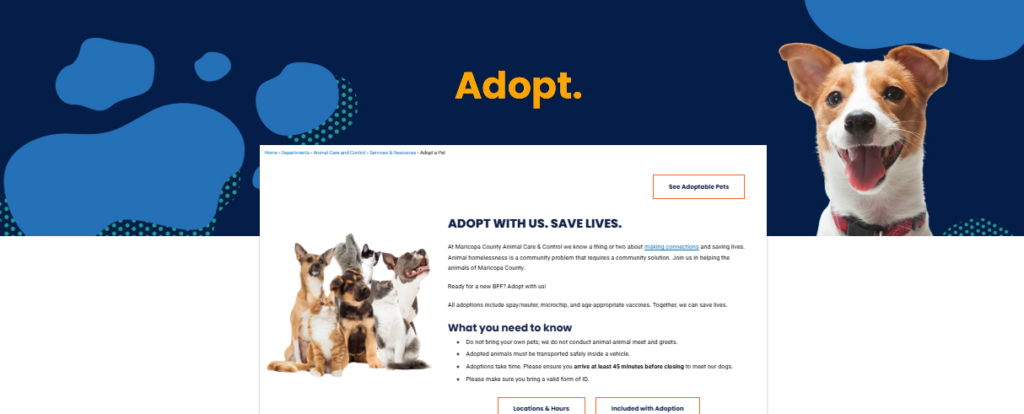
- Puppies and young dogs
- Adult trained dogs
- Senior companion pets
- Special needs animals
Many users searching “adopt a dog Phoenix AZ” begin here before visiting any center.
Visit the Shelter
After selecting a pet, a visit to the shelter is scheduled. Staff members provide background details about behavior, medical history, and compatibility.
Visitors may:
- View kennels in person
- Ask questions about temperament
- Check interaction compatibility
This step helps match families with the right pet.
Meet the Animal
Meeting the animal allows direct interaction in a controlled environment. Staff observes behavior during introductions.
Typical checks include:
- Reaction to people
- Interaction with other dogs
- Energy level assessment
This step plays a key role in the animal rescue system adoption matching process.
Adoption Fees
Shelter adoption fees vary based on age, breed, and medical care provided. Fees support ongoing shelter operations and animal care.
Average fee range:
- Puppies: moderate to higher range
- Adult dogs: standard range
- Senior pets: reduced fee options
Fees usually include spay/neuter services and basic veterinary care.
Pet Services: Vaccines, Microchips & Dog Licensing
Pet services in Maricopa County support public safety and healthy animals across communities. These services include dog licensing, rabies vaccination requirements, and microchipping for https://www.maricopa.gov/161/Services-Resources lost pet recovery. A dog license in Maricopa County, AZ, is required for most dogs living in the county. Rabies vaccination records and microchip registration often support this licensing process.
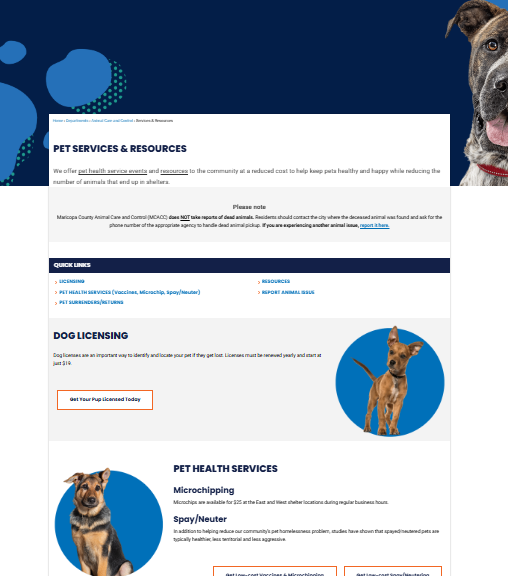
Dog Licensing Rules in Maricopa County
Dog licensing helps local animal control track pets and return lost animals quickly. In Arizona, licensing is tied closely to rabies vaccination status.
Rules include:
- https://www.maricopa.gov/226/Dog-License
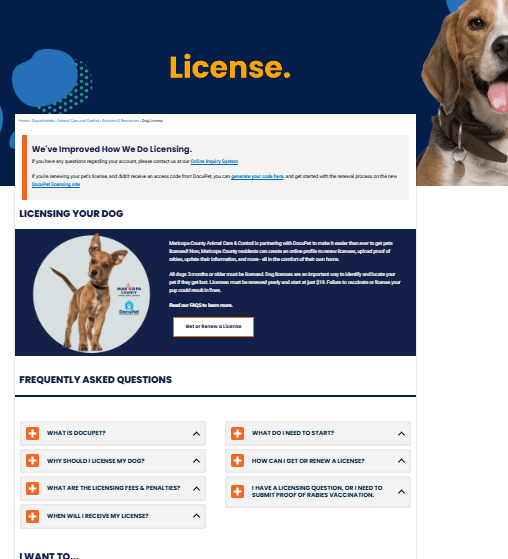
- Dogs must hold a valid rabies vaccination certificate
- Licenses must be renewed based on vaccine duration
- Fees may vary for spayed or neutered pets
- Tags must be worn on collars in public areas
Without a license, pet owners may face penalties or delayed return of lost pets.
Rabies Vaccination Requirements
Rabies vaccination remains a core requirement for pet vaccination in Phoenix services. Veterinarians across the county provide approved rabies shots for dogs and cats.
Common points include:
- The first vaccine is usually given at 3–4 months of age
- Booster shots required based on vaccine type (1-year or 3-year)
- Proof of vaccination is needed for animal registration in Arizona systems
Rabies control supports both pet safety and public health protection.
Microchipping for Pet Recovery
Microchipping improves lost pet recovery rates across Maricopa County. The chip stores a unique ID linked to the owner’s contact details.
Benefits of microchip pet recovery:
- Permanent identification under the skin
- No battery or maintenance required
- Works even if the collar or tag is lost
- Fast scanning at shelters and clinics
Pet Service Comparison Table
| Service Type | Purpose | Requirement Level |
|---|---|---|
| Dog License | Legal pet identification | Required |
| Rabies Vaccine | Disease prevention | Required |
| Microchip | Lost pet recovery support | Highly recommended |
These services work together to reduce stray populations and improve return-to-owner outcomes.
Managed Intake System
The managed intake system in Maricopa County organizes how pets enter shelters. It uses scheduled intake and priority rules to control shelter space and improve care. An animal intake system, the Arizona approach, reduces sudden overcrowding. A pet surrender appointment is often required before bringing an animal to a shelter.
Why Appointments Are Required
Shelters in Maricopa County operate with limited capacity. Walk-in intake can overload staff and space quickly.
Appointment-based intake supports:
- Controlled daily intake volume
- Better health screening for incoming animals
- Reduced stress for surrendered pets
- Staff preparation for each case
This system also helps match resources with incoming pet needs.
Shelter Overcrowding Prevention
The managed system supports shelter capacity management across facilities. By limiting intake flow, shelters can focus on care quality instead of volume pressure.
Practices include:
- Scheduled intake slots per day
- Temporary holding limits for healthy animals
- Transfer coordination between shelters
- Foster network placement when space is tight
These steps help reduce overcrowding and improve outcomes for animals.
Priority System for Emergency Cases
Not all cases follow standard appointment timing. Emergency intake receives priority based on risk level.
Priority intake cases may include:
- Injured or sick stray animals
- Aggressive or dangerous situations
- Abandoned litters of young animals
- Court-ordered or law enforcement cases
Non-emergency cases are scheduled through regular intake slots, which keeps operations stable.
Foster & Volunteer Programs
Temporary care homes and volunteer participation support Maricopa County Animal Control operations by giving animals safer conditions and daily care outside shelters. These programs help reduce shelter overcrowding and improve recovery chances for animals awaiting adoption or medical treatment. Community members in Phoenix and surrounding areas take part through structured roles that support rescue operations, shelter maintenance, and animal well-being.
Temporary Care Homes Program
Short-term animal care placements give pets a calmer environment compared to busy shelters. These homes support animals recovering from stress, injury, or abandonment.
Common features of temporary care placements:
- https://www.maricopa.gov/296/Foster
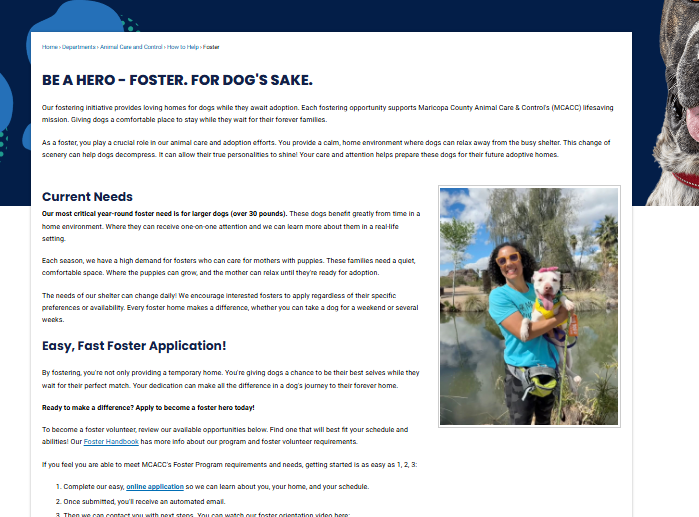
- Short-duration animal care in private homes
- Basic feeding and supervision duties
- Socialization for adoptable behavior readiness
- Support for young, sick, or stressed animals
This system works closely with local rescue groups across Maricopa County and Phoenix-area services.
Volunteer Roles at Animal Shelter
Volunteer participation at shelters covers many daily responsibilities that support animal care and teams.
Typical volunteer tasks include:
- https://www.maricopa.gov/294/Volunteer
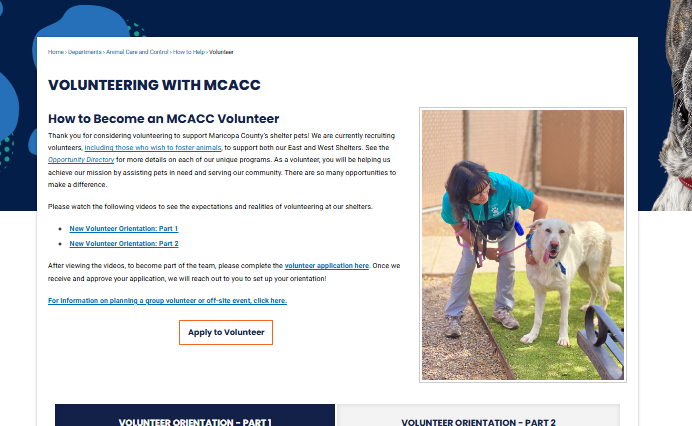
- Feeding and cleaning animal living spaces
- Walking dogs and social interaction sessions
- Assisting with adoption event coordination
- Helping staff with administrative tasks
Volunteer animal shelter AZ programs attract students, retirees, and working adults who want structured community service involvement.
Community Support Network
Rescue support programs rely on coordinated community involvement. Residents, nonprofit groups, and animal control teams work in shared response efforts.
Support areas include:
- Donation drives for food and medical supplies
- Adoption awareness campaigns
- Lost pet reunification support
- Education sessions on responsible pet care
This network strengthens animal welfare services across Maricopa County.
Emergency Animal Control Situations
Animal control emergency response in Maricopa County focuses on fast action when public safety or animal welfare is at risk. Situations often involve injury, aggression, or uncontrolled stray movement. Residents report incidents to local animal control services or emergency lines based on severity.
Aggressive Animal Response
Aggressive animal cases require immediate attention when pets or stray animals show threatening behavior. These incidents may involve barking, lunging, or chasing people or other animals.
Response signs:
- https://www.maricopa.gov/405/Report-An-Animal-Issue
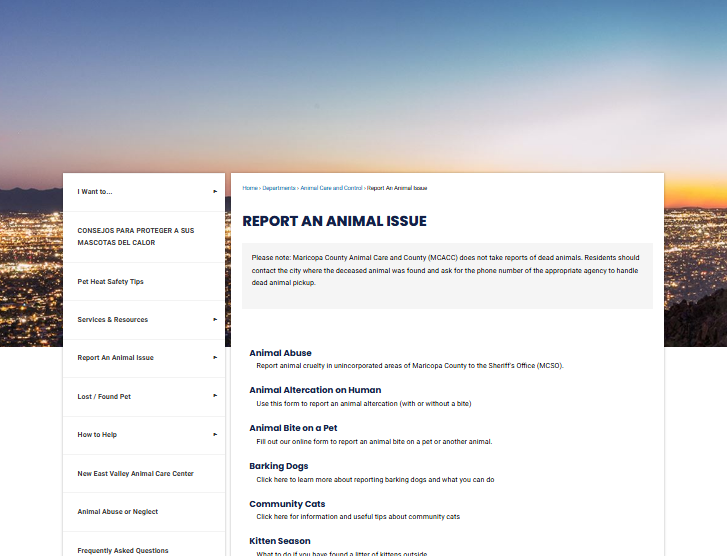
- Uncontrolled biting or attack attempts
- Territorial behavior near homes or parks
- Signs of rabies risk or abnormal behavior
Animal emergency Phoenix, AZ teams respond to secure the area and prevent harm.
Injured Stray Cases
Injured animals found in streets, parks, or neighborhoods require urgent reporting. Common cases include hit-by-vehicle pets, limping strays, or animals trapped in unsafe areas.
Typical actions taken:
- Safe containment of injured animals
- Transport to veterinary care partners
- Identification checks for lost pets
Urgent animal rescue teams coordinate transport and medical support.
When 911 Applies
Emergency calls to 911 are appropriate when human safety is at immediate risk. This includes situations involving uncontrolled, dangerous stray dog behavior or direct attacks.
Call 911 when:
- An animal is actively attacking a person
- A stray animal blocks traffic, causing danger
- Severe public threat from aggressive wildlife behavior
Non-life-threatening cases are usually handled through Maricopa County Animal Control dispatch lines.
FAQs – Maricopa County Animal Control
Stray animals in Maricopa County are handled through local animal services, shelter intake teams, and field officers who respond to public reports. People often ask about the stray dog rules Phoenix residents must follow, the pet surrender policy in AZ, licensing costs, and what happens after an animal is picked up. These FAQs explain the most common situations in a simple way so residents know what steps apply.
How do I report a stray dog in Phoenix?
A stray dog in Phoenix can be reported through the animal services phone lines or official online reporting systems. The report goes to dispatch teams, who send a field officer based on urgency and location. Residents should stay at a safe distance and avoid approaching the dog while waiting for a response. The officer may scan for a microchip and take the dog to a shelter if needed.
What happens to stray animals?
Stray animals taken by Maricopa County Animal Control go through intake at approved shelters where staff check for tags or microchips first. If an owner is found, contact is made quickly; otherwise, the animal enters a holding period with health checks, temporary housing, and public lost pet listings. If unclaimed, animals may move into adoption programs or rescue placement after evaluation.
How much is a dog license in Maricopa County?
Dog license fees in Maricopa County depend on whether the dog is spayed or neutered, with lower fees for altered pets. Most licenses range from $20 to $40 for sterilized dogs and $40 to $80 for unaltered dogs, with possible late fees for delayed renewal. Licensing helps reunite lost pets with owners faster through registered tags and database records.
Can I surrender my pet?
Pet surrender in Maricopa County is handled through scheduled shelter appointments where owners provide basic pet history, medical records, and the reason for surrender. Intake staff reviews each case before acceptance, and the pet is then placed into evaluation for adoption or foster care programs. This process helps match animals with suitable future homes.
Does animal control pick up cats?
Animal control may pick up cats only in specific cases, such as injury, illness, trapping situations, or safety risks in public areas. Healthy roaming cats are usually not collected unless there is distress or danger involved. Community cats are often monitored in place, while injured or vulnerable cats are taken for medical care and shelter support.