
The Maricopa County jail system operates as a structured county jail network in Arizona that manages individuals taken into custody by local law enforcement. It is operated by the Maricopa County Sheriff’s Office, which controls intake, supervision, and security across all detention units under one custody system. This is not a single correctional facility, but a connected group of detention centers working together as one law enforcement detention system. The network manages inmate housing, classification, and movement across multiple facilities, forming a coordinated detention center structure for the entire county.
The Maricopa County jail AZ system processes individuals from arrest through booking and placement into appropriate custody levels. Each correction facility serves a defined role such as intake processing, pre-trial detention, or specialized inmate housing, based on security requirements and case status. Within this custody system, inmate housing is assigned after classification based on charges, behavior, and legal conditions. The county jail network supports structured movement between detention centers, ensuring organized tracking of every inmate across the law enforcement detention process.
How the Maricopa County Jail System Works
The Maricopa County jail system operates as a connected network of detention facilities that handle intake, housing, and release of inmates. It follows a structured process that begins at booking and ends at release or transfer. Each https://www.mcso.org/Home/Jailsa stage of inmate custody is managed through strict detention workflow procedures.
Jail System Structure as a Network of Facilities
The jail system in Maricopa County functions as multiple detention centers working together rather than one single jail. Each facility supports different roles in the detention process and helps manage population flow across the county. This network setup allows officials to distribute inmates based on space, security needs, and case status. As a result, the system avoids overcrowding in one location and maintains steady movement across units.
Features of this network include:
- Multiple intake and holding centers
- Separate housing units across facilities
- Coordination between transport teams and custody staff
- Shared records through centralized inmate custody databases
Each facility contributes to a larger detention workflow. The system depends on communication between booking staff, classification officers, and housing supervisors. This structure supports fast placement decisions and smoother movement of detainees through each stage.
Booking Process and Intake Processing
The booking process marks the first formal step when a person enters custody in Maricopa County. At this stage, the system collects identity details, charges, and initial case information. During intake processing, staff record personal data, fingerprints, photographs, and property inventory. Medical screening may occur at this point to check immediate health needs. The data collected becomes part of the inmate custody record used throughout detention.
Core steps during booking include:
- Identity verification
- Criminal charge entry
- Fingerprinting and mugshot capture
- Personal property logging
- Health and risk screening
Once intake processing ends, the person moves into temporary holding. From there, classification officers review the case for housing placement. This stage forms a key link in the detention workflow, setting the direction for how long and where a person will stay within the system.
Classification System and Housing Levels
After booking, the classification system determines where each inmate will be placed. This step evaluates risk level, behavior history, current charges, and safety concerns. The system divides housing into different security levels. Each level reflects the custody needs of the inmate and facility safety rules.
Common housing categories include:
- Minimum security units: Lower risk individuals, fewer restrictions
- Medium security units: Moderate supervision with controlled movement
- Maximum security units: High-risk inmates with strict control measures
Classification officers review information from intake processing and assign placement. The decision affects daily movement, cell assignment, and contact with other inmates.
Detention Workflow from Custody to Release
The detention workflow covers the full path from entry into custody to final release. Each stage follows documented procedures that keep records updated and actions consistent. After classification and housing assignment, inmates move through court appearances, legal processing, and program assignments. Movement between facilities may occur based on court dates or security changes.
A simplified flow includes:
| Stage | Description |
|---|---|
| Intake | Booking and initial intake processing |
| Classification | Risk assessment and housing decision |
| Housing | Placement in assigned facility unit |
| Court Processing | Transport for hearings and legal steps |
| Release or Transfer | Exit from custody or movement to another facility |
Release occurs after bail, case dismissal, or sentence completion. At that point, property is returned, and records are updated to close the custody file.
Jail Facilities
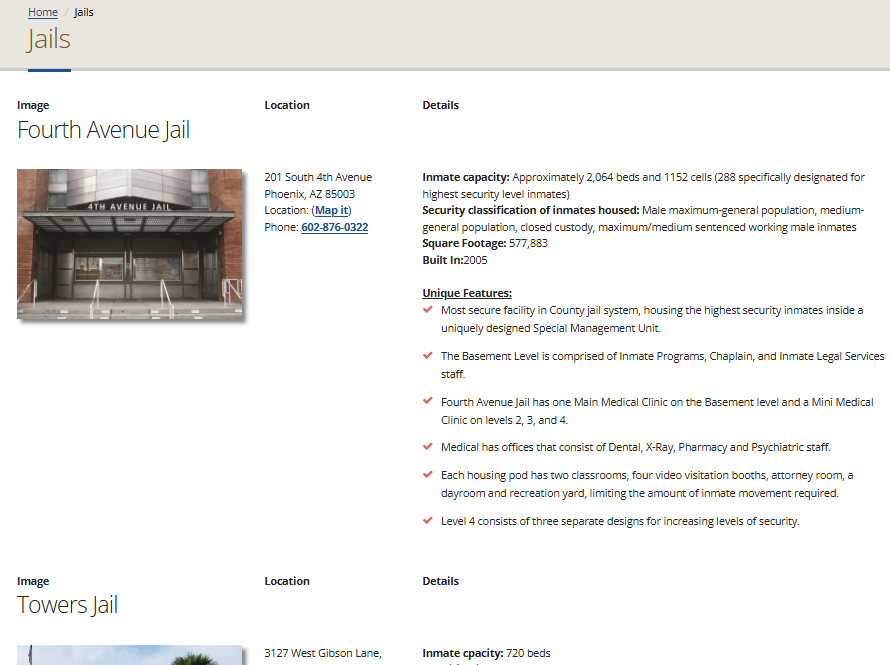
The Maricopa County correctional system operates several detention centers, each built for different custody levels and inmate needs. These facilities separate inmates based on risk level, legal status, medical needs, and behavior classification. Each jail plays a distinct role in correction facility operations, ranging from maximum security housing to pretrial detention and behavioral programs.
4th Avenue Jail
The 4th Avenue Jail in Phoenix, AZ, serves as one of the highest security detention centers in the county. It primarily houses maximum custody inmates and individuals requiring strict control measures. This facility focuses on secure containment, medical response, and specialized inmate supervision, including psychiatric care support.
High-Security Housing and Maximum Custody Units
The 4th Avenue Jail operates as a maximum security jail, designed for inmates who require strict monitoring and controlled movement. Security procedures restrict contact and reduce risk inside the facility.
Features include:
- Controlled high-security housing units
- Segregated inmate classification levels
- Restricted movement scheduling
- Continuous supervision by trained detention officers
Inmate classification determines placement inside the facility. Higher-risk individuals remain in secured pods with limited interaction.
Medical Services and Psychiatric Care Unit
The facility includes a dedicated medical clinic jail that supports routine treatment and emergency care. Medical staff handle chronic illness, injury response, and intake screening. A separate psychiatric care unit supports inmates with mental health conditions.
This unit provides:
- Crisis stabilization support
- Medication management
- Behavioral health monitoring
- Suicide risk observation protocols
The combination of medical and psychiatric services reduces transfers to external hospitals.
Role in Maximum Security Jail Operations
As a central maximum security jail, the facility supports countywide correction operations. It handles inmates considered high-risk or requiring protective custody separation. Correction teams apply structured housing policies and controlled scheduling. This supports order within high-security environments and reduces internal incidents.
Towers Jail
Towers Jail operates as a medium security detention center focused on pretrial inmates. Most individuals housed here are awaiting court hearings or sentencing outcomes. The facility supports controlled housing with balanced supervision and structured daily routines.
Medium Security Housing and Pretrial Population
Towers Jail primarily holds inmates classified under medium security levels. These individuals do not require maximum restriction but still need supervised containment.
Core features include:
- Shared housing units with monitored access
- Scheduled movement for meals, recreation, and court transport
- Structured inmate classification system
Pretrial inmates form a large portion of the population, which creates constant intake and release cycles.
Operational Focus in Correction Facility Operations
Correction facility operations at Towers Jail center on efficiency and safety. Staff manage inmate flow between court appearances, medical visits, and housing assignments. Work programs and limited activities may be available depending on classification status.
Watkins Jail
Watkins Jail focuses on behavior-based correction programs and direct supervision models. This facility supports structured inmate behavior management inside controlled housing settings. It often houses inmates who require monitored interaction rather than isolation.
Behavior Programs and Rehabilitation Structure
Watkins Jail runs several behavior-focused programs that address compliance, conduct, and reintegration readiness.
Programs may include:
- Anger management sessions
- Cognitive behavior sessions
- Substance use monitoring support
- Rule compliance tracking
These programs aim to reduce repeat misconduct inside detention settings.
Direct Supervion Model
Watkins Jail uses a direct supervision approach. Officers stay inside housing units rather than observing from remote stations.
This model supports:
- Faster conflict response
- Continuous behavior observation
- Improved communication between staff and inmates
The system strengthens control inside housing units while maintaining daily structure.
Estrella Jail
Estrella Jail serves as a dedicated facility for female inmates. It supports custody housing, health services, and program participation designed for women in detention. The facility operates with structured classification and gender-specific care needs.
Female Inmates Facility Structure
Estrella Jail houses individuals across different security levels, from lower to higher custody classifications.
Elements include:
- Gender-specific housing units
- Classification-based placement system
- Controlled movement scheduling
Inmate housing separation reduces conflict risk and supports orderly daily routines.
Programs and Support Services
Programs at Estrella Jail focus on education, behavioral improvement, and personal development.
Common services include:
- Parenting support sessions
- Educational coursework
- Health education programs
- Behavioral compliance monitoring
These services align with correction facility operations focused on structured rehabilitation pathways.
Lower Buckeye Jail
Lower Buckeye Jail stands as the largest detention facility in the county system. It handles a wide inmate population with varying custody levels and medical needs. The facility integrates housing, medical support, and classification systems under one large operation.
Largest Facility and Housing Capacity
Lower Buckeye Jail includes extensive housing units designed to manage high inmate volume. The facility supports multiple classification levels across separate wings.
Features:
- Large-scale intake processing
- Multi-level inmate classification system
- Segmented housing blocks for risk levels
The scale of operations requires coordinated staffing and scheduling systems.
Mental Health and Infirmary Services
This facility includes one of the most active mental health support systems in the county jail network. The infirmary handles both physical and psychological care.
Services include:
- Infirmary-based medical treatment
- Psychiatric evaluation support
- Crisis observation housing
- Medication distribution programs
These services reduce external hospital transfers and support internal care continuity.
Inmate Search System
Inmate records in Maricopa County are checked through a public inmate lookup system that shows current custody details. The system helps locate a person in jail using basic identity or booking information. The inmate search Maricopa County tool displays custody status, booking record, and housing location in real time.
How to Search for an Inmate in Maricopa County
The inmate locator tool works by matching submitted details with jail records. Users can search through name-based or number-based inputs. The system then returns matching results with custody status and booking record details.
Common search steps include:
- https://www.mcso.org/InmateInfo
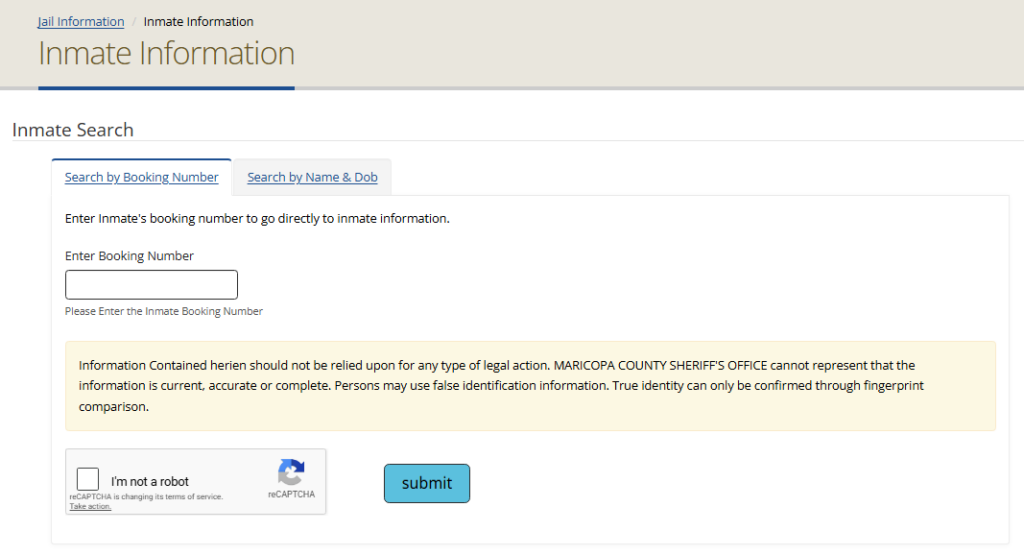
- Enter full legal name (first and last)
- Use the date of birth for better matching
- Enter booking number if available
- Select search to view results
The inmate locator tool may show multiple matches if names are common. In that case, extra identifiers like age or booking date help narrow results. The custody status section shows if the person is in jail, released, or transferred.
Data Needed for Inmate Search in Maricopa County
The inmate lookup system relies on accurate input data. More precise details lead to better results in the inmate search in the Maricopa County database.
| Required Data | Purpose in Search |
|---|---|
| Full Name | Primary search match |
| Date of Birth | Separates similar names |
| Booking Number | Direct record match |
| Arrest Date | Helps filter records |
| Custody Status (optional) | Shows current jail status |
The system may still show results with partial information. However, missing details can bring broader results with multiple entries. The booking record contains arrest charges, intake date, and housing unit details.
Booking Number Explanation and Inmate Locator Tool Function
A booking number works as a unique ID assigned when a person enters custody. It connects directly to the inmate’s booking record inside the system. Each booking number stays tied to one arrest event. The inmate locator tool uses this number for fast record matching. When entered, it pulls the exact custody status without mixing similar names.
Points about booking number:
- Assigned during the intake process
- Linked to one specific arrest event
- Used for fast record retrieval
- Helps confirm the correct inmate identity
The booking record inside the system may show:
- Arrest charges and case details
- Jail housing location
- Custody status updates
- Bond or release information
The inmate lookup system updates records as status changes occur. This keeps information aligned with current jail data and reduces mismatched results in the inmate search in the Maricopa County system.
Intake, Transfer, & Release Process
Intake, transfer, and release in Maricopa County follow structured custody steps inside designated detention facilities. The system includes booking, movement between units, and final discharge from custody after case status updates. These steps operate through a controlled processing center and connected detention locations that function as a custody intake facility and transfer hub for inmate movement.
Intake & Booking Process
The jail intake process begins after arrest or court commitment. Individuals arrive at a custody intake facility where identity checks and record creation take place. Staff record personal details, charges, and legal status in the booking system.
During booking, several steps occur in sequence:
- Photographing and fingerprinting
- Medical screening for immediate health concerns
- Property inventory and secure storage
- Criminal history verification
- Temporary housing assignment
Each case moves through a structured processing center workflow. Classification officers review security levels and housing needs. This step decides placement inside the detention network. The booking stage sets the foundation for custody tracking. Data entered here follows the person through all facility transfers until release.
Transfer Between Facilities
After intake, some inmates move between facilities based on capacity, security level, or court scheduling needs. The system works as a coordinated transfer hub across multiple detention centers.
Transfers may occur for:
- https://www.mcso.org/InmateInfo/SelfSurrender
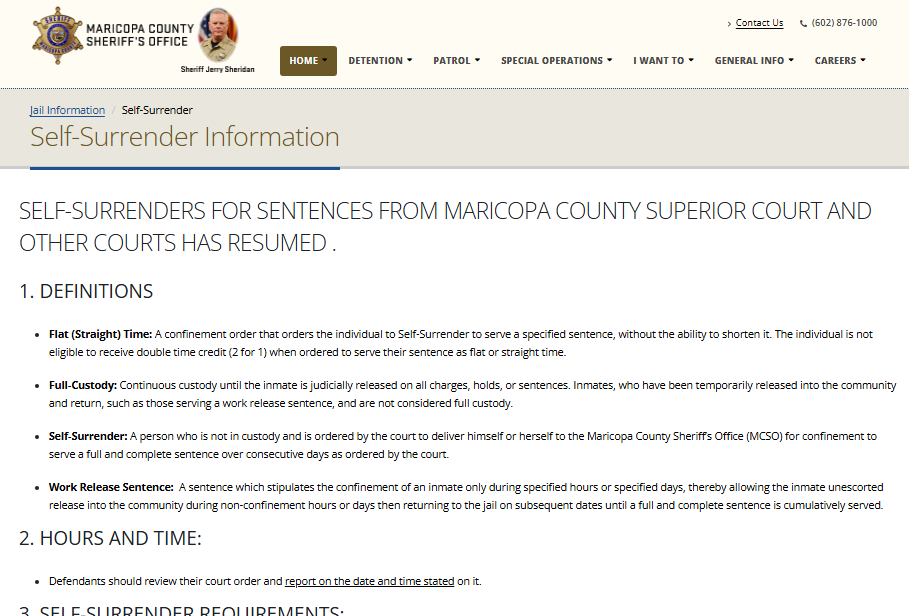
- Court appearances in different jurisdictions
- Medical or mental health treatment needs
- Housing reclassification
- Population management across units
Movement stays documented at every stage. Transport teams update custody records before and after relocation. Each facility receives updated intake information from the central system.
| Transfer Stage | Description |
|---|---|
| Review | Custody level and housing checked |
| Assignment | New facility selected |
| Transport | Secure movement between centers |
| Reception | Arrival logged at destination facility |
This transfer structure keeps inmate placement aligned with operational needs across the county network.
Release System
The release process starts after court orders, sentence completion, or bail authorization. The inmate release procedure in Maricopa County follows verification steps before discharge from custody.
Release steps include:
- Case status confirmation from court records
- Outstanding warrant check
- Property returned from storage
- Final identity verification
- Exit documentation processing
Once clearance is completed, the release paperwork is finalized at the processing center. Individuals exit through controlled release points at designated facilities.
Inmate Accounts & Money Deposits
Inmate accounts at the Maricopa County Jail System allow money to be placed into a secure inmate commissary account for daily purchases. Funds support basic items like hygiene products, snacks, and writing supplies. The system accepts inmate account deposits through kiosks, online platforms, and phone-based payment services linked to a central funding system.
Inmate Account Deposits Process in the Maricopa County Jail System
Money sent to an inmate gets stored in a controlled inmate commissary account. This account works like a personal balance used inside the facility for approved purchases. The process follows strict payment verification steps before funds reflect.
Deposits typically follow this flow:
- https://www.mcso.org/InmateInfo/InmateAccount
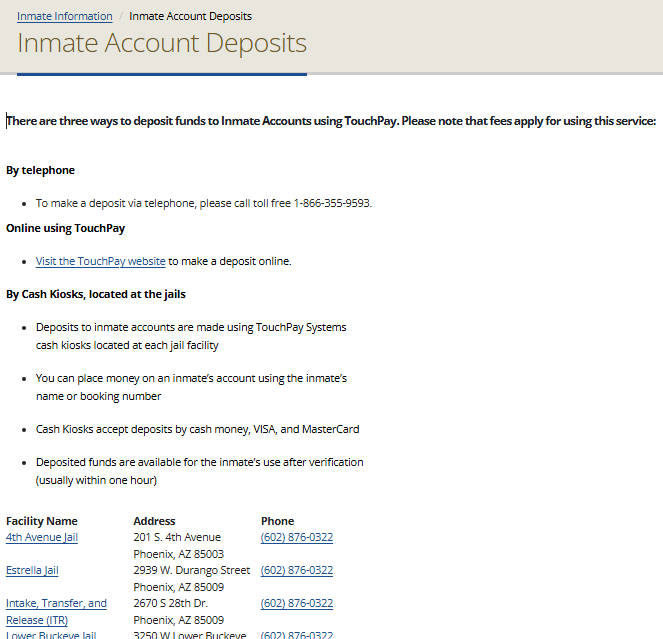
- Sender selects inmate using name or booking ID
- Payment enters the funding system
- Payment verification checks security details
- Funds move into the commissary balance
The system reduces manual handling and keeps records tied to each inmate account deposit request. Transactions remain traceable for corrections staff review. Most deposits post within a short processing window, depending on the payment channel.
Kiosk, Online, Phone Payment Options for Commissary Funds Jail
The Maricopa County Jail System provides multiple ways to send commissary funds and jail payments. Each method supports different user preferences and payment speeds.
Main deposit channels
- Kiosk deposits
- Located at approved facility locations
- Cash or card payments accepted
- Immediate payment verification in most cases
- Online deposits
- Secure website-based funding system
- Debit or credit card payments
- Digital receipt generated after submission
- Phone deposits
- Automated phone payment system
- Card-based transaction processing
- Voice or keypad entry for inmate details
| Method | Payment Type | Processing Speed | Receipt |
|---|---|---|---|
| Kiosk | Cash/Card | Fast | Printed |
| Online | Card | Fast | |
| Phone | Card | Moderate | Email/SMS |
Each method feeds directly into the inmate commissary account, keeping balances updated after payment verification steps finish.
Commissary Funds, Jail System, and Payment Verification Flow
The commissary funds jail system operates through a structured funding system that records every transaction. Each deposit goes through validation checks before posting to the inmate’s balance.
Payment verification focuses on:
- Correct inmate identification
- Valid payment source
- Fraud prevention checks
- Transaction logging within the funding system
Once verified, funds shift into the inmate commissary account for use in approved jail commissary services. This setup reduces errors and keeps financial activity organized across the jail network.
Phone Call & Communication System in Maricopa County Jail
Phone contact from custody operates through controlled calling services that allow outgoing contact only. Communication runs through a prepaid-based setup that connects inmates with approved contacts under monitored conditions. The system limits inbound calling, so communication depends on scheduled outgoing calls. All activity passes through a regulated jail communication system with tracking and recording.
Outgoing Calls Only in Maricopa County Jail
Communication from custody in Maricopa County runs on an outgoing calls only structure. Inmates place calls after gaining system permission during assigned hours. Incoming calls do not connect through the facility line. The setup for inmate phone calls in Maricopa County follows strict control points. Calls connect to approved numbers listed by the inmate during intake or later updates. Each call goes through a monitored call process that records audio and call logs.
Outgoing call flow:
- https://www.mcso.org/InmateInfo/InmateTelephone
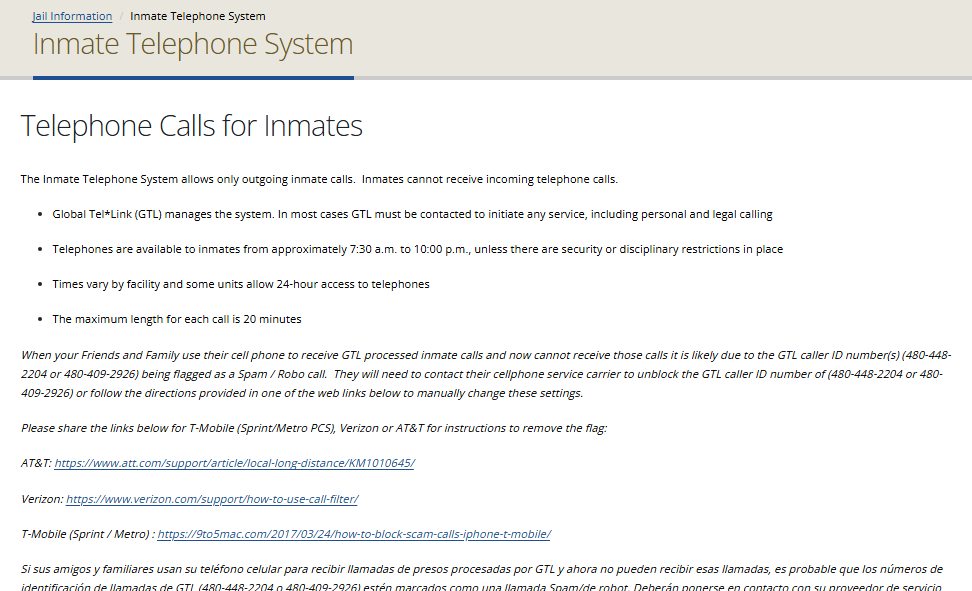
- Inmate selects approved contact number
- System verifies account balance or prepaid status
- Call connects through the jail routing network
- Communication gets recorded and stored
Call duration remains limited to allow equal phone time among inmates. When call volume is high, scheduling delays may occur. Contact attempts depend on facility rules and unit schedule.
Prepaid Calling System and Communication Provider
The jail uses a prepaid-based model supported by an external communication provider. Funds must be added before calls connect. The system works as part of the broader jail communication system used across detention facilities. A prepaid calling system reduces billing issues and controls usage inside custody. Family members or contacts usually fund accounts through online deposits or phone-based payment channels.
Elements of the prepaid model:
- Preloaded account balance required for outgoing calls
- Per-minute billing structure applies
- Separate accounts per inmate number
- Funds managed through approved vendor platforms
- Call time is deducted automatically during connection
The communication provider manages routing, billing, and monitoring tools. This setup allows jail staff to track communication records and maintain structured phone access.
Call Restrictions and Monitoring Rules
Phone communication inside Maricopa County custody follows strict restriction layers. These rules regulate who can be contacted, how long calls last, and what content is allowed during conversations.
Common call limits and restrictions:
- Only approved contacts receive calls
- Three-way calling gets blocked
- Call forwarding remains disabled
- Call duration capped per session
- No incoming calls accepted
Monitoring and recording structure:
All calls pass through monitored call systems. Staff and software tools track conversations for security review. This process records:
- Call audio
- Dialed numbers
- Call time stamps
- Account activity logs
Communication rules:
| Area | Rule Type | Detail |
|---|---|---|
| Contact List | Approval required | Only pre-approved numbers |
| Call Type | Outgoing only | No inbound calls |
| Monitoring | Active recording | Stored for review |
| Payment | Prepaid system | Balance required |
| Restrictions | Limited features | No call transfer or forwarding |
Video Visitation System
Video visitation in the Maricopa County Jail System allows approved visitors to connect with inmates through a secure online platform. This system supports remote video visits without requiring physical presence at the facility. It is commonly referred to as video visitation jail AZ services. The system follows strict scheduling rules and controlled entry points. It operates under structured Maricopa County jail visitation policies to maintain order and safety.
Remote Video Visits in Maricopa County Jail Visitation
The remote visitation system allows friends and family to connect from home or approved devices. Visits take place through monitored inmate video calls using a secured platform. Each session is recorded and supervised for compliance with jail regulations. The system reduces physical crowding at facilities and supports consistent communication between inmates and approved contacts.
Features include:
- https://www.mcso.org/InmateInfo/Visitation
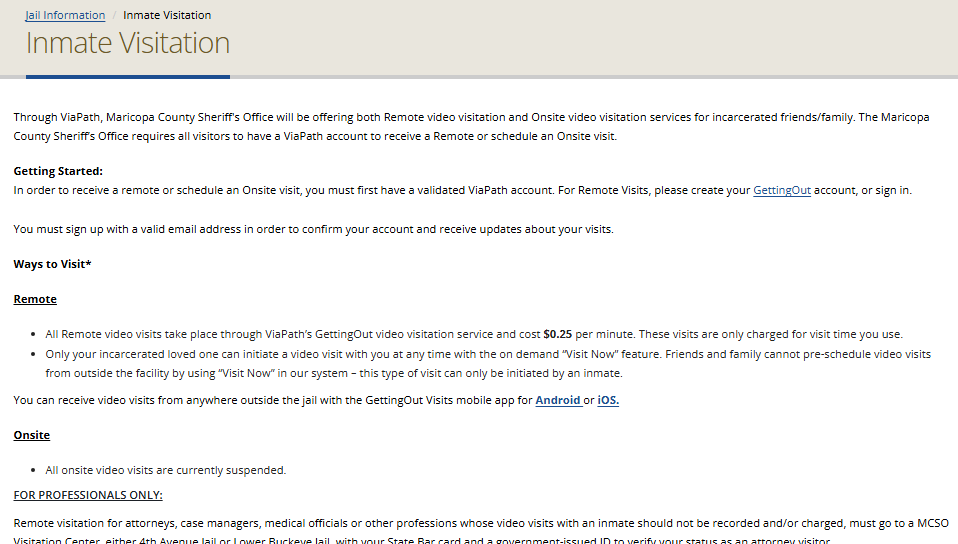
- Secure login for approved users
- Scheduled time slots for each inmate
- Video and audio monitoring
- Limited duration per session
- Device-based connection from home or kiosks
The platform helps maintain structured communication while keeping security checks active at every level.
Scheduling Rules for Video Visitation Jail AZ
Scheduling follows a fixed booking system controlled by jail administration. Each inmate receives assigned visitation windows based on housing location and facility rules. Visitors must register before booking a session. Approval depends on background checks and inmate eligibility status.
Common scheduling steps include:
- Create an approved visitor account
- Link profile to inmate ID
- Select available time slots
- Confirm booking before the cutoff time
- Join the session at the scheduled time
Late arrivals or missed sessions may lead to cancellation without refund or rescheduling.
Restrictions and Visitation Compliance Rules
The system follows strict visitation compliance standards to maintain safety and order inside correctional facilities. Rules apply to both visitors and inmates during all video sessions.
Restrictions include:
- No unapproved participants during calls
- No recording or screen capture
- No disruptive behavior or offensive language
- Proper identification required before entry
- Dress code compliance for all users
- Time limits are strictly enforced
Violation of rules may lead to temporary or permanent suspension of visitation privileges.
A simple reference table is shown below:
| Rule Type | Requirement |
|---|---|
| Identity Check | Verified account required |
| Behavior | Calm and respectful conduct |
| Devices | Approved platforms only |
| Recording | Not allowed |
| Timing | Fixed session duration |
These rules support safe and controlled communication between inmates and outside contacts.
Inmate Video Calls and System Monitoring
Inmate video calls are monitored through a centralized control system that tracks activity in real time. Staff members review flagged sessions when required.
The monitoring system checks:
- Audio clarity and content
- Visual activity during calls
- Connection stability
- Rule compliance signals
The system supports correctional facility safety while allowing structured communication. It also records sessions for review if disputes or violations occur.
Inmate Tablets & Messaging
Inmate tablets in Maricopa County support controlled communication, education, and limited digital services for incarcerated individuals. These devices operate inside a monitored system that supports messaging, learning content, and approved entertainment. They play a key role in digital inmate communication, offering structured contact options while maintaining facility security standards.
Tablet Features in Inmate Tablets, Maricopa County
The inmate tablets Maricopa County system provides are controlled devices issued to eligible inmates. These tablets function within a closed network and do not connect to the open internet. Every activity remains recorded and reviewed by correctional staff.
Tablet features include:
- https://www.mcso.org/InmateInfo/Tablets
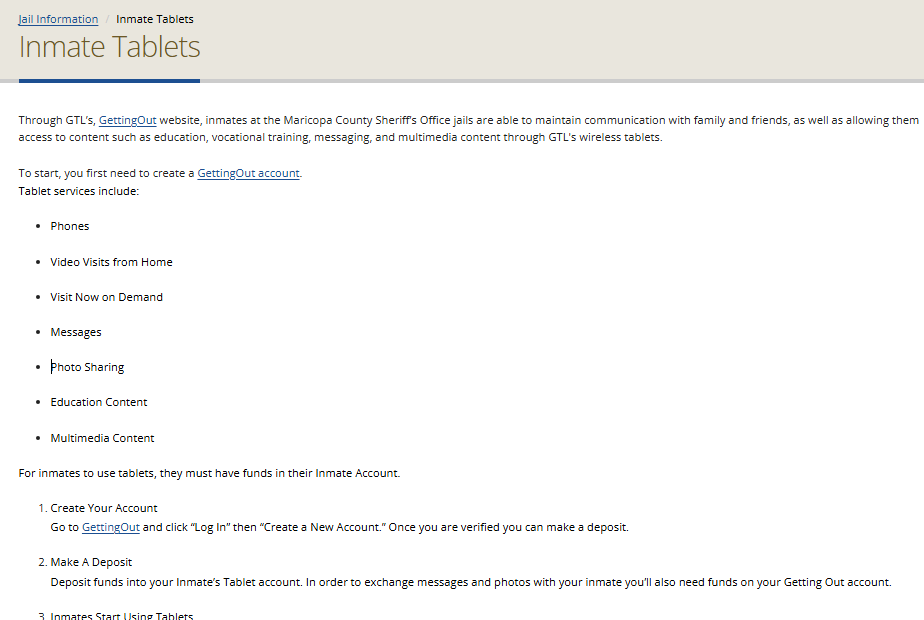
- Secure messaging system for approved contacts
- Preloaded educational programs and self-improvement courses
- Music, books, and limited media libraries
- Request forms for services inside the facility
- Scheduling tools for calls and visits
- Legal document viewing tools, in some cases
The system supports structured learning and communication while limiting misuse. Content selection follows facility rules, and updates occur through controlled uploads. Tablets also help reduce paper-based processes inside housing units.
Messaging System and Digital Inmate Communication
The messaging function works as a secure messaging system designed for monitored contact between inmates and approved outside contacts. Every message passes through filters and review checkpoints before delivery or response.
Messages are usually:
- Sent through a paid or credit-based system
- Stored for record review
- Limited in length and frequency
- Restricted to approved contact lists
The digital inmate communication system replaces some traditional written mail functions. It speeds up communication while maintaining supervision standards. Families and friends can respond through the same platform, creating a controlled communication loop.
Restrictions and Monitoring Rules
Tablet use follows strict rules inside correctional housing units. The system limits misuse and controls all activity through monitoring software.
Common restrictions include:
- No open internet browsing
- No social media platforms
- No video calling without approval
- No file transfers between users
- Limited usage hours per day
- Content blocked based on security level
Contact the Sheriff’s Office With Questions or Concerns
The Maricopa County Sheriff’s Office provides official contact channels for questions that cannot be answered through inmate search tools or jail information pages. These options also support concerns about jail operations, staff behavior, or facility conditions. Most requests start with the Contact Us page, where users can find phone numbers, office locations, and complaint submission options. This section helps with issues beyond daily inmate communication or routine custody checks.
From the contact page, users can take several actions depending on their needs:
- Find the main office location and mailing address
- Check phone numbers for different departments
- Review office hours for public inquiries
- Submit complaints, comments, or formal concerns
These channels are often used for common jail questions that involve administrative issues or service-related concerns.
Below are key Maricopa County jail facilities and offices with contact details for public reference:
- Fourth Avenue Jail: 201 South 4th Avenue, Phoenix, AZ 85003; Phone: (602) 876-0322
- Towers Jail: 3127 West Gibson Lane, Phoenix, AZ 85009; Phone: (602) 876-0322
- Watkins Jail: 2680 South 28th Drive, Phoenix, AZ 85009; Phone: (602) 876-0322
- Estrella Jail: 2939 West Durango Road, Phoenix, AZ 85009; Phone: (602) 876-0322
- Lower Buckeye Jail: 3250 West Lower Buckeye Road, Phoenix, AZ 85009; Phone: (602) 876-0322
- Intake, Transfer, and Release (ITR): 2670 South 28th Drive, Phoenix, AZ 85009; Phone: (602) 876-0322
- 512 Facility: 2670 South 28th Drive, Phoenix, AZ 85009; Phone: (602) 876-0322
- Transportation HUB: 2670 South 28th Drive, Phoenix, AZ 85009; Phone: (602) 876-0322
- Maricopa County Sheriff’s Office: 550 West Jackson, Phoenix, AZ 85003; Phone: (602) 876-1000
- Telecommunications Division / ITS: 550 West Jackson Street, Phoenix, AZ 85003; Phone: (602) 876-5412
These contact points support custody procedures, public inquiries, and administrative communication linked to the jail system.
(FAQs) About Maricopa County Jail
Two main questions often appear about the Maricopa County Jail System: how inmate search works and what rules apply for visitation, deposits, and jail contact.
Inmate Search Questions in Maricopa County Jail, AZ?
The inmate search system helps people check custody status, booking details, and housing location in Maricopa County Jail facilities. Searches usually work with a full name or booking number for faster results. Records come from jail intake systems and are updated during custody changes. Many users rely on this tool for basic inmate search questions about detention status. The system follows standard custody procedures across county facilities.
Visitation Rules and Custody Procedures?
Visitation in the Maricopa County Jail System follows strict scheduling and approval rules based on custody level. Visitors must be on an approved list and show valid identification before entry. Some facilities allow video visits while others offer on-site sessions only. Time limits and monitoring rules apply during each visit. These rules connect directly with common jail questions about visitation eligibility.
Deposits, Jail Contact, and Inmate Communication?
Money deposits allow inmates to buy commissary items like hygiene products and snacks. Funds can be sent through online systems, kiosks, or approved payment services linked to inmate accounts. Jail contact lines help families check custody status and basic booking updates. Communication options also include monitored phone calls and mail services. These systems follow strict inmate access rules for security.
Jail Contact and Inmate Communication Rules?
Jail contact works through central phone lines and department-specific extensions for different requests. Staff may provide only limited custody information depending on case status. High call volumes can affect response time during busy hours. Written requests are sometimes required for detailed records or official documents. All communication follows secure monitoring procedures within the jail system.
Custody Status Updates and Inmate Release?
Custody status updates in the Maricopa County Jail System change based on intake, court decisions, and facility transfers. People often ask how quickly updates appear after booking or release actions. The system reflects real-time jail records, but short delays may happen during processing. This is one of the most common inmate search questions linked with common jail questions about timing and accuracy. Updates follow standard custody procedures used across county detention facilities.