
Maricopa County court records search provides official access to legal case information, court filings, and case status details held within the county court system. These records fall under Maricopa County, AZ, court records and are used to review public court records linked with civil, criminal, family, probate, and traffic matters. Court records are legal documents maintained by the Clerk of the Superior Court in Maricopa County, Arizona. This office manages case information, court filings, and judicial records through a structured court records search system.
Users often review these records to find verified case information, track case progress, and check legal documents connected to court proceedings. Court records include detailed case information such as party names, filing dates, hearing schedules, judgments, and case outcomes. These records support transparency in the court system and allow structured review of public court records for legal and informational use.
What Are Maricopa County Court Records?
Maricopa County court records are official legal documents that show details of cases filed and handled in the county courts. These records include case filings, hearing details, judgments, and case history stored in the public record system.
Court Records Definition and Legal Documentation System
Court records represent written documentation created during legal proceedings. They include case filings, motions, orders, judgments, and docket entries that track case activity from start to finish. Maricopa County maintains these records through its court administration system, which supports transparency and public record access for eligible information. The records reflect both current and closed cases across multiple legal categories.
Common LSI and NLP terms tied to this system include:
- legal documents
- court filings
- case history
- public record system
- docket information
These records help show how cases move through the judicial process, from filing to resolution.
Who Maintains Court Records in Maricopa County?
Maricopa County court records are maintained by the Clerk of the Superior Court. This office serves as the main legal record keeper for all court-related documents in the county. It manages official documentation linked to hearings, filings, and case activity within the official court system. Every entry becomes part of structured case documentation used for record tracking and reference.
Clerk of Superior Court Role in Clerk of Court Records
The Clerk of the Superior Court manages the clerk of court records across civil, criminal, probate, and family matters. This office acts as the central legal record keeper for all Maricopa County court records. Record management includes organized filing of documents, tracking case progress, and maintaining long-term case documentation. Each case receives a docket entry that reflects every court action taken. Hearing records are logged after each proceeding for accuracy and historical reference. These records support case tracking and public information needs.
Responsibilities include:
- Docket maintenance
- Document storage
- Hearing records
Record management systems support consistent case tracking across the court process. Each document becomes part of the official archive maintained by the clerk’s office.
Court Records Management and Case Documentation
The official court system in Maricopa County relies on structured record management for all case activity. Case documentation includes filings, motions, orders, and hearing summaries stored in secure systems. Maricopa County court records remain organized through both physical archives and digital databases. This structure supports accurate tracking of ongoing and closed cases. The clerk of the court records office manages updates to case files with consistent data entry practices. Public record requests follow formal procedures set by the court administration.
Record components include:
- Filing records from attorneys and parties
- Court-issued orders and judgments
- Hearing transcripts and summaries
Case documentation supports transparency within the judicial process and provides a reliable reference point for legal and administrative review.
How to Search Maricopa County Court Records Online
The Maricopa County case search system lets users view public court records through an online docket search tool. Users can perform a case lookup using filters such as case number, party name, or filing date. The court database organizes public filings, hearings, and case updates in a structured format. This makes online case search faster compared to manual file requests. Users can review civil, criminal, probate, and family case details in one centralized legal case lookup system.
Use of the Maricopa County Court Database for Case Lookup
The Maricopa County court database supports a structured court records search for public information. It pulls data from multiple divisions into one digital docket search system. Users can begin by selecting the correct case category. Common options include civil cases, criminal records, probate matters, and family court filings. Each selection narrows results inside the court database.
Actions within this step include:
- Open the official Maricopa County https://www.superiorcourt.maricopa.gov/docket/index.asp
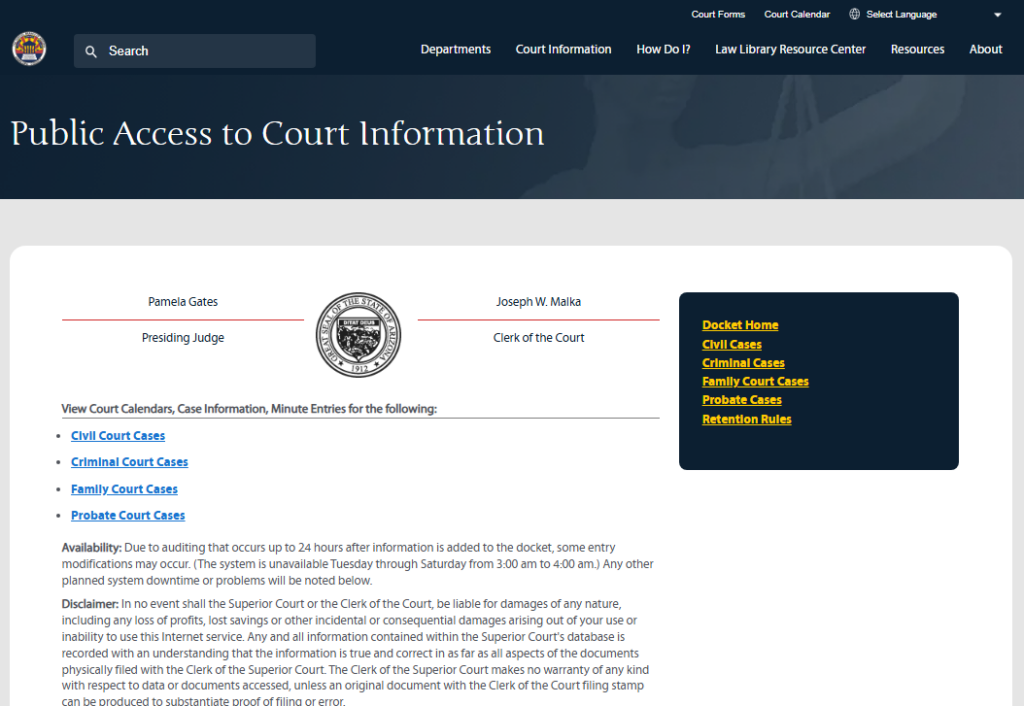
- Select the case type from the available court divisions
- View docket entries linked to hearings and filings
- Open individual case details for full records
This online case search system helps users track case activity over time. Each record may show filing updates, hearing schedules, and court-issued orders.
Search by Case Number, Party Name, and Filing Date
The Maricopa County case search tool supports multiple search inputs for legal case lookup. Each method serves different user needs.
- Case Number Search
This option gives the fastest results. A full case number brings up a single record inside the court records search system. - Party Name Search
Users can enter a plaintiff or defendant name. The system lists matching cases tied to that name. This method works well for broad case lookup results. - Filing Date Search
Date filters help narrow results to a specific time range. This is useful for reviewing cases filed within a set period.
Search inputs often include:
- Full or partial names
- Date ranges
- Case category selection
Filters, Limits, and Result Interpretation in Online Case Search
The Maricopa County court records search system includes filters that refine results. These filters help sort large volumes of docket search data.
Common filters include:
- Case status
- Court division type
- Filing date range
- Case category
Search results may not show sealed or restricted records. Some sensitive cases remain excluded from public view under court rules.
The Public Court Docket System
A court docket shows a structured list of events and updates for a legal case in Maricopa County. It works as a case activity record that tracks what happens from filing to final decision. It helps users review public court records and follow each case step by step through official updates.
What is a Court Docket in Maricopa County
A court docket is a case log maintained by the court. It lists every action taken in a case from start to finish. This record supports transparency in the legal process. Through a docket search, users can review case progress without visiting a courthouse. Each entry reflects a specific update in the case timeline.
Parts of a docket include:
- Case filing details
- Hearing dates
- Motion submissions
- Judge orders
- Final judgments
These entries form a clear case timeline that shows how a case moves through the system. Each update is recorded as a court entry for public reference.
What Users See in Public Court Records
Public court records in Maricopa County display structured case information through the docket system. The data helps users follow a hearing schedule and track legal outcomes.
Most docket pages show:
| Category | Details Shown |
|---|---|
| Hearings | Dates, time, courtroom details |
| Filings | Complaints, motions, responses |
| Orders | Judge directions or rulings |
| Judgments | Final case decisions |
Each section supports clarity on how a case progresses. Hearing updates show upcoming court dates. Filings reflect legal actions from both sides. Orders and judgments show official decisions issued by the court.
How to Use Minute Entries for Case Details
Minute entries provide short official notes from court hearings that summarize key actions in a case. They help explain what happened during a hearing and show updates in the court case history.
What Minute Entries Show
Minute entries are legal documents created by the court clerk during hearings. They record hearing summary details such as judge orders, filings, and case updates in an organized format. They often include dates, motions, rulings, and next hearing schedules.
These records act as quick reference points for reviewing progress in a case.
- https://courtminutes.clerkofcourt.maricopa.gov/index.asp
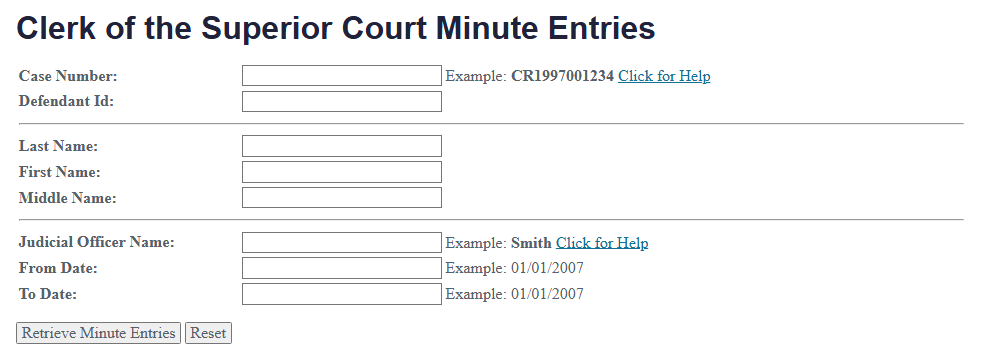
- hearing summary
- judge orders
- case updates
- filings and motions
- scheduling details
They form a written timeline that reflects each step in the court case history.
Why They Matter for Case Review
Minute entries help users track case progress without reviewing full transcripts. They provide a fast way to follow changes in legal documents linked to a case. They support a quick review of legal documents and clarify court actions taken by the judge. This helps users see how decisions affect the overall case flow.
| Element | Value |
|---|---|
| Minute entries | hearing summary |
| Judge orders | court directions |
| Case updates | status changes |
They also help attorneys and users confirm what happened during each court session and track important updates across the full court case history.
How to Get Full Court Documents & Certified Copies
Certified court records can be obtained through the Maricopa County court system by submitting a formal request for copies. These records include official documents such as judgments, filings, and hearing details validated by the clerk’s office. A certified copy carries a court seal and signature, confirming it as an official record for legal use, filing copies, or verification purposes.
Certified Copy Request Process for Court Records Search
A certified copy request starts with identifying the exact case record needed. Users must provide case numbers, party names, or filing dates during the court records search. After selection, the request moves into processing through the clerk’s office system.
Typical request steps include:
- https://www.clerkofcourt.maricopa.gov/records
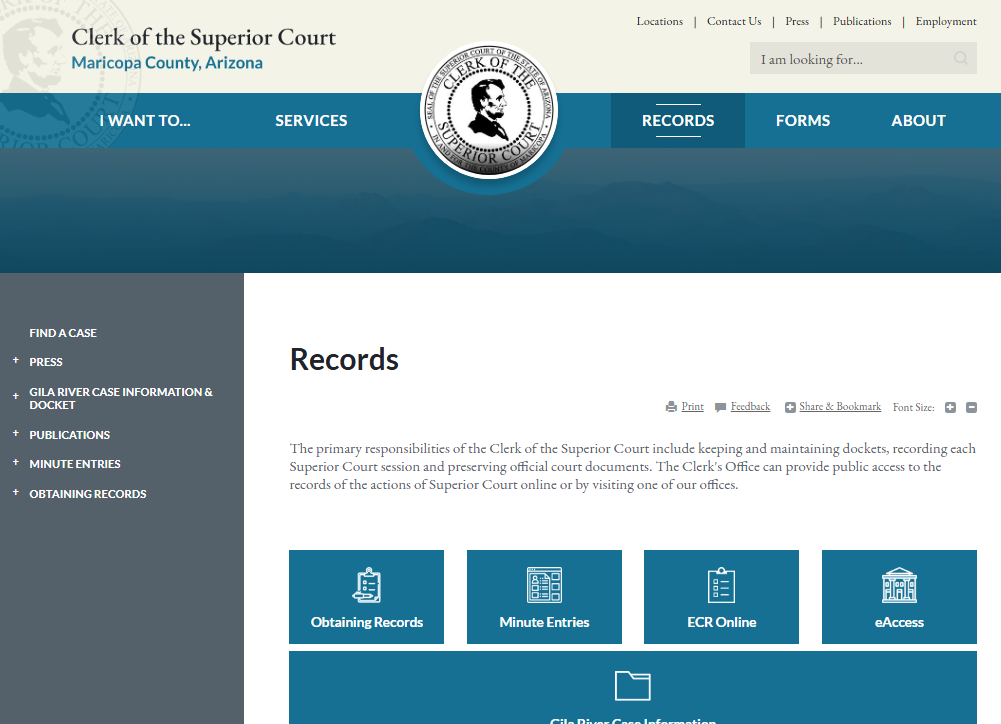
- Locating the case through the court records search system
- Selecting specific legal documents from the case file
- Submitting a certified copy request form
- Paying applicable fees for each page or certification
- Waiting for processing before pickup or delivery
Certified court records are stamped and signed once completed. These documents are used for hearings, appeals, and official verification.
Clerk Office Process and Document Request System
The clerk’s office manages all filing copies and certified court records within Maricopa County. Requests may be submitted in person, by mail, or through approved online channels, depending on record type. The document request system processes each order based on availability and case status.
Common request channels include:
- In-person request at the clerk’s office counter
- Mail-in request using case details and payment
- Online document request system for selected cases
Staff reviews each request to confirm record accuracy before release. Older cases may require additional processing time due to archived storage.
Fees for Certified Court Records and Filing Copies
Costs depend on the number of pages and the certification type. Each certified copy carries a fixed charge set by the court.
| Service Type | Typical Cost Range |
|---|---|
| Plain copy (per page) | $0.50 – $1.00 |
| Certified court record | $15 – $25 per document |
| Archive retrieval fee | Varies by case age |
| Mailing service | Extra postal cost |
Payment is usually accepted through cash, card, money order, or cashier’s check. Fee schedules may change based on court policy updates.
ECR Online & eAccess System
ECR Online and the eAccess system provide two different ways to review Maricopa County court case information and electronic court records. One system supports party-based viewing, and the other is designed for broader public case review and document viewing. These tools support the Maricopa County case search process by offering structured digital case data and court filings through a digital case system.
ECR Online
ECR Online works as a party-specific electronic court records platform. It is mainly used by case participants, attorneys, and authorized users connected to a case. This system shows detailed court file content tied to a specific party or case number. It supports structured case history review and hearing summaries.
Points about ECR Online:
- https://ecronline.clerkofcourt.maricopa.gov/login.aspx
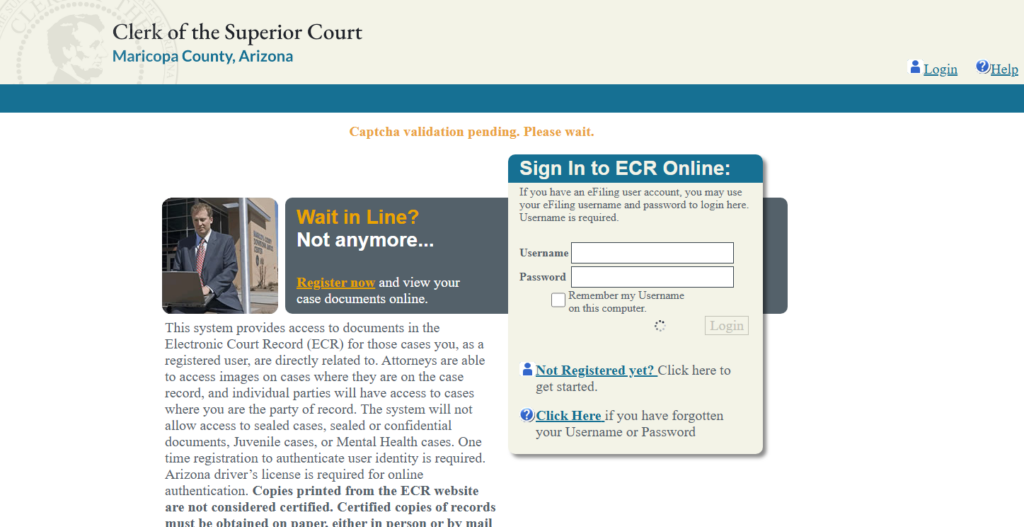
- Built for case-related parties
- Shows full electronic court records tied to cases
- Includes filings, orders, and judge notes
- Supports detailed court case history review
ECR Online often shows deeper case details compared to public systems. It focuses on case-specific data linked to parties involved.
eAccess System
The eAccess system is a public subscription-based platform used for reviewing court case information. It is designed for broader use and supports general case lookups. Users can review selected court documents and case updates through this digital case system.
Main features of eAccess:
- https://eaccess.azcourts.gov/
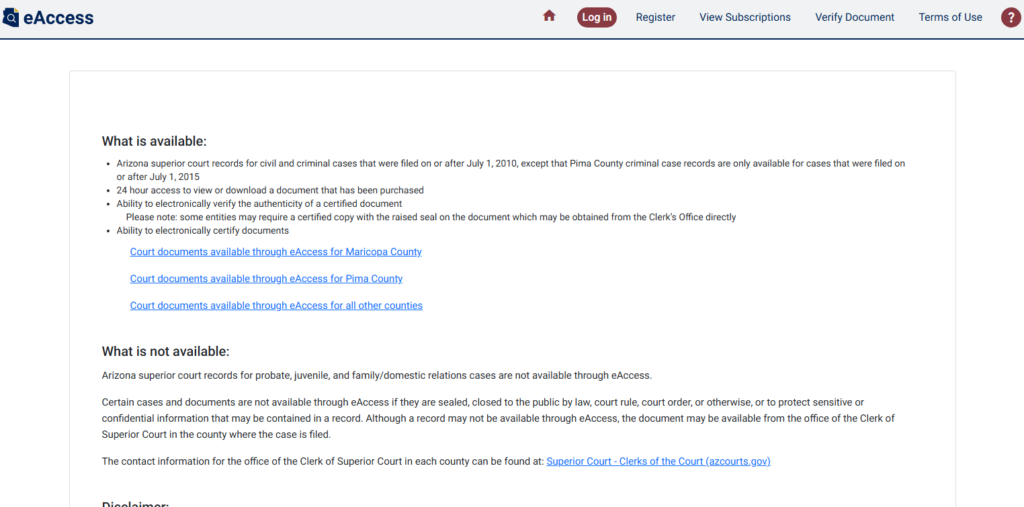
- Subscription-based public platform
- Displays selected case filings and updates
- Supports name or case number searches
- Used for basic court record viewing
This system supports users who need regular case information without party-level authorization.
ECR Online vs eAccess System Comparison
Both systems support electronic court records, yet they serve different purposes and user groups.
| Feature | ECR Online | eAccess System |
|---|---|---|
| User Type | Case parties, attorneys | Public users |
| Data Depth | Full case record details | Selected case information |
| Purpose | Case-specific review | General case lookup |
| Case History | Full legal case history | Limited updates and filings |
| Format | Party-linked records | Subscription case viewer |
What Court Records Are Public vs Restricted?
Court records in Maricopa County fall into two main categories: public court records and restricted files. Public records can be viewed by the general public, while restricted files stay limited under privacy laws and court confidentiality rules. These rules separate open case information from sensitive materials. They help balance transparency with legal protection for private matters.
Public Court Records in Maricopa County
Public court records include case information that supports court transparency and accountability. These records often show case history, party names, and hearing activity. Many civil, traffic, and standard criminal matters fall in this category.
Common items in public court records include:
- Civil case filings and motions
- Traffic violation records
- Criminal case summaries
- Court orders and final judgments
- Hearing schedules and docket entries
These records form a large part of the court case history. They help track case progress from filing to final decision. In many situations, they show judge actions and filing updates in a simple format.
Restricted and Sealed Case Records
Some records stay limited under privacy laws and court confidentiality rules. These files are not open for general review. Only authorized parties or approved requests may view them under strict conditions. This category includes sealed documents and sensitive case types that require strong protection.
Restricted or confidential records often include:
- Juvenile case records
- Adoption files
- Sealed criminal case documents
- Mental health proceedings
- Protected witness information
These files fall under strict restricted access rules. Courts protect them to maintain privacy and legal safety for involved parties.
Common Problems When Searching Court Records
A court records search often brings errors that block accurate results or show missing case details. Many users face mismatched names, delayed updates, and confusion around sealed case files. These problems usually come from data entry issues, update timing gaps, or legal restrictions on record visibility. As a result, court case history may look incomplete or inconsistent during a search.
Name Mismatch Issues in Court Records Search
One of the most frequent search errors comes from name-mismatch issues. Small spelling differences or alternate name formats can stop a record from appearing in results. This is common in court records search systems that rely on exact input matching.
Typical case mismatch causes include:
- Misspelled first or last names
- Use of initials instead of full names
- Hyphenated or changed surnames
- Data entry variations across court filings
These issues lead to case mismatch, where the correct record exists but does not show up. Using flexible search formats or partial name input often reduces missing results in court databases.
Record Delay and Sealed Case Confusion
Another common issue is record delay, where new filings or hearing updates take time to appear online. Court systems may update data in batches, which creates a gap between real-time events and published records. Sealed or restricted cases also create confusion.
These records are legally hidden from public view, even if the case exists in the system.
| Issue Type | What Happens | Result |
|---|---|---|
| Record delay | Updates post late | Missing recent hearings |
| Sealed case | Data hidden by court | No visible case details |
| System sync gap | Database lag | Outdated record display |
These factors often cause incomplete results during court case history checks. Careful search input and awareness of public limits help reduce confusion during searches.
FAQs – Maricopa County Court Records
Maricopa County court records FAQs explain how the Maricopa County case search system works and how users view public case information. These records show hearings, filings, and docket updates through the official court records search system in Arizona courts.
How do I search court records?
Court records can be searched through the official Maricopa County case search portal using a name or case number. The system returns matching civil, criminal, family, and probate cases. Users can then open a case to view docket entries and filings. Each record reflects updates entered by court staff or clerks.
Are Maricopa County court records public?
Most Maricopa County court records are public under the Arizona public records law. This includes civil, criminal, and probate case details. Some records remain restricted, such as juvenile matters or sealed cases. Public users can still view general case status through the court records search system.
How do I find a case number?
A case number can be found through a name search in the Maricopa County case search tool. It also appears on court documents, filings, and docket entries. Once found, the case number helps pull the full case history quickly. Clerk databases also store case numbers for reference.
Can I get certified copies online?
Certified copies of court records can be requested through the official clerk system. Some documents may be available online, while others require a formal request. Fees and identity checks may apply depending on the record type. These certified records are often used for legal or official purposes.
How often are court records updated?
Court records in Maricopa County are updated regularly as new actions occur in a case. Changes appear when judges issue orders, hearings are held, or filings are submitted. The Maricopa County case search system reflects these updates after court staff enter them into the database. Users may see updates the same day or within a short processing time.