
The Clerk of Superior Court Services in Maricopa County manages official court records, filings, and case documentation for the Superior Court system. This office supports legal administration by keeping court case history accurate, structured, and available for public review.
The clerk of court, Maricopa County, functions as a core part of judicial support within Arizona court operations, handling records authority, docket updates, and legal document processing across civil, criminal, family, and probate matters. The maricopa county clerk az office plays a direct role in court workflow by ensuring filings are recorded correctly, and case information remains consistent for judges, attorneys, and the public.
What is the Maricopa County Clerk of Court?
The Maricopa County Clerk of Court is the official office responsible for managing court records and supporting court operations in Arizona. The clerk of the court, Maricopa County, works within the state judicial system to handle case files, filings, and legal documentation. The maricopa county clerk az serves as a central administrative authority that keeps court records accurate, organized, and available for judicial review. This office does not decide cases but plays a key role in legal administration and court case history tracking.
Role of the Maricopa County Clerk of Court
The court clerk’s office supports daily legal administration within the Superior Court system. It handles case processing, records authority, and judicial support functions that keep court operations structured and consistent.
Responsibilities include:
- Managing court filings and legal documents
- Maintaining official court case history
- Recording hearing summaries and minute entries
- Processing orders, judgments, and notices
- Supporting judges with case scheduling data
These duties connect directly with court operations and help maintain accurate legal records used by attorneys, judges, and the public.
Differences Between Judge and Court Clerk
A judge and a court clerk serve different functions within the Arizona court system. The judge makes legal decisions, while the clerk manages documentation and case records.
| Role | Main Function | Authority Type |
|---|---|---|
| Judge | Decides outcomes in court cases | Judicial authority |
| Court Clerk | Manages filings and records | Administrative authority |
Judges focus on hearings, rulings, and legal interpretation. The clerk of the court in Maricopa County focuses on recordkeeping, filings, and court data management.
Clerk of Court Online Services Portal
The Maricopa County Clerk of Court online portal provides a centralized system for handling court-related services digitally. It supports public court information, case tools, and self-service options through one structured platform https://www.clerkofcourt.maricopa.gov/. The clerk of the Court of Maricopa County portal offers fast digital court services through a secure web-based system. It helps users complete many tasks without visiting the court clerk’s office in person.
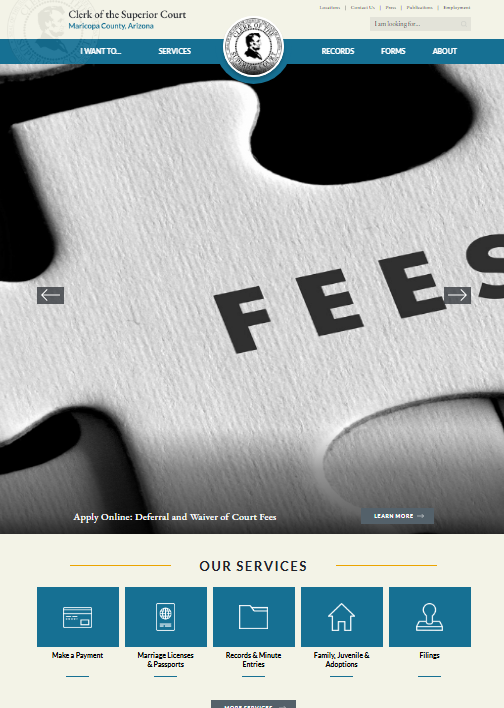
Official Online Portal Structure for Clerk of Court, Maricopa County
The official portal for the Clerk of Superior Court in Maricopa County presents a structured layout focused on online court services. It organizes tools and resources so users can quickly locate needed services through a clear menu system. The homepage features direct links to case search tools, filing services, and payment options. It also connects users to records, schedules, and hearing information within the same platform.
Service areas include:
- Case search and case status tools
- eFiling and document submission options
- Fee payment and receipt services
- Court record request forms
- Jury duty information pages
The system supports digital court services and improves case handling speed through centralized navigation. It also supports a public access system that displays selected court data for public reference.
“I Want To” Tools and Service Categories in Court Clerk Office Portal
The portal uses an “I Want To” tools section to simplify task selection https://www.clerkofcourt.maricopa.gov/i-want-to for users. This feature connects users directly with common actions instead of requiring deep menu browsing.
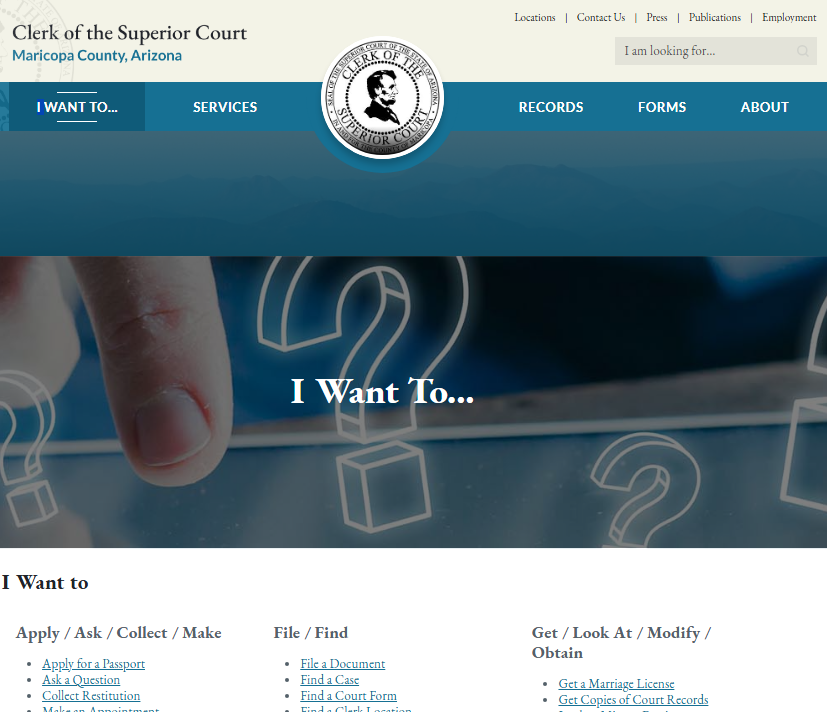
Common options in this section include:
- I want to search a case record
- I want to file a court document
- I want to pay court fees
- I want to check hearing dates
- I want jury service details
These tools reflect structured online legal tools used in modern court systems. They reduce steps by grouping tasks based on user intent rather than technical categories.
Main Responsibilities of the Clerk of Superior Court
The Clerk of Superior Court carries out core duties that support court operations and official judicial processes. This office maintains official case documentation, handles filings, and manages key administrative services linked to the court system. These responsibilities cover record handling, financial processing, and public service tasks that support accurate and organized court activity.
Court Records Management and Legal Filings
The Clerk of Superior Court manages court records management systems that store and organize case data. This includes legal filings, case updates, and all submitted court paperwork. Every filing document enters a structured judicial filing system that tracks case progress. Staff handles filing documents submitted by attorneys, law enforcement, and the public.
Functions include:
- Organizing civil, criminal, and probate case files
- Processing incoming legal filings with case numbers
- Maintaining official records for court reference
- Updating case documentation for ongoing matters
- Preserving historical court documentation for legal reference
This system supports accurate case documentation and keeps all official records aligned with court activity.
Minute Entries, Document Filing System, and Case Documentation
The Clerk records minute entries during court proceedings. These entries summarize court actions, rulings, and procedural updates in real time. A structured document filing system supports fast retrieval of court documentation. It also keeps all case documentation consistent across multiple departments.
Core responsibilities in this area include:
- https://courtminutes.clerkofcourt.maricopa.gov/index.asp
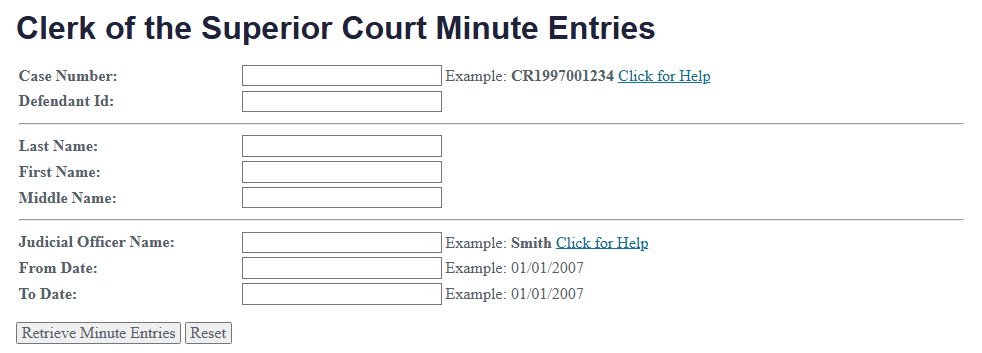
- Recording minute entries during hearings
- Updating judicial filing system logs
- Filing motions, petitions, and court orders
- Managing docket entries for active cases
- Supporting digital and physical case documentation storage
This process keeps court documentation accurate and supports transparency in court records. It also helps attorneys and the public follow case progress through official channels.
Financial Transactions, Marriage Licenses, and Passport Processing
The Clerk also handles financial and public service operations linked to the court. This includes processing court fees, fines, and bond payments tied to active cases. In addition, the office issues marriage licenses and supports passport application processing services in many jurisdictions. A large part of this role includes secure handling of funds and official records storage, including court exhibits submitted during hearings.
| Service Area | Function |
|---|---|
| Financial Transactions | Collects fees, fines, and bond payments |
| Marriage Licenses | Issues legal marriage documents |
| Passport Services | Processes applications and verification |
| Exhibit Storage | Secures physical court evidence |
These services support both legal and public needs while maintaining organized court documentation and financial accountability.
How to File Court Documents in Maricopa County
Court documents in Maricopa County are submitted through structured legal filing steps managed by the Clerk of Superior Court Services. The process includes both in-person filing at court locations and electronic filing through https://www.clerkofcourt.maricopa.gov/services/filing-information, the official eFiling system, depending on case type and user preference. Each filing follows a court intake system that reviews document accuracy before acceptance into the case record.
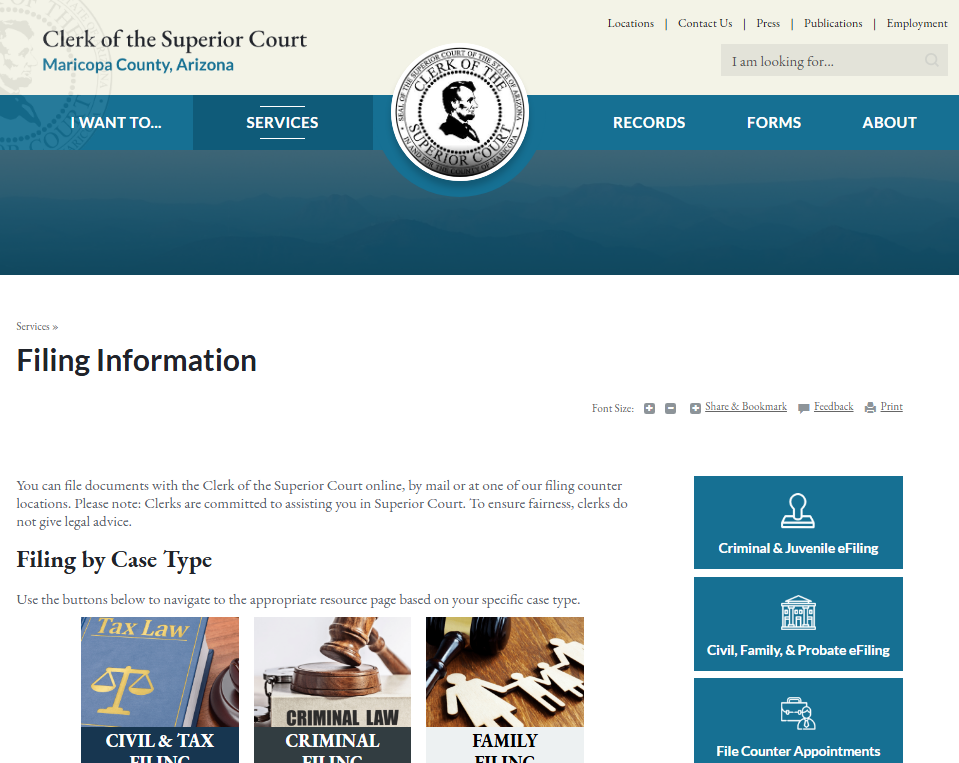
Types of Court Filings in Maricopa County
Court filing documents in Maricopa County are divided into key case categories that follow specific legal filing rules. Civil filings cover disputes such as contracts, property issues, and financial claims, while criminal filings include charges, motions, and court-related actions. Family filings involve divorce, custody, child support, and protective orders, and probate filings handle estates, wills, guardianship, and conservatorship matters. Each category uses a defined case filing procedure, and selecting the correct type supports proper document submission and smoother processing within the court intake system.
In-Person Filing Process for Legal Filings
In-person filing remains available for those who prefer direct submission of court paperwork. Clerks review filing documents at intake counters before entering them into the system.
Steps for in-person filing:
- Prepare all required forms and copies
- Visit a Maricopa County Clerk of Superior Court location
- Submit documents at the intake counter
- Pay applicable filing fees
- Receive stamped copies for records
Court staff checks formatting, signatures, and case details during submission. If missing items appear, documents may be returned for correction before acceptance.
Electronic Filing System: eFiling Process
Maricopa County supports an electronic filing system for faster document submission. This system allows users to upload filings without visiting a courthouse.
Key steps in eFiling:
- Create an account in the approved eFiling portal
- Select case type and filing category
- Upload PDFs or required forms
- Pay fees through online payment tools
- Receive electronic confirmation after submission
The court intake system processes submissions in order received. Time stamps track filing documents for case records.
Filing Locations and Service Points
Maricopa County provides multiple filing locations where court documents can be submitted, depending on the case’s needs. These include the Downtown Phoenix Superior Court location, along with Southeast, Northeast, and Southwest Regional Court Facilities. Each office accepts document submission during working hours and handles different categories of legal filings. Some locations also offer self-service options for basic case-filing tasks, allowing users to complete parts of the court filing process without full counter assistance.
Common Mistakes in Filing Documents
Errors in filing documents often delay processing within the court intake system and can result in rejection or resubmission. Common mistakes include missing signatures, incorrect case numbers, outdated forms, and incomplete payment of filing fees. Filing under the wrong category is another frequent issue, along with incomplete or unclear document submission. Careful preparation of legal filings before submission reduces delays and supports smoother acceptance in the court filing process.
Common Rejection Reasons in the Court Filing Process
The clerk may reject filings if they do not meet court rules or formatting standards. Rejection usually means resubmission with corrections.
Top rejection reasons:
- Non-compliance with Arizona court formatting rules
- Illegible or incomplete paperwork
- Missing supporting documents
- Incorrect filing fees or payment issues
- Filing sent to the wrong division
Proper review before submission reduces rejection chances and supports smoother processing of court records.
eFiling System Guide: Electronic Court Filing
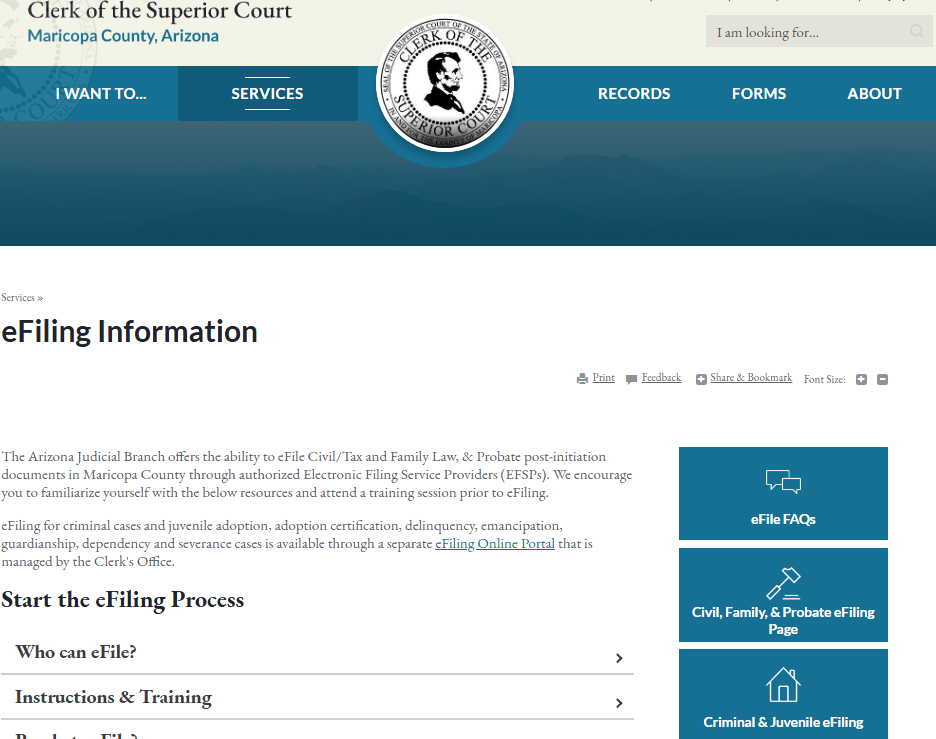
Electronic filing lets parties submit legal filings through a secure court portal without paper handling. It supports fast digital submission of filing documents and case records. The system works as a central case upload system for courts https://www.clerkofcourt.maricopa.gov/services/efiling-information. This electronic filing system helps reduce delays in filing documents and improves record handling. It also keeps legal filings organized inside the court portal for review and processing.
What eFiling means in court services
Electronic filing refers to a digital submission process used by courts for legal filings. It replaces paper delivery with a secure online method through a court portal. Users upload filing documents, pay fees, and track case status in one system. This system supports faster handling of records and reduces manual entry work at the clerk’s office. It also keeps case data stored in a structured case upload system.
Who can use the electronic filing system
The electronic filing system supports several filer types:
- Licensed attorneys
- Self-represented parties
- Law firms and legal assistants
- Registered government agencies
Each filer must create a court portal account before submitting legal filings. The account links filings to the correct case records and filing documents.
Supported case types for filing documents
Not every matter accepts electronic submission. Most courts allow eFiling for:
- Civil cases
- Family law matters
- Probate filings
- Small claims submissions
- Selected criminal post-filing motions
Case eligibility depends on court rules and filing category. The court portal usually displays supported case types before submission.
Court portal login and case upload system
The court portal works as the main entry point for digital submission. Users sign in with registered credentials and select the correct case upload system section.
Steps include:
- Log in to the court portal
- Select case type
- Upload filing documents
- Review filing details
- Submit legal filings for processing
The system assigns a confirmation number after submission for tracking purposes.
Court Records, Minute Entries & Case Lookup
Court records include official documentation of everything recorded in a case, from filings to final orders. These records reflect the full case history within the court system.
Minute entries summarize what happens during hearings and hearings-related actions in short written form. These materials support judicial record tracking and form part of the overall docket system used by courts for structured case monitoring.
Court Records & What They Include
Court records cover a wide set of documents created during legal proceedings. They form the core of records management inside the court system.
Common items include:
- Case filings and petitions
- Judge rulings and written orders
- Hearing schedules and notices
- Evidence lists and submitted documents
- Final judgments and case closures
Each entry helps build a complete case history. Legal professionals and the public may review these records based on court rules. In many situations, these documents reflect official judicial activity in a structured format tied to the docket system.
Case Lookup Process & Minute Entries Meaning
Case lookup relies on searching a case number, party name, or filing date within the court database. The system organizes data through structured judicial record tracking, which connects each filing to its related case.
Minute entries play a key role in this process. They summarize courtroom activity, such as:
- Hearing outcomes
- Judge instructions
- Scheduled next steps
- Procedural updates
These short notes act as a timeline inside the docket system. They help users follow case progress without reading full transcripts.
Public Rules, Limits & Records Management Controls
Court records are often available for public review, but certain limits apply. Sensitive details like sealed filings or juvenile matters remain restricted.
Limitations include:
- Sealed or confidential case files
- Expunged records removed by court order
- Restricted family or juvenile case data
- Privacy protections for sensitive information
Courts manage these records through structured records management systems. This process maintains accuracy, organizes filings, and supports long-term storage of judicial documents.
Marriage Licenses & Passport Services
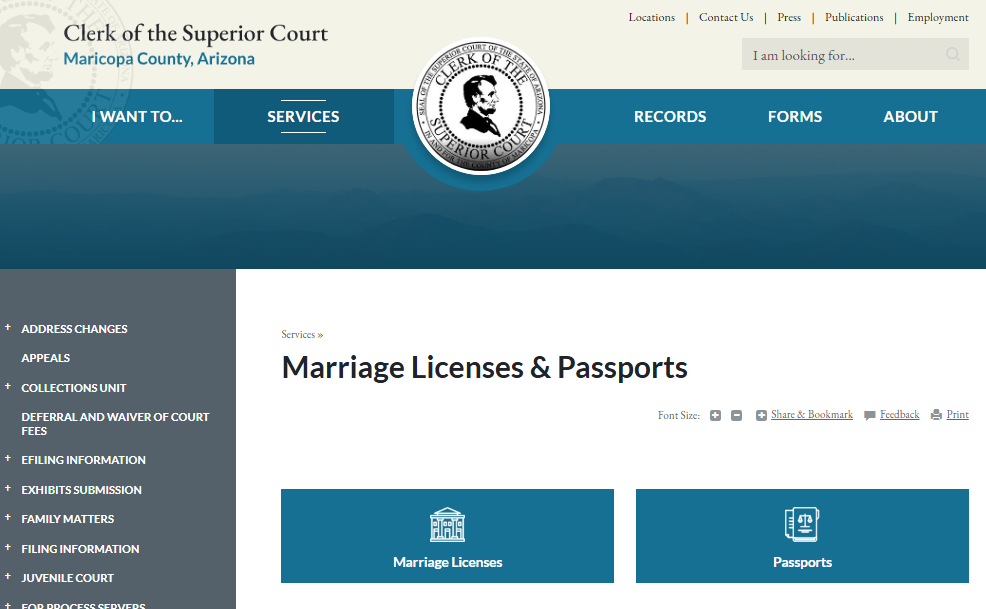
The Clerk of Superior Court provides marriage license services and passport application acceptance at designated service locations. The marriage license office supports couples with legal marriage documents and identity https://www.clerkofcourt.maricopa.gov/records/marriage-licenses-passports processing for official civil registration. These services at the Maricopa County Clerk AZ offices help residents complete marriage licensing steps and submit passport applications in one place.
Marriage License Office Services in Maricopa County Clerk AZ
The marriage license office handles the issuance of legal marriage documents required for civil registration in Arizona. Applicants complete identity processing and submit the required paperwork before receiving approval for marriage authorization.
Eligibility rules stay simple and require basic documentation:
- Valid government-issued photo ID
- Proof of age (18+ standard requirement)
- Social Security details, if available
- No blood test requirement in Arizona
An appointment system is often used to manage in-person visits and reduce wait times. Walk-in service may exist at selected locations, depending on daily volume.
Passport Application Acceptance & Civil Registration Support
Selected Maricopa County Clerk AZ locations accept passport applications for first-time applicants and renewals under specific conditions. Staff verifies identity by processing documents before submission to federal agencies.
Passport services commonly include:
- DS-11 application acceptance
- Photo compliance checks
- Fee collection processing
- Document review for identity confirmation
Civil registration supports links to marriage records with official state documentation. This helps residents maintain accurate legal identity records for travel and marital status verification.
Fees, Payments, Fines & Bonds
Court-related charges in the Clerk of Superior Court Services cover filing costs, penalties, and deposit requirements tied to case activity. These payments support the financial court system and keep legal filings moving through proper channels. Court users deal with structured costs such as filing charges, penalty settlements, and bond deposits set by the judicial authority. The clerk’s office handles payment processing for different case types, including civil, criminal, and traffic matters. In most situations, court payments follow fixed schedules based on case classification and court orders. At the same time, judicial records track all judicial fees linked to each filing or motion.
Court Fees and Payment Processing Options
Court fees apply at the time of submitting legal filings, motions, or case initiation documents. These charges vary based on case type and court rules. Fine payments usually come from traffic violations, criminal judgments, or late compliance orders issued by the court. Bond deposits work as financial security in criminal cases. They may be refunded after case closure if all court conditions are met. Refund rules depend on the case outcome and the compliance status recorded by the clerk’s office.
Common payment channels include:
- Online payment portals using a card or an e-check
- In-person cashier windows at the court office
- Mail-in payment with case reference details
- Authorized payment kiosks in select locations
| Payment Type | Purpose Example | Processing Status |
|---|---|---|
| Court Fees | Case filing charges | Immediate/Posted |
| Fines | Traffic or penalty charges | Posted after payment |
| Bond Deposits | Case security amounts | Refundable if eligible |
Late payments may result in added penalties or case delays. Refund processing for eligible bond deposits follows review of case records within the court’s financial tracking system.
Clerk Office Locations & Contact
Maricopa County Clerk AZ services are provided through several courthouse locations and regional service centers across the county. The court clerk’s office supports filings, records, and customer service at each site for easier public support.
Main Court Clerk Office Locations in Maricopa County
The Clerk of Superior Court operates multiple service points for case processing and public assistance. Each courthouse handles different legal services such as filings, records requests, and case updates.
Primary locations include:
- Downtown File Counter – Central Court Complex
201 W. Jefferson St., Phoenix, AZ 85003 - Southeast Regional Center
222 E. Javelina Dr., Mesa, AZ 85210 - Northeast Regional Center
18380 N. 40th St., Phoenix, AZ 85032 - Northwest Regional Center
14264 W. Tierra Buena Ln., Surprise, AZ 85374
These locations serve different regions of Maricopa County. As a result, residents can visit a nearby courthouse instead of traveling long distances.
Customer Service Centers for Marriage Licenses & Passports
Certain services, such as marriage licenses and passport processing, require scheduled appointments at designated service centers. The Maricopa County Clerk, AZ, provides structured appointment support to manage public flow.
Appointment-based locations include:
- Customer Service Center – Downtown
601 W. Jackson St., Phoenix, AZ 85003 - Northeast Regional Center – Phoenix
18380 N. 40th St., Phoenix, AZ 85032 - Northwest Regional Center – Surprise
14264 W. Tierra Buena Ln., Surprise, AZ 85374 - Southeast Regional Center – Mesa
222 E. Javelina Dr., Mesa, AZ 85210
After booking, users receive a confirmation message with a QR code for check-in at the counter. This system helps reduce wait times and improve service flow at busy locations.
Clerk of Court FAQs
Clerk of Court services in Maricopa County handle filing documents, court record searches, fee payments, eFiling, and marriage licenses. The Clerk of Court of the Maricopa County office manages official legal filings and maintains public court records for different case types.
How do court documents get filed?
Filing documents at the Clerk of Court Maricopa County office involves submitting papers linked to civil, family, probate, or criminal cases. These filings become part of official legal filings recorded in the court system. Documents can be filed in person at clerk offices, through approved online systems, or by mail for selected forms. Common submissions include motions, petitions, responses, and affidavits. Each filing must follow court rules and include correct case details.
How are court records searched?
Court record search services allow users to check case details, hearings, and docket updates. The Clerk of the Court of Maricopa County provides public tools for searching active and past cases. Search options include case number lookup, party name search, and citation search. Users can view case status, court dates, and filed documents. Some records stay restricted under Arizona court privacy rules.
What is eFiling in court systems?
eFiling is an electronic system used for submitting legal filings without visiting the courthouse. It supports faster processing and reduces paper-based work. Users upload documents through an online portal and receive instant filing confirmation. It is widely used for civil, family, and selected criminal case documents. The system also stores digital copies for future reference.
Where are court fees paid?
Court fees are paid through multiple official channels managed by the clerk’s office. These fees apply to filings, record copies, and other court services. Payments can be made online using debit or credit cards, in person at clerk counters, or by mail using money orders. Fee amounts depend on the case type and filing category under Arizona court schedules.
How is a marriage license obtained?
A marriage license is issued by the Clerk of Court of the Maricopa County office for couples planning to marry in Arizona. It serves as official legal permission for marriage. Both applicants must appear in person with valid identification and complete the application form. A fee is required at the time of application. Arizona does not require a blood test, and the license is valid for a limited period.