
The maricopa county superior court az operates as the primary trial court within Arizona’s judicial structure and holds authority over major legal matters across Maricopa County. It functions under the state court system and handles serious civil, criminal, and family law cases that require formal hearings and final judgments. It also manages case filings, courtroom proceedings, and official record decisions that impact residents across the county.
The superior court of Maricopa County serves as a court of general jurisdiction, meaning it reviews evidence, hears testimony, and issues binding rulings across multiple case types. It plays a central role in the Arizona judicial system, including felony cases, civil disputes, probate matters, and family law issues such as custody and divorce, while maintaining a direct connection with county-level legal processes and public court services. It also supports jury trials, pre-trial motions, and appeals from lower courts within its authority.
What is the Maricopa County Superior Court?
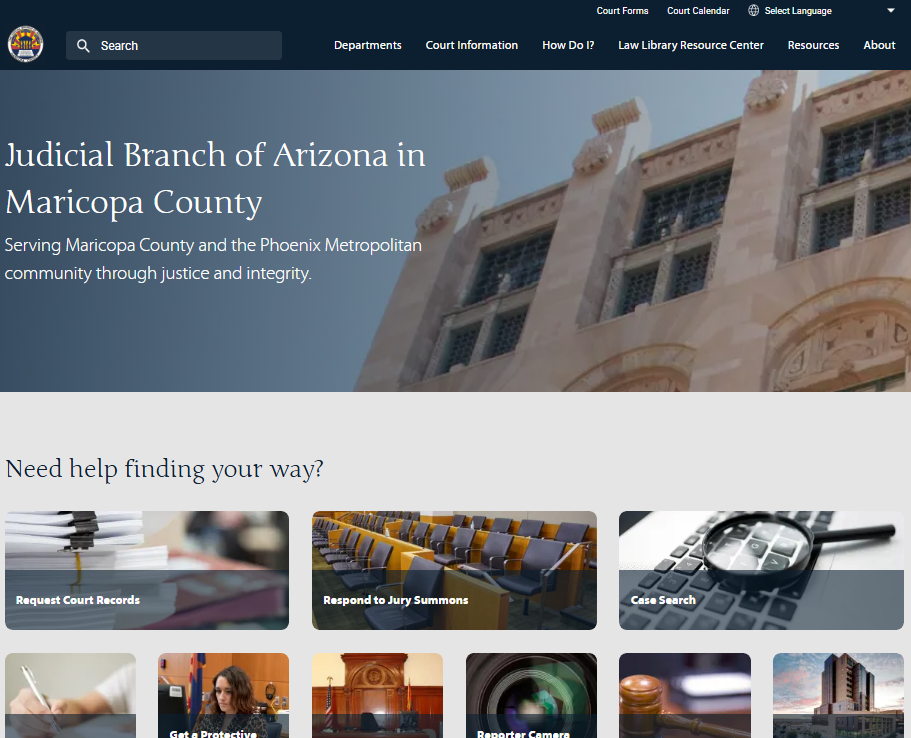
The Maricopa County Superior Court is the main state trial court serving Maricopa County, Arizona. It handles major civil, criminal, family, and probate cases under Arizona state law. The Maricopa County Superior Court, AZ, operates as part https://superiorcourt.maricopa.gov/ of Arizona’s statewide judicial system and carries broad legal authority over serious legal disputes. The Superior Court of Maricopa County processes cases from filing through final judgment within its court jurisdiction.
Court Structure of Maricopa County Superior Court
The Maricopa County Superior Court operates as a single, unified trial court with multiple divisions. Each division focuses on a specific case category to support organized case processing across the county. The court system structure includes judges assigned to specialized areas. These divisions help manage high case volumes in a large county.
Divisions include:
- Civil Division – handles lawsuits, contract disputes, and property matters
- Criminal Division – manages felony cases and major criminal charges
- Family Court – processes divorce, child custody, and support cases
- Probate Court – oversees estates, wills, and guardianship matters
- Juvenile Court – handles cases involving minors
Each division works under the same superior court authority. This setup supports efficient case distribution and consistent application of Arizona state law.
Trial Court Role in the Arizona State Court System
The Maricopa County Superior Court functions as a trial court within the Arizona state court system. Trial courts hear cases first and evaluate facts, evidence, and legal claims. Judges in this court conduct hearings, review evidence, and issue rulings. In jury trials, citizens may decide the outcome based on the presented facts. The court holds original jurisdiction in the most serious legal matters. This means cases usually start here rather than moving from lower courts.
Common case types include:
- Felony criminal cases
- High-value civil disputes
- Domestic relations cases
- Probate and estate matters
Trial proceedings follow Arizona procedural rules. Case processing includes filing, pre-trial motions, hearings, trial, and final judgment.
Role in the Arizona Judiciary and Legal Authority
The Maricopa County Superior Court plays a central role in Arizona’s judiciary. It supports the enforcement of state laws through formal court proceedings and binding judgments. This court holds statewide legal authority within its jurisdiction. It also connects with appellate courts for case reviews when appeals occur.
| Function Area | Court Role |
|---|---|
| Case processing | Handles filings to final judgment |
| Legal authority | Applies Arizona state law |
| Jurisdiction | County-wide trial jurisdiction |
| Appeals path | Sends cases to Arizona Court of Appeals |
The court also supports public record maintenance and legal transparency. Court decisions contribute to Arizona case law and legal consistency across the state court system.
How to Search Maricopa County Court Cases
Maricopa County court cases can be searched through the official Superior Court online docket system using names or case numbers. The case lookup Maricopa County tool gives public records, docket entries, and case status details in a structured online database.
Direct Court Search Link
The main entry point for court records is the Superior Court docket system. It supports civil, criminal, family, and probate case tracking in one place.
Official case search page:
- https://www.superiorcourt.maricopa.gov/docket/index.asp
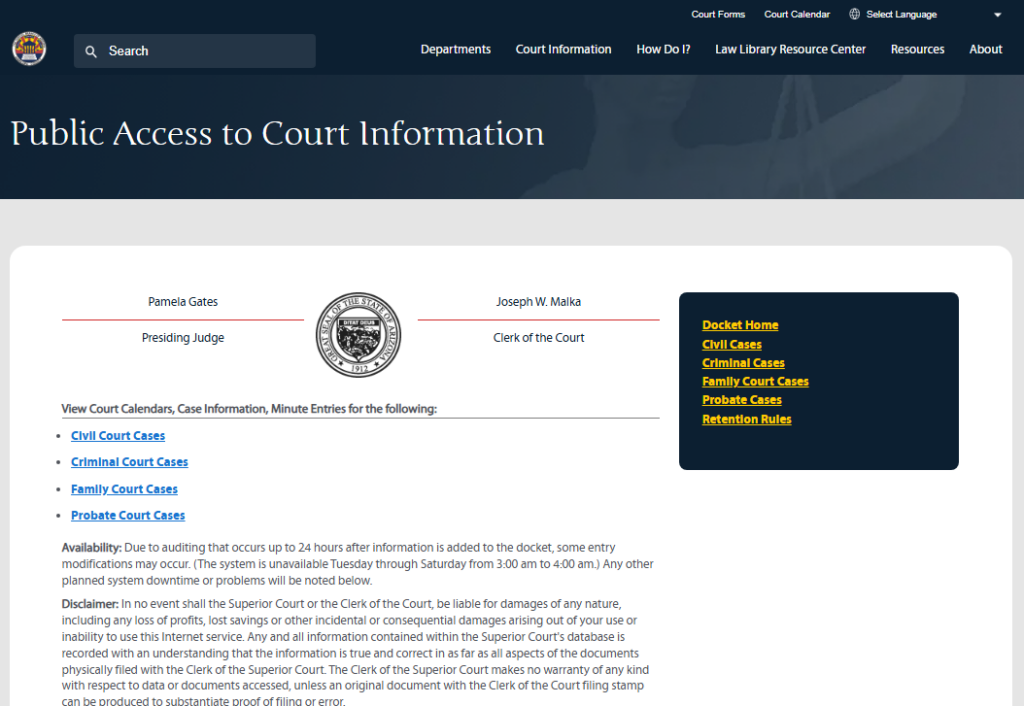
This portal works as a centralized public records system. It allows users to review case updates, court calendars, and docket activity without visiting a courthouse.
How to Use the Maricopa County Case Search Tool
The Maricopa County court records search tool follows a simple process. It is designed for public use and supports both basic and detailed case lookup options.
Steps process:
- Open the official docket search page
- Select search type (name or case number)
- Enter details in the search fields
- Click the search button
- Review results from the online database
The system pulls data from the court docket search records. It updates regularly as new filings and hearings are added.
Search Methods in Case Lookup, Maricopa County
The case lookup in the Maricopa County system supports two main search methods. Each method works for different needs and levels of detail.
Name-Based Search
Name search is used when the case number is unknown. Users can enter:
- First name
- Last name
- Partial name
This method shows multiple matching results from public records. It works well for general case tracking and docket search.
Points:
- Broader results list
- May include multiple cases per person
- Useful for public record review
Case Number Search
Case number search is more precise. Each court case has a unique number linked to filings and updates.
Example format: CR2023-001234
Points:
- Direct match to one case
- Faster case tracking
- Reduced unrelated results
This method is commonly used for checking exact case status in the Maricopa County court records search system.
What is the Maricopa County Clerk of Court?
The Maricopa County Clerk of Court is the official office responsible for managing court records and supporting court operations in Arizona. The clerk of the court, Maricopa County, works within the state judicial system to handle case files, filings, and legal documentation. The maricopa county clerk az serves as a central administrative authority that keeps court records accurate, organized, and available for judicial review. This office does not decide cases but plays a key role in legal administration and court case history tracking.
Role of the Maricopa County Clerk of Court
The court clerk’s office supports daily legal administration within the Superior Court system. It handles case processing, records authority, and judicial support functions that keep court operations structured and consistent.
Responsibilities include:
- Managing court filings and legal documents
- Maintaining official court case history
- Recording hearing summaries and minute entries
- Processing orders, judgments, and notices
- Supporting judges with case scheduling data
These duties connect directly with court operations and help maintain accurate legal records used by attorneys, judges, and the public.
Differences Between Judge and Court Clerk
A judge and a court clerk serve different functions within the Arizona court system. The judge makes legal decisions, while the clerk manages documentation and case records.
| Role | Main Function | Authority Type |
|---|---|---|
| Judge | Decides outcomes in court cases | Judicial authority |
| Court Clerk | Manages filings and records | Administrative authority |
Judges focus on hearings, rulings, and legal interpretation. The clerk of the court in Maricopa County focuses on recordkeeping, filings, and court data management.
Case Types Handled by Superior Court
Maricopa County Superior Court handles a wide range of legal matters across civil, criminal, and family law. Each category follows its own legal process and case structure. These case types cover disputes, charges, and domestic relations filed within the county system. The court hears both private disputes and state-level charges. It also handles sensitive family-related matters involving children and domestic responsibilities.
Civil Cases
The civil court in Maricopa County deals with disputes between people, businesses, or organizations. These civil court matters focus on resolving legal cases without criminal penalties. The main goal is to decide liability and damages. Civil court cases often involve claims where one party seeks compensation or legal action against another. These legal cases follow formal procedures, including filings, responses, hearings, and trial settings when needed.
Common civil case types include:
- https://superiorcourt.maricopa.gov/departments/superior-court/civil/
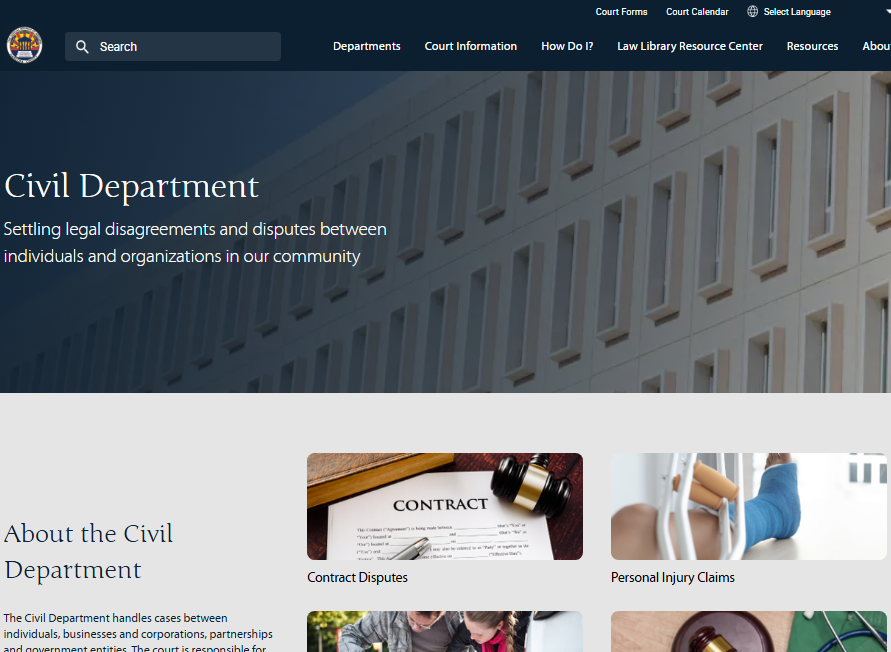
- Contract disputes between businesses or individuals
- Property disputes involving ownership, leases, or boundaries
- Personal injury claims, such as accidents or negligence
- Business-related lawsuits involving service failures or financial disagreements
Many civil court matters move through negotiation phases first. Arbitration or settlement talks may resolve disputes before trial. When cases proceed, a judge reviews evidence, witness statements, and legal arguments.
Elements seen in civil court:
| Element | Description |
|---|---|
| Lawsuits | Formal claims filed by one party against another |
| Disputes | Conflicts involving rights, property, or agreements |
| Arbitration | Private resolution process outside full trial |
| Damages | Financial compensation ordered by the court |
Civil court decisions depend on the strength and legal standards of proof. These rulings can affect financial outcomes and legal responsibilities between parties.
Criminal Cases
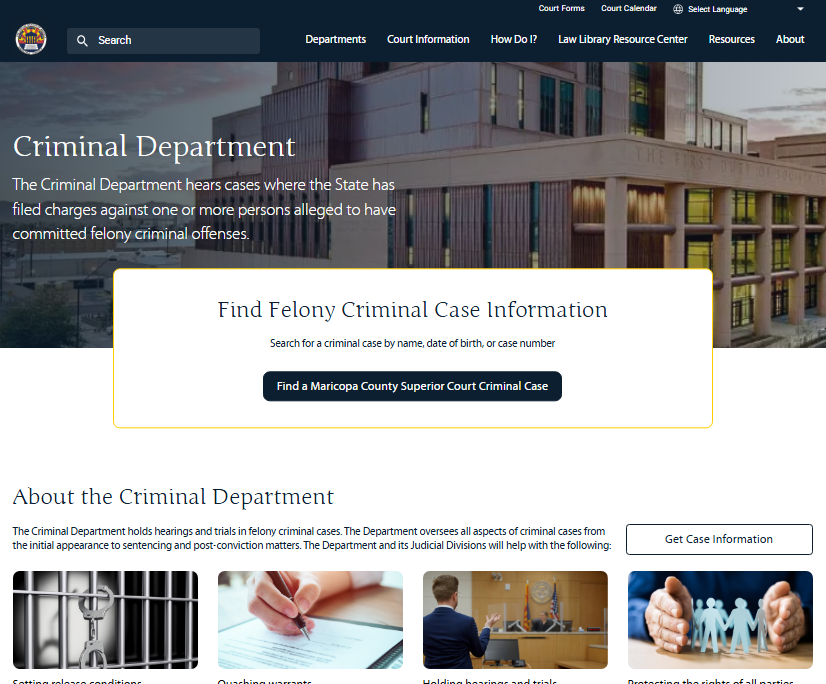
The criminal court handles cases where state law is alleged to have been broken. These matters involve prosecution by the government against an accused person. The process focuses on accountability and public safety. Criminal court covers a wide range of charges, from lower-level offenses to serious felony cases. Each case follows structured stages, starting with arrest or summons and moving through formal proceedings.
Stages in criminal court include:
- https://superiorcourt.maricopa.gov/departments/superior-court/criminal/
- Arraignment, where charges are formally read
- Pre-trial hearings for motions and evidence review
- Trial process, where guilt or innocence is evaluated
- Sentencing, if a conviction is reached
Felony cases involve more serious allegations. These may include violent offenses, large-scale theft, or repeat violations. Misdemeanor cases involve less severe charges but still carry legal consequences.
The criminal court also deals with:
- Arrest warrants issued by judges
- Bail decisions and release conditions
- Plea agreements between the prosecution and the defense
- Jury or bench trials, depending on case type
Sentencing decisions may include jail time, probation, fines, or rehabilitation programs. The court considers prior records, severity of offense, and legal statutes when issuing outcomes.
Family Court Matters
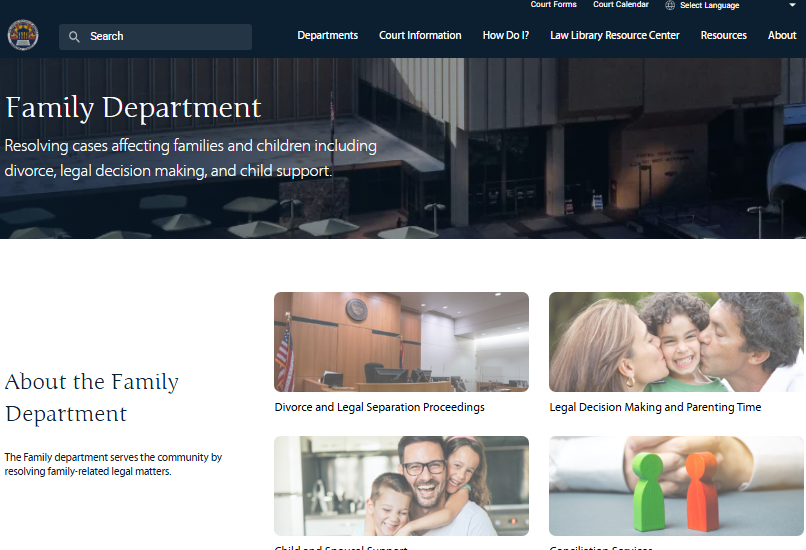
Family court handles domestic relations cases involving household and parental issues. These cases often involve emotional and financial responsibilities between family members. Common case types include divorce, child custody, and support orders. Family court also manages modifications to earlier court decisions when life circumstances change. A common request in public records involves divorce records in Maricopa County, AZ, which relate to finalized divorce filings and related legal orders.
Family court matters often cover:
- https://superiorcourt.maricopa.gov/departments/superior-court/family/
- Divorce proceedings and property division
- Child custody arrangements between parents
- Child support and financial obligations
- Parenting plan creation and enforcement
Custody cases focus on the best arrangement for children. Courts review living conditions, parental involvement, and stability factors. Parenting plans outline schedules, holidays, and decision-making authority.
Main Responsibilities of the Clerk of Superior Court
The Clerk of Superior Court carries out core duties that support court operations and official judicial processes. This office maintains official case documentation, handles filings, and manages key administrative services linked to the court system. These responsibilities cover record handling, financial processing, and public service tasks that support accurate and organized court activity.
Court Records Management and Legal Filings
The Clerk of Superior Court manages court records management systems that store and organize case data. This includes legal filings, case updates, and all submitted court paperwork. Every filing document enters a structured judicial filing system that tracks case progress. Staff handles filing documents submitted by attorneys, law enforcement, and the public.
Functions include:
- Organizing civil, criminal, and probate case files
- Processing incoming legal filings with case numbers
- Maintaining official records for court reference
- Updating case documentation for ongoing matters
- Preserving historical court documentation for legal reference
This system supports accurate case documentation and keeps all official records aligned with court activity.
Minute Entries, Document Filing System, and Case Documentation
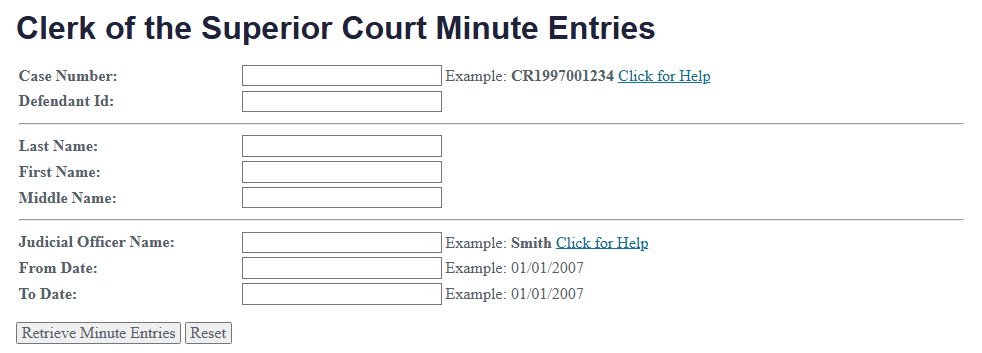
The Clerk records minute entries during court proceedings. These entries summarize court actions, rulings, and procedural updates in real time. A structured document filing system supports fast retrieval of court documentation. It also keeps all case documentation consistent across multiple departments.
Core responsibilities in this area include:
- https://courtminutes.clerkofcourt.maricopa.gov/index.asp
- Recording minute entries during hearings
- Updating judicial filing system logs
- Filing motions, petitions, and court orders
- Managing docket entries for active cases
- Supporting digital and physical case documentation storage
This process keeps court documentation accurate and supports transparency in court records. It also helps attorneys and the public follow case progress through official channels.
Court Hearings & What to Expect
Court hearings in Maricopa County Superior Court follow a structured process where each case is assigned a set time and courtroom. A judicial hearing may take place in person or through a virtual platform based on case type. The court hearings maricopa county process follows a fixed courtroom procedure shaped by the case filing and appearance notice. The Maricopa County Superior Court schedule lists hearing dates, assigned judges, and courtroom locations for civil, criminal, family, and probate matters.
Types of Hearings in Maricopa County Superior Court
Different hearing types exist based on the case stage and legal matter. Each judicial hearing serves a specific purpose within the case timeline.
Common hearing types include:
- Initial Appearance: First court contact after arrest or filing
- Pretrial Hearing: Review of evidence and case status
- Motion Hearing: Review of legal requests from either party
- Trial Hearing: Full presentation of evidence and witness testimony
- Sentencing Hearing: Final decision in criminal matters after conviction
- Status Conference: Case progress check with the judge
Civil, family law, and probate cases follow similar hearing structures with case-specific variations. Each hearing appears in the official trial schedule maintained by the court system.
Courtroom Procedure and What Happens Inside
Courtroom procedure in Maricopa County Superior Court follows a formal sequence. Each party receives an appearance notice with an assigned time and courtroom number.
A typical courtroom flow includes:
- Check in with court staff before entry
- Security screening at courthouse entrance
- The judge calls the case from the docket
- Parties respond when names are called
- Attorneys present arguments or updates
- The judge issues orders or sets the next hearing date
The courtroom procedure follows strict decorum rules. Speaking out of turn or late may affect the case’s standing. Records of each hearing are added to the official court file for future reference.
Virtual vs In-Person Hearings in Maricopa County
Maricopa County Superior Court uses both virtual and in-person hearing formats based on case needs and judicial direction. In-person hearings take place at designated courthouses. Parties appear physically before the judge, clerk, and opposing side. These hearings are common in trials, evidentiary matters, and jury cases.
Virtual hearings run through approved video platforms. These are often used for:
- Preliminary hearings
- Case management conferences
- Non-evidentiary motions
- Administrative updates
Participants receive login details through the appearance notice or court notice system. Stable internet, camera access, and a quiet setting support smoother participation.
How to File Court Documents in Maricopa County
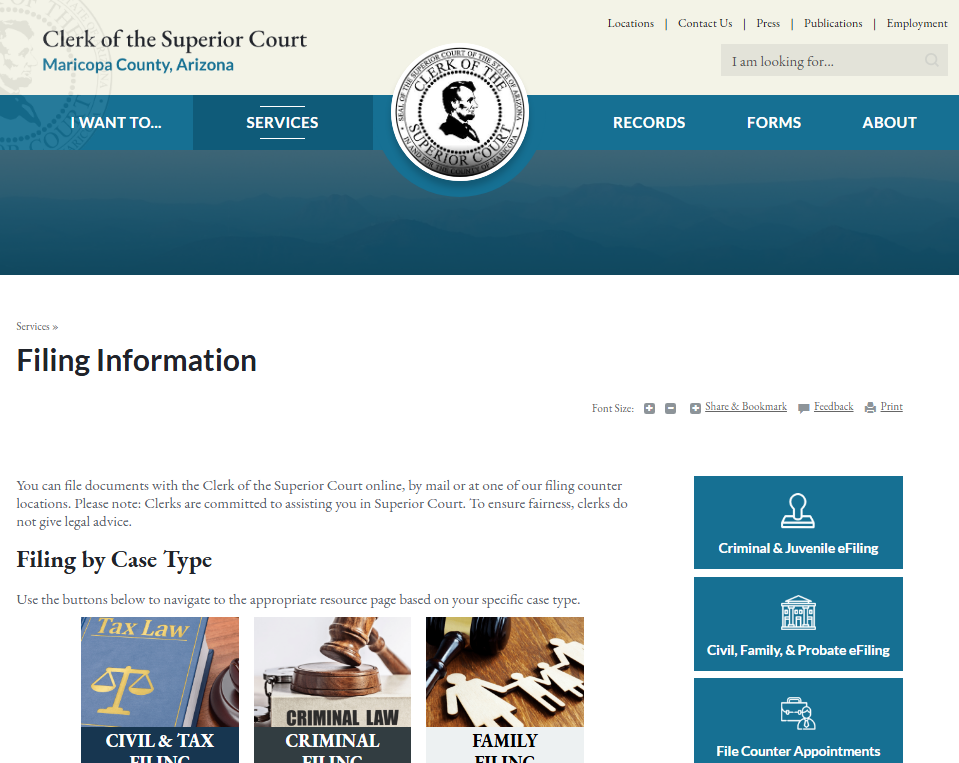
Court documents in Maricopa County are submitted through structured legal filing steps managed by the Clerk of Superior Court Services. The process includes both in-person filing at court locations and electronic filing through https://www.clerkofcourt.maricopa.gov/services/filing-information, the official eFiling system, depending on case type and user preference. Each filing follows a court intake system that reviews document accuracy before acceptance into the case record.
Types of Court Filings in Maricopa County
Court filing documents in Maricopa County are divided into key case categories that follow specific legal filing rules. Civil filings cover disputes such as contracts, property issues, and financial claims, while criminal filings include charges, motions, and court-related actions. Family filings involve divorce, custody, child support, and protective orders, and probate filings handle estates, wills, guardianship, and conservatorship matters. Each category uses a defined case filing procedure, and selecting the correct type supports proper document submission and smoother processing within the court intake system.
In-Person Filing Process for Legal Filings
In-person filing remains available for those who prefer direct submission of court paperwork. Clerks review filing documents at intake counters before entering them into the system.
Steps for in-person filing:
- Prepare all required forms and copies
- Visit a Maricopa County Clerk of Superior Court location
- Submit documents at the intake counter
- Pay applicable filing fees
- Receive stamped copies for records
Court staff checks formatting, signatures, and case details during submission. If missing items appear, documents may be returned for correction before acceptance.
Electronic Filing System: eFiling Process
Maricopa County supports an electronic filing system for faster document submission. This system allows users to upload filings without visiting a courthouse.
Key steps in eFiling:
- Create an account in the approved eFiling portal
- Select case type and filing category
- Upload PDFs or required forms
- Pay fees through online payment tools
- Receive electronic confirmation after submission
The court intake system processes submissions in order received. Time stamps track filing documents for case records.
Filing Locations and Service Points
Maricopa County provides multiple filing locations where court documents can be submitted, depending on the case’s needs. These include the Downtown Phoenix Superior Court location, along with Southeast, Northeast, and Southwest Regional Court Facilities. Each office accepts document submission during working hours and handles different categories of legal filings. Some locations also offer self-service options for basic case-filing tasks, allowing users to complete parts of the court filing process without full counter assistance.
Common Mistakes in Filing Documents
Errors in filing documents often delay processing within the court intake system and can result in rejection or resubmission. Common mistakes include missing signatures, incorrect case numbers, outdated forms, and incomplete payment of filing fees. Filing under the wrong category is another frequent issue, along with incomplete or unclear document submission. Careful preparation of legal filings before submission reduces delays and supports smoother acceptance in the court filing process.
Common Rejection Reasons in the Court Filing Process
The clerk may reject filings if they do not meet court rules or formatting standards. Rejection usually means resubmission with corrections.
Top rejection reasons:
- Non-compliance with Arizona court formatting rules
- Illegible or incomplete paperwork
- Missing supporting documents
- Incorrect filing fees or payment issues
- Filing sent to the wrong division
Proper review before submission reduces rejection chances and supports smoother processing of court records.
Jury Duty in Maricopa County Superior Court
Jury duty in Maricopa County Superior Court involves residents receiving a jury summons to serve on a trial jury for court participation. This process supports fair hearings through public involvement in legal cases. The system follows structured steps that include selection, attendance rules, and assigned responsibilities tied to civic duty in the justice system.
Selection Process for Jury Service, Maricopa County
The selection for jury service in Maricopa County begins with a random pull from approved government records. These often include voter registration lists and motor vehicle records. After selection, residents receive a jury summons by mail. This notice includes reporting dates, location details, and basic instructions.
Steps in the process include:
- Random name selection from eligible databases
- Delivery of a jury summons to the resident
- Completion of a short questionnaire
- Screening during voir dire in the courtroom
- Final placement on a trial jury or release
During voir dire, attorneys and the judge ask questions to check fairness and suitability for a case. Some individuals may be excused at this stage.
Duties and Attendance Rules for Jury Service, Maricopa County
Jury duty involves active participation in court proceedings and strict attention to attendance rules. Each juror plays a role in reviewing facts and supporting fair verdicts.
Core duties include:
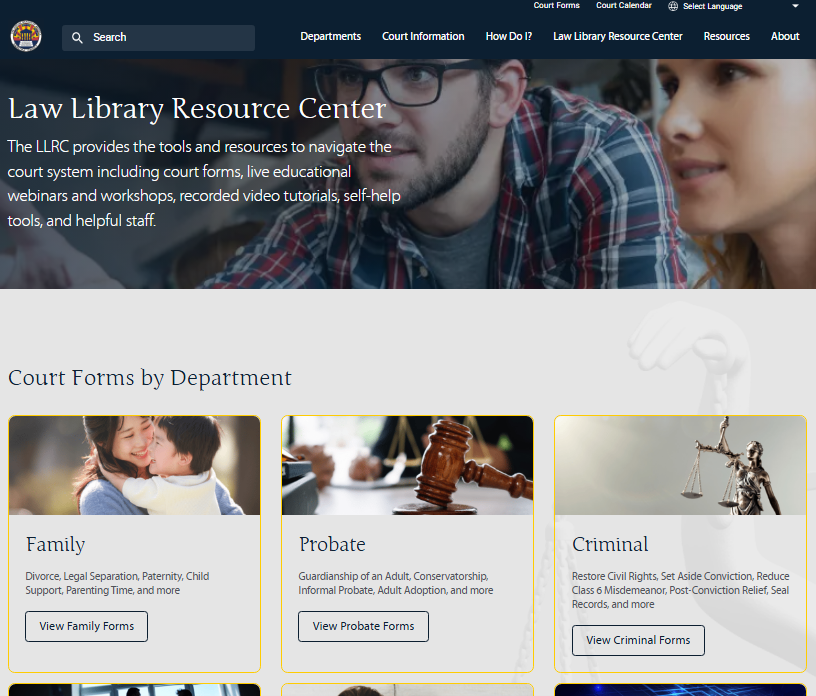
- https://superiorcourt.maricopa.gov/llrc/
- Listening to witness testimony and evidence
- Following the judge’s instructions
- Taking part in jury deliberations
- Keeping case details private during the trial
Attendance rules apply from the first reporting day. Missing required days can lead to penalties or rescheduling.
Departments of Superior Court
Maricopa County Superior Court operates through several departments that manage different parts of the legal system. Each unit functions under the Arizona judicial branch, the Maricopa County structure, and handles specific responsibilities such as court filings, supervision programs, criminal case processing, and family-related disputes. Together, these departments support organized case flow, official records handling, and fair legal procedures across the county.
Clerk of Court
The Clerk of Court manages official court records and handles filing documents for all case types within the Maricopa County Superior Court system. This office works as the central hub for filing documents, court records, and official filings, ensuring that every case entry is properly recorded and stored. It processes new case submissions, maintains legal records, issues certified copies of court documents, updates dockets, and manages related fees. This department also supports attorneys, public users, and government agencies by keeping accurate case histories that include motions, rulings, and judgments, which helps maintain transparency in the court system.
Probation Department
The Probation Department supervises individuals placed under court-ordered monitoring instead of serving full jail sentences. This department works closely with the criminal justice system under the Arizona judicial branch, Maricopa County operations. Its focus centers on supervision, rehabilitation, and offender monitoring for adults and juveniles.
Core responsibilities include:
- Monitoring compliance with court orders
- Conducting regular check-ins with probationers
- Running rehabilitation and counseling programs
- Supporting reintegration into society
- Reporting behavior to the court
Officers track progress and check whether individuals follow the conditions set by judges. These conditions may include community service, treatment programs, or employment requirements.
Criminal Division Office
The Criminal Division Office manages felony and misdemeanor cases within the Superior Court system and oversees the full progression of criminal proceedings. It handles felony processing, sentencing, and criminal justice procedures, starting from case intake to final judgment. This office schedules hearings, coordinates trials, manages plea agreements, and records judicial decisions while ensuring compliance with court rules. Judges, prosecutors, and defense attorneys operate through this division, which also supports jury trials and evidentiary hearings, maintaining structured case flow across all criminal matters in Maricopa County.
Family Division Office
The Family Division Office deals with domestic relations and sensitive legal matters involving families and households. It focuses on custody, divorce proceedings, and mediation, handling cases such as child custody arrangements, visitation rights, child support orders, divorce filings, and protection orders. This division supports resolution through both court hearings and mediation services, helping parties reach agreements where possible. Judges review case details and issue rulings based on applicable law, while mediation programs help reduce conflict and support quicker resolutions in family-related disputes.
Court Forms & Self-Help Resources
Court forms in the Maricopa County Superior Court are available through online systems and self-service tools for filing legal documents. These resources support self-representation and help users complete paperwork for various case types.
Online Court Forms and Filing Tools
The court forms the Maricopa County system, which provides structured forms for civil, family, probate, and criminal matters. Users rely on digital portals for forms access and case preparation without in-person visits. A major tool used is ezCourtForms, which builds completed legal forms through step-by-step questions. It helps reduce errors in formatting and improves filing accuracy for court submissions. Many users rely on it for legal self help arizona needs, especially for routine filings.
Online tools include:
- ezCourtForms for automated form generation
- Court filing portals for document submission
- Printable PDF form libraries for offline preparation
- Case-type selectors for correct document matching
These online tools support faster preparation of court paperwork. They also help users manage deadlines and required attachments for filings. In many cases, the system assists people handling self-representation without attorney support.
Self-Help Filing Support and Legal Documents
Maricopa County provides structured legal self-help resources focused on legal documents, filing assistance, and procedural clarity. These tools support users who prepare motions, petitions, and responses on their own.
The self-help system often includes:
- Step-by-step form instructions
- Case-type document checklists
- Sample filings for reference
- E-filing instructions for submission
A simple comparison of common tools:
| Resource Type | Purpose |
|---|---|
| ezCourtForms | Auto-generated legal paperwork |
| PDF Forms Library | Printable court documents |
| Online Filing Tools | Digital submission of cases |
| Self-Help Centers | Filing and procedural help |
Marriage Licenses & Passport Services
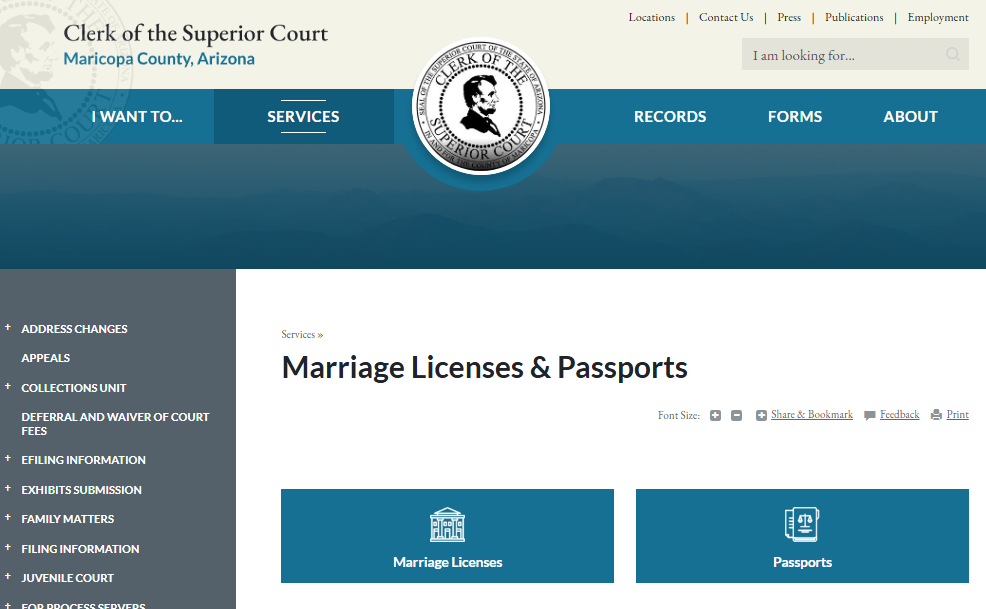
The Clerk of Superior Court provides marriage license services and passport application acceptance at designated service locations. The marriage license office supports couples with legal marriage documents and identity https://www.clerkofcourt.maricopa.gov/records/marriage-licenses-passports processing for official civil registration. These services at the Maricopa County Clerk AZ offices help residents complete marriage licensing steps and submit passport applications in one place.
Marriage License Office Services in Maricopa County Clerk AZ
The marriage license office handles the issuance of legal marriage documents required for civil registration in Arizona. Applicants complete identity processing and submit the required paperwork before receiving approval for marriage authorization.
Eligibility rules stay simple and require basic documentation:
- Valid government-issued photo ID
- Proof of age (18+ standard requirement)
- Social Security details, if available
- No blood test requirement in Arizona
An appointment system is often used to manage in-person visits and reduce wait times. Walk-in service may exist at selected locations, depending on daily volume.
Passport Application Acceptance & Civil Registration Support
Selected Maricopa County Clerk AZ locations accept passport applications for first-time applicants and renewals under specific conditions. Staff verifies identity by processing documents before submission to federal agencies.
Passport services commonly include:
- DS-11 application acceptance
- Photo compliance checks
- Fee collection processing
- Document review for identity confirmation
Civil registration supports links to marriage records with official state documentation. This helps residents maintain accurate legal identity records for travel and marital status verification.
Fees, Payments, Fines & Bonds
Court-related charges in the Clerk of Superior Court Services cover filing costs, penalties, and deposit requirements tied to case activity. These payments support the financial court system and keep legal filings moving through proper channels. Court users deal with structured costs such as filing charges, penalty settlements, and bond deposits set by the judicial authority. The clerk’s office handles payment processing for different case types, including civil, criminal, and traffic matters. In most situations, court payments follow fixed schedules based on case classification and court orders. At the same time, judicial records track all judicial fees linked to each filing or motion.
Court Fees and Payment Processing Options
Court fees apply at the time of submitting legal filings, motions, or case initiation documents. These charges vary based on case type and court rules. Fine payments usually come from traffic violations, criminal judgments, or late compliance orders issued by the court. Bond deposits work as financial security in criminal cases. They may be refunded after case closure if all court conditions are met. Refund rules depend on the case outcome and the compliance status recorded by the clerk’s office.
Common payment channels include:
- Online payment portals using a card or an e-check
- In-person cashier windows at the court office
- Mail-in payment with case reference details
- Authorized payment kiosks in select locations
| Payment Type | Purpose Example | Processing Status |
|---|---|---|
| Court Fees | Case filing charges | Immediate/Posted |
| Fines | Traffic or penalty charges | Posted after payment |
| Bond Deposits | Case security amounts | Refundable if eligible |
Late payments may result in added penalties or case delays. Refund processing for eligible bond deposits follows review of case records within the court’s financial tracking system.
Clerk of Superior Court vs Superior Court
The Superior Court in Maricopa County handles cases such as criminal matters, civil disputes, family issues, and probate. The Clerk of the Superior Court of Maricopa County manages court records, filings, and case documentation as an administrative office. The court decides cases and issues rulings. The clerk’s office acts as the official records office and filing authority for those cases.
Role of Superior Court in Maricopa County
The Superior Court functions as the main trial court in Arizona. It handles legal disputes and delivers judgments based on law and evidence. Judges in the court review arguments, hear testimony, and issue orders. The court does not handle paperwork storage or public records requests.
Responsibilities of the Superior Court:
- Hear civil and criminal cases
- Handle family law matters such as custody and divorce
- Decide probate and estate cases
- Issue rulings and court orders
- Conduct hearings and trials
The court focuses on decision-making. It does not act as a filing center or records office.
Clerk of Court Maricopa County Functions
The Clerk of the Superior Court of Maricopa County serves as the official administrative office for court documents. It manages filings, case records, and public access to court information. This office works as the records office and filing authority for all Superior Court cases.
Main duties include:
- Accepting and processing legal filings
- Storing and maintaining court case records
- Issuing copies of court documents
- Managing docket entries and case updates
- Handling fee payments related to filings
The clerk does not make legal decisions. Instead, it supports the court system through administrative work.
FAQs – Maricopa County Superior Court
The Maricopa County Superior Court FAQs help users quickly understand case lookup, hearing schedule, jurisdiction, and basic court rules. This section supports users who want clear answers about court records, legal process, and missed court dates. It focuses on simple explanations for common court-related questions. The goal is to make court information easier to follow for public use.
Case Lookup and Court Records?
Case lookup in Maricopa County Superior Court helps users find details about civil, criminal, family, and probate cases. Users can search using a case number, party name, or attorney name. The system shows case status, filing dates, and scheduled events. Most court records are public, but sealed cases remain restricted. Updates appear as new filings are added.
Court Hearings and Schedule Tracking?
Court hearing schedules show when a case is set before a judge in Maricopa County Superior Court. Users can check hearing dates through the official court calendar or case details page. Hearing times may change if the court resets or modifies the schedule. Each courtroom follows its own assigned calendar. This helps users stay updated on upcoming legal events.
Superior Court Jurisdiction?
Maricopa County Superior Court handles major legal matters, including felony criminal cases, large civil disputes, family law issues, and probate cases. Jurisdiction depends on case type and legal filing category. Each division follows specific rules and procedures. This structure helps manage complex legal matters within one court system. It supports both civil and criminal legal processes.
Missing a Court Date?
Missing a court date in Maricopa County Superior Court can lead to serious outcomes depending on the case. The judge may issue a bench warrant in criminal matters or a default judgment in civil cases. Some cases may allow a request to reset the hearing date. Action should be taken quickly after a missed appearance. Court response depends on case type and status.
Court Case Status Updates?
Court case status updates show the current stage of a legal matter in Maricopa County Superior Court. Status may include active, pending, closed, or under review. Users can track changes through the case lookup system. Updates reflect filings, motions, and court decisions. This helps users follow legal progress clearly.