
Maricopa County inmate search provides official custody details of individuals held in county detention centers. It allows users to check booking records, current facility location, and updated custody status using verified jail system data. It reflects real-time jail intake information across county detention facilities. It supports quick verification of arrest records without delays. It helps track movement inside the detention system.
This tool is widely used for inmate search in Maricopa County and the Maricopa County inmate search AZ to confirm arrest status, detention updates, and booking information. It helps users quickly identify whether a person is still in custody or has been released from the county jail system. It also supports access to basic booking details like charges and intake timing. It reduces the need to contact jail offices for routine status checks. It keeps public record access simple and direct.
How the Maricopa County Inmate System Works
Maricopa County’s inmate system works through a centralized sheriff’s custody bureau that manages arrests, housing, and release tracking. It organizes all detainee data in a prisoner database that records booking activity and custody status in real time. Each entry in the system connects to official booking records, which reflect intake details, charges, and housing location inside county facilities.
Sheriff Custody Bureau Structure and Inmate Data Flow
The sheriff’s custody bureau oversees all detainees from arrest through release. It operates as the central authority for classification, security assignment, and movement between facilities. Once a person is taken into custody, the bureau assigns a unique booking ID. This ID links to the prisoner database, which stores identification details, charges, and court-related updates.
Responsibilities include:
- https://www.mcso.org/InmateInfo/CustodyBureauInfo
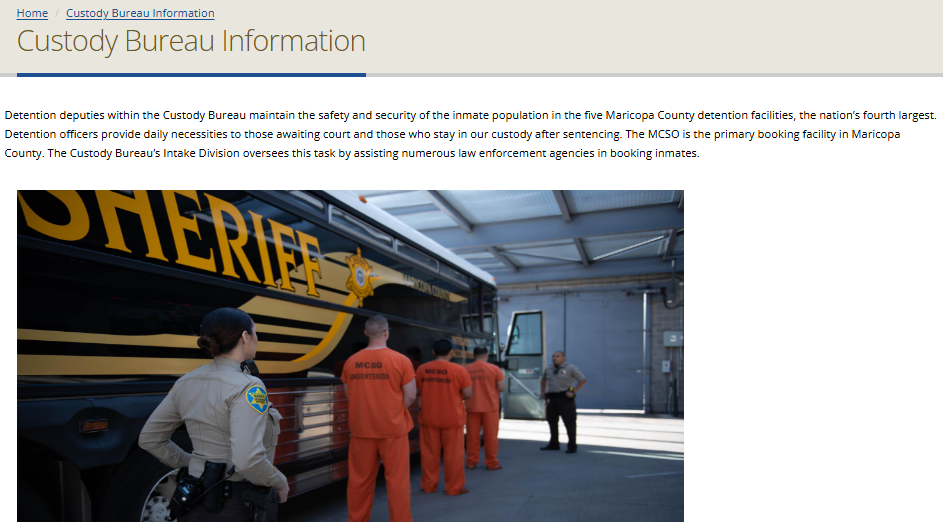
- Processing arrest intake and identity verification
- Assigning housing levels inside the jail housing system
- Tracking movement between the court, holding cells, and release units
- Updating booking records for public and legal reference
This structure keeps information consistent across all detention units. It also supports coordination between law enforcement teams and court systems.
Jail Facilities Overview and Correctional Facility Network
Maricopa County operates several detention center locations under a shared correctional network. Each site serves a specific function inside the overall custody system. The main facilities operate as part of an interconnected correctional facility setup, which includes intake processing, short-term holding, and long-term housing.
Facility types include:
- Intake and release center: Handles new arrests and release processing
- Medium-security detention units: Houses sentenced or awaiting-trial inmates
- High-security units: Manages higher-risk custody classifications
| Facility Type | Primary Function | Inmate Stage |
|---|---|---|
| Intake Center | Booking and processing | Entry phase |
| Detention Unit | Housing and supervision | Pre-trial or sentenced |
| Release Center | Final clearance | Exit phase |
Each detention center connects through a shared database system, which updates inmate movement instantly across all locations.
Booking Process and Intake Workflow
The booking process starts when law enforcement brings a person into custody. At the intake and release center, staff collect biometric data, personal details, and case information. This process builds the official booking records, which later support court review and custody verification.
Main steps in the booking workflow include:
- Identity confirmation using fingerprints and ID records
- Entry into the prisoner database with assigned booking number
- Health screening and risk classification
- Assignment to the appropriate jail housing system
- Transfer to a designated housing unit inside a correctional facility
Once processed, the inmate’s status updates across the sheriff system. This allows law enforcement, courts, and authorized agencies to track custody status without delay.
Official Inmate Search Tool
The Maricopa County inmate search system provides a fast way to check custody details using a secure inmate information search tool. It shows booking status, charges, and custody location through a centralized custody lookup system. Searches can be completed using a name or booking number. This system supports inmate lookup, inmate search AZ Maricopa County, and full inmate record search functions for public records review.
Steps in the Inmate Lookup Process
The official inmate search process follows a clear structure inside the county’s online database. Each search pulls live custody records linked to jail facilities across Maricopa County. Start by opening the inmate search page and selecting a search option. Two main methods appear: booking number search and name-based search.
Follow these steps:
- https://www.mcso.org/InmateInfo
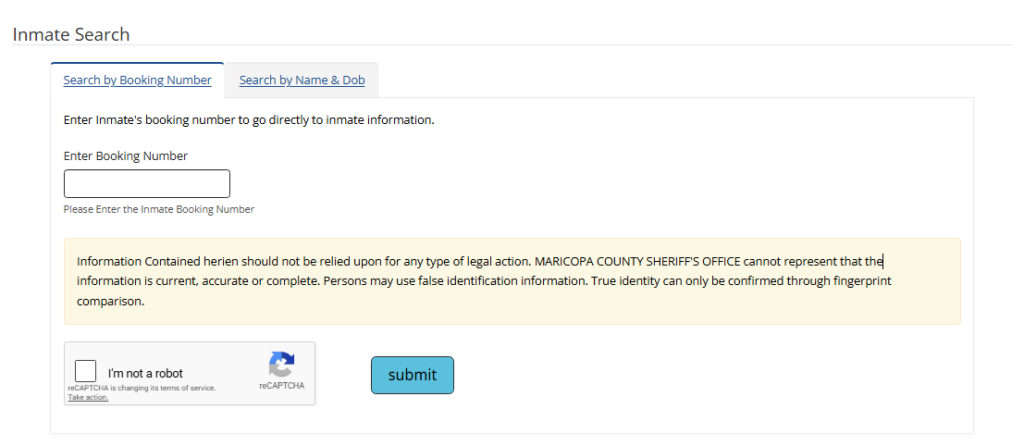
- Select search type (Name or Booking Number)
- Enter the required details in the search fields
- Click search to load inmate records
- Review custody status and booking details
The system displays results such as:
- Full inmate name
- Booking number
- Arrest date
- Current custody status
- Facility location
- Charges filed
Search results update in real time, which supports quick inmate record search for recent arrests and active custody cases.
Booking Number Search
The booking number search is the most direct method inside the Maricopa County system. Each inmate receives a unique booking ID during intake processing. This ID links directly to their jail record. When using this method, the system returns a single matching profile if the number is correct. It reduces confusion from similar names or spelling errors.
Booking Number Search Format Table
| Field Type | Input Example | Result Output |
|---|---|---|
| Booking Number | 2024-123456 | Exact inmate profile |
| Search Match | Single record | Full custody details |
| Data Type | Numeric ID | Arrest + jail status |
This method supports accurate inmate lookup because it connects directly to the booking record system. It is often used by legal representatives and family members who already have the ID.
Name Search and DOB Format Rules
The name search option is used when the booking number is not available. The system runs a match based on full or partial names stored in the jail database.
Search fields usually include:
- First name
- Last name
- Middle initial (optional)
To improve accuracy, the system may request the date of birth (DOB) input. The DOB format follows a standard structure used across jail records:
DOB Format Example:
- MM/DD/YYYY (Example: 08/14/1992)
Entering correct DOB details reduces duplicate matches. It helps filter inmates with similar names inside the inmate record search system.
Search results may show multiple entries if the name is common. Each result includes:
- Age
- Booking number
- Custody status
- Facility name
This step supports broader inmate search AZ Maricopa County use cases, especially for public record checks.
How to Search by Name
Searching by name in a Maricopa County inmate lookup requires exact input details. Small mistakes in spelling, format, or date entry can block matching booking records. A legal name search works best when details match official jail records. Name-based inmate lookup often returns multiple results when aliases or similar names exist. Correct formatting and accurate date of birth input help narrow booking records quickly.
Name formatting issues in inmate lookup
Name formatting affects how booking records appear in search results. The system expects a standard structure used in jail databases.
Common formatting problems include:
- https://www.mcso.org/InmateInfo/Visitation
- First and last name order reversed
- Missing middle initials
- Extra spaces in name fields
- Hyphenated surnames entered incorrectly
A legal name search works best when the full registered name is used. Even small formatting gaps can return no results or unrelated booking records.
Spelling variations and alias name issue
Spelling differences often create missed results in inmate lookup systems. Many records also contain alias name issue entries linked to past bookings.
Common issues include:
- “Jon” vs “John” spelling differences
- “Smith” vs “Smyth” variations
- Nicknames stored as alias names
- Multiple known identities in booking records
When booking records contain aliases, the system may show several matches for one person. Using full legal name search data reduces confusion.
Date of birth format errors: YYYYMMDD
Date of birth errors are one of the most common reasons inmate lookup fails. The system uses a strict numeric format: YYYYMMDD.
Examples of correct format:
| Type | Entry Example |
|---|---|
| Correct DOB format | 19880514 |
| Wrong format | 05/14/1988 |
| Wrong format | 1988-05-14 |
A single incorrect digit or symbol can block booking records from showing results. Matching the exact date format helps align records with the inmate lookup database.
Why No Records Found
No records found in the Maricopa County Inmate Search often point to timing, data updates, or search input differences. The result may not reflect a real absence of a custody record. It can relate to release status changes or recent booking activity. Many users searching the inmate search az maricopa county face this issue when records shift between systems or update delays occur.
Release and Transfer Status Delays
A missing result can connect to a recent release status change. Inmates may no longer appear after processing starts, but before the public records update. A transferred inmate can also show no match in the original database. Movement between facilities or agencies can split record visibility.
Common situations include:
- Recent release processed within hours
- Transfer to the state prison system
- Movement to another county facility
- Temporary custody changes during transport
In these cases, records exist but sit in different systems or update stages.
Data Entry and System Update Issues
Public inmate systems rely on frequent updates. A short delay can affect search results. A system update delay may happen during scheduled database syncing. During that time, new bookings or status changes may not display.
Other issues include incorrect booking data, such as:
| Issue Type | Effect on Search Result |
|---|---|
| Misspelled name | No matching record |
| Wrong DOB input | Record mismatch |
| Booking number error | Empty result page |
| Partial name entry | Missing entries |
Even small input errors can block results in the Maricopa County inmate records.
The Inmate Information Results
Inmate search results from the Maricopa County system show structured data pulled from official booking records. The prisoner database displays key details such as custody status, housing location, and arrest charges overview in a clear format.
What Data Appears in Booking Records
Booking records in the Maricopa County system show core identifiers tied to each inmate profile. Each record connects directly to the prisoner database and reflects recent intake or custody updates.
Fields commonly shown include:
- Full name and booking number
- Custody status (active, released, transferred)
- Arrest charges overview with listed offenses
- Booking date and time
- Bond amount, if set
In many cases, the charge details list both felony and misdemeanor allegations. The arrest charges overview may include multiple entries if more than one incident exists.
Housing Location and Custody Details
The housing section shows where a person is held inside the jail system. This part of the prisoner database reflects current jail assignment and facility placement.
Typical housing details include:
- Facility name within the Maricopa County jail system
- Unit or pod location
- Custody level (minimum, medium, maximum)
- Movement history between facilities
A simple breakdown appears in many listings:
| Data Type | What It Shows |
|---|---|
| Custody status | Active, released, or transferred |
| Jail assignment | Facility and unit location |
| Booking records | Intake details and charge entry time |
| Charges overview | Listed criminal allegations |
Housing updates often change after court hearings or internal transfers. This section helps confirm where a person is held at the time of search and how custody status shifts across the system.
Jail Facilities in Maricopa County
Maricopa County operates multiple jail facilities that process, house, and manage inmates across different custody levels. Each detention center serves a specific function within the overall jail system, from intake to housing and release processing.
Primary Jail Facilities in Maricopa County
Several facilities form the core of the county jail system. Each detention center handles different custody levels and inmate categories across the network.
- 4th Avenue Jail: Handles booking, intake processing, and short-term holding for new arrests
- Lower Buckeye Jail: Houses medium to high-security inmates with longer stays
- Estrella Jail: Focuses on female inmates and classification-based housing
- Intake Transfer Release Center: Manages booking intake, inmate transfers, and release processing steps
Each detention center supports a specific function inside the jail system. For example, intake operations often begin at the booking-focused facility, then move into classification units. After classification, inmates are placed into housing based on custody level, behavior, and legal status.
Inmate Movement Across the Jail System
Inmate movement follows a structured path through multiple stages inside the jail system. First, arrest intake begins at booking locations such as the 4th Avenue Jail or the Intake Transfer Release Center. Then, the classification staff reviews custody level, medical needs, and security risk. After review, placement shifts inmates into housing facilities like Lower Buckeye Jail or Estrella Jail. Transfers may occur multiple times based on court dates, behavior changes, or security adjustments.
| Stage | Location | Purpose |
|---|---|---|
| Intake | 4th Avenue Jail / Intake Transfer Release Center | Booking and processing |
| Classification | Central intake units | Custody and risk evaluation |
| Housing | Lower Buckeye Jail / Estrella Jail | Short or long-term detention |
| Release | Intake Transfer Release Center | Release processing and paperwork |
Movement across facilities keeps the detention center network organized. It also supports safer inmate management and smoother daily operations across Maricopa County facilities.
Mugshots vs Inmate Records
A mugshot is a booking photo taken after an arrest, while inmate records show a full custody and jail history profile. Both appear in public databases, but they serve different purposes in a Maricopa County inmate search. Mugshots are mainly visual identifiers linked to arrest events. Inmate records include broader details such as charges, custody status, booking date, and release updates. Together, they support a complete view of a person in the jail system.
Mugshot Lookup and Booking Records Difference
A mugshot lookup focuses on arrest photos taken at booking. These images are stored inside an arrest photo database tied to law enforcement intake systems. Booking records contain structured jail data linked to each arrest event.
They often include:
- https://www.mcso.org/Home/CriminalRecords
- Full name and booking ID
- Arrest date and intake location
- Charges filed at booking
- Custody status in the jail system
- Assigned facility in Maricopa County
Mugshots show the appearance at the time of arrest. Booking records explain the legal and administrative details behind the detention. Together, they support standard inmate search results and jail record checks.
Arrest Photo Database and Public Record Limits
An arrest photo database stores mugshots collected during booking. These images are part of public records in many cases, but they may face removal or restriction under certain rules. Public record limitations affect what appears in searches. Some records may be sealed, expunged, or temporarily unavailable. In some cases, an updated custody status may appear without a visible mugshot.
| Record Type | What It Shows |
|---|---|
| Mugshot | Arrest photo at booking |
| Booking Record | Charges, custody status, jail details |
| Inmate Record | Ongoing detention history |
Phone Calls, Visitation & Contact
Phone calls and visitation in Maricopa County follow strict communication rules tied to custody information and facility operations. Family members can stay in contact through approved channels that connect with the inmate phone system and scheduled visits.
Communication Methods via Inmate Phone System
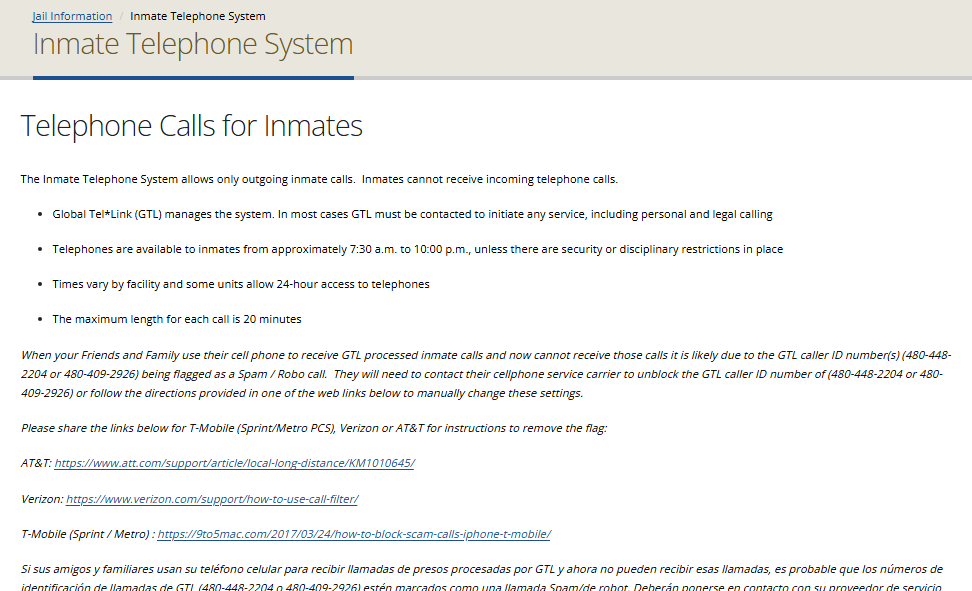
The inmate phone system allows outgoing calls only, and inmates cannot receive incoming calls. Calls usually require prepaid accounts or collect call acceptance from the receiving party. All calls follow monitored communication rules set by the facility. Calls may be recorded, and limits apply based on housing location and custody information status.
Communication options include:
- https://www.mcso.org/InmateInfo/InmateTelephone
- Collect calls through approved carriers
- Prepaid phone accounts funded by family or friends
- Secure voicemail services in some facilities
- Approved contact lists only
An inmate lookup process helps confirm where a person is held. That detail affects call timing, restrictions, and phone availability. Call durations are often limited. High call demand may also affect availability during peak hours. Families often check custody information to confirm housing changes, since transfers can impact phone access.
Visitation Schedule and Communication
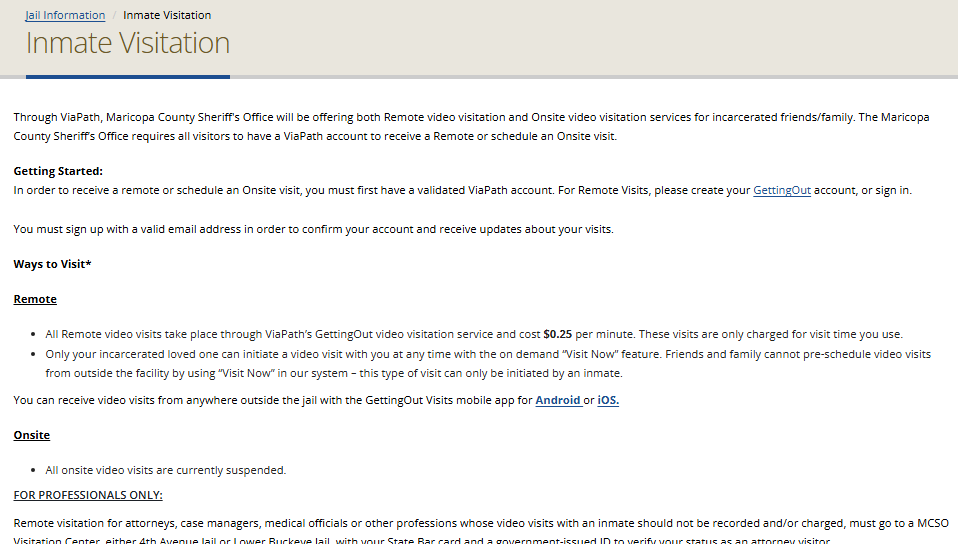
Visitation follows a set visitation schedule based on facility type, housing unit, and custody level. Each location may set different time blocks and booking rules. Most visits require prior approval. Visitors may need identification checks and registration before entry. Video visitation may replace in-person visits in some housing units.
Common visitation conditions include:
- Scheduled time slots only
- Visitor approval list required
- Dress code compliance
- No prohibited items inside the visitation areas
Communication rules also control how inmates interact with outside contacts. Messages may pass through approved mail systems or digital messaging platforms where available.
Sending Money & Support
Money and support for incarcerated people in Maricopa County are handled through approved commissary systems. Family members place deposits into an inmate’s account for daily needs like food, hygiene items, and phone use.
How Commissary Deposits Work for Inmate Accounts
Commissary deposits follow a structured jail payment system linked to inmate lookup results and booking records. Each person in custody has a unique booking number that connects to their account. Family members first use an inmate lookup tool or booking records to confirm identity before sending funds. Once confirmed, money is added to commissary funds, which act as a personal balance inside the facility. These funds allow purchases from approved jail stores.
Common inmate account deposit methods include:
- https://www.mcso.org/InmateInfo/InmateAccount
- Debit or credit card payments
- Approved kiosk payments at service locations
- Phone-based payment services
- Secure online deposit portals
After payment, the jail payment system credits the account, usually within a short processing window. The funds then become available for commissary use based on facility rules. This system helps maintain controlled spending inside the facility while supporting basic daily needs.
Payment Options for Commissary Funds and Jail Payment System
Several payment options support commissary funds for inmates in Maricopa County facilities. Each option connects directly to the inmate lookup system, which confirms booking records before processing any deposit.
The jail payment system commonly supports:
- Fast electronic deposits using card payments
- Scheduled deposits for regular support
- Third-party payment services linked to inmate accounts
Funds added through an inmate account deposit can be used for hygiene kits, snacks, writing supplies, and communication needs. Families often check booking records first to confirm where funds should be sent, which reduces delays and errors in processing.
Family Support Resources
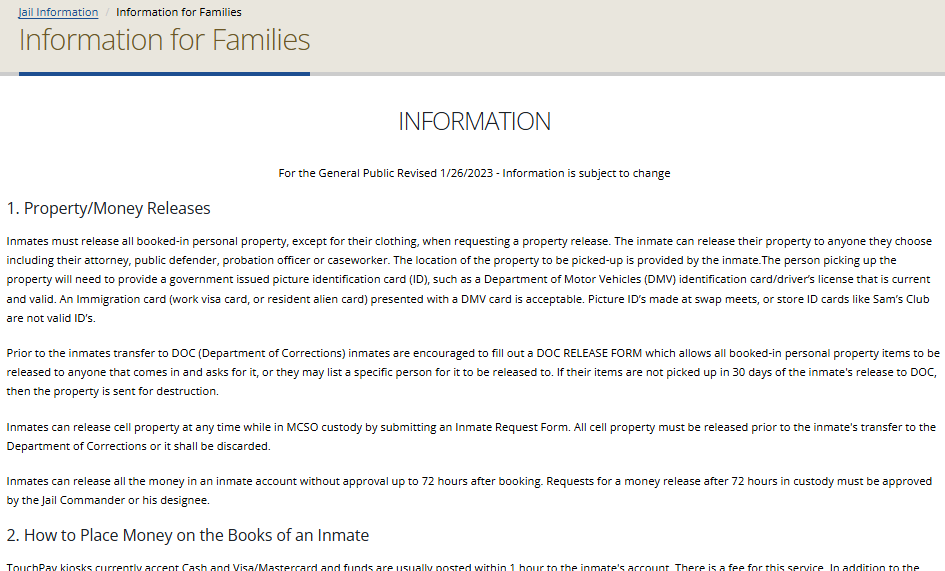
Family members often need both emotional strength and clear updates after a custody situation. Support programs help them stay informed through reliable services linked with inmate search az maricopa county tools. These resources focus on emotional care and practical custody details. Many organizations and county services provide family assistance programs that help reduce stress and confusion. They also help families follow custody status changes, visitation rules, and communication options.
Support options for families
Families dealing with detention cases often rely on these services:
- https://www.mcso.org/InmateInfo/InformationforFamilies
- Emotional counseling services for stress and anxiety support
- Visitation coordination help for scheduling and rules
- Custody updates support through verified channels
- Legal aid referrals for basic case questions
- Community outreach programs for ongoing support
The custody information support system in Maricopa County connects families with updated custody records and facility contact points. This helps reduce uncertainty during long case timelines. Many users also rely on the inmate lookup system to confirm location details and custody changes. In some cases, hotline services provide step-by-step assistance for searching records within the prisoner database.
Safety, Medical & Victim Services
Safety services in Maricopa County focus on health concerns, inmate welfare, and victim protection. These services connect directly with the prisoner database and inmate lookup systems for accurate custody monitoring and reporting. Correctional facilities follow strict procedures for medical attention and safety complaints. Families and inmates can raise concerns through official reporting channels.
Medical support and reporting
Medical support inside detention centers includes:
- Routine health screenings
- Emergency treatment services
- Mental health evaluation support
- Chronic illness care plans
- Inmate medical request submission options through facility channels
Inmates or families can submit health-related concerns through approved reporting forms. Staff review each case and respond based on urgency and medical need.
Victim protection services
Maricopa County provides structured victim support tools linked to custody records. The victim notification system alerts registered individuals about custody changes such as release, transfer, or court movement.
Victim services include:
- Real-time custody status alerts
- Notification of release or transfer events
- Case-related scheduling updates
- Secure enrollment for ongoing monitoring
These services reduce uncertainty for victims and improve safety planning. The system connects directly with the inmate search AZ Maricopa County database for verified updates.
PREA reporting and safety monitoring
The PREA reporting process supports the prevention of abuse inside facilities. Reports can be submitted confidentially through designated channels. Staff review allegations under strict protocols to protect inmate safety and maintain facility standards.
FAQs About Maricopa County Inmate Search
Common questions about Maricopa County inmate records focus on search results, custody status, and booking details. The Maricopa County inmate lookup system shows arrest data, charges, and jail location in real time. Users rely on inmate search AZ Maricopa County tools for fast record checks.
How do they find someone in the Maricopa County jail?
The search starts through the official inmate search AZ Maricopa County system. Users enter a full name or booking number to begin. The system then shows matching records with custody status. Results include jail location, charges, and booking details. Small spelling changes can affect results.
Why is an inmate not showing up in the search?
An inmate may not appear due to timing or data issues. New arrests may take time to enter the system. Sometimes spelling errors block correct matches. Releases or transfers also remove records from active lists. Juvenile or sealed cases may not display at all.
Can inmates receive direct phone calls?
Inmates cannot receive incoming calls inside Maricopa County jails. Communication only happens through outgoing calls from approved systems. Calls are usually collect or prepaid. All calls are recorded and monitored. Family members must set up accounts through jail phone services.
How often is inmate data updated?
The inmate lookup system updates several times each day. Booking details and custody changes appear after processing. Releases are often updated on the same day. Transfers between facilities may take a few hours. Short delays can occur during busy booking periods.
What does a booking number mean?
A booking number is a unique ID given during intake at the jail. It tracks all records linked to that person. This number helps avoid confusion between similar names. It is used in inmate lookup searches for faster results. Each booking number connects to full arrest details.