
Maricopa County Recorder’s Office maintains official property records for real estate across Maricopa County, Arizona. It records deeds, land documents, and ownership transfer filings that establish legal property history. Users rely on this system for verified real estate record information tied to parcels and transactions. The office serves as the central source for recorded documents related to property ownership and title changes. It supports public record transparency for real estate research and verification needs.
Focuses on Maricopa County, AZ, recorder search intent, including deed records, property ownership details, and land record lookup. It separates recording functions from property search use, helping users find accurate information on deeds, parcel data, and recorded real estate documents. It also targets semantic SEO terms like property deeds, land records search, and ownership transfer history. The structure aligns with how users search for county-level real estate records in Arizona.
What is the Maricopa County Recorder’s Office?
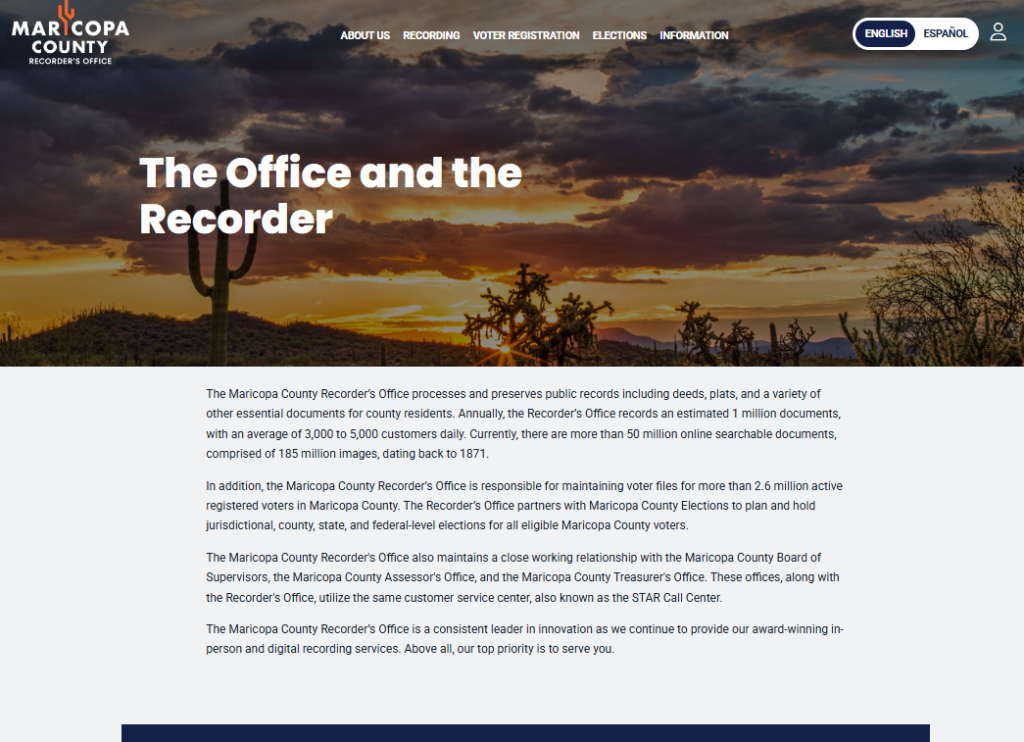
The Maricopa County Recorder’s Office is a government office in Arizona that records and stores official public documents. It maintains verified records related to property ownership, including property deeds and land records. This office https://recorder.maricopa.gov/about-us/about-the-office-and-recorder.html serves as a central point for recording real estate documents and maintaining historical property data across Maricopa County, Arizona. It operates as a key part of the county’s official records system.
Role in Property Records – maricopa county az recorder
The Maricopa County Recorder’s Office plays a direct role in managing property records across the county. It records legal documents that confirm ownership changes and property rights. These records form a structured property ownership database used by the public, title companies, and government agencies. The office functions as a document recording authority that validates and stores real estate filings. It processes materials such as deeds, liens, and property-related notices.
Functions include:
- Recording ownership transfers through official filings
- Maintaining updated land ownership data
- Preserving historical real estate documents
- Indexing records for public reference
- Supporting legal clarity in property transactions
The system supports transparency in real estate activity across Maricopa County. Each entry becomes part of the official county record system used for verification and legal reference.
Property Deeds and Land Records in Maricopa County
Property deeds represent legal proof of ownership for land and real estate. The recorder’s office handles the filing and preservation of these documents. Once recorded, a deed becomes part of the county’s permanent land records archive. Land records include more than ownership transfers. They may contain easements, mortgages, and other property-related filings. These documents help track how land has changed over time within Maricopa County.
Common document types recorded:
| Document Type | Purpose in Records System |
|---|---|
| Warranty Deed | Transfers full ownership rights |
| Quitclaim Deed | Transfers interest without guarantees |
| Mortgage Records | Shows loan secured by property |
| Lien Notices | Indicates financial claims on property |
These records support legal verification and property history checks. Real estate professionals often rely on them for title review and ownership confirmation.
Public Records System and Document Recording Authority
The Maricopa County Recorder’s Office operates as part of a broader public records system. It organizes and preserves official documents that affect property rights and civic recordkeeping. This system supports transparency in county-level real estate activity. As a document recording authority, the office follows strict filing procedures. Submitted documents go through indexing, validation, and archiving before becoming part of the official database.
Elements of the system include:
- Centralized record storage for property data
- Indexed search structure for land records
- Secure archiving of recorded documents
- Public reference tools for verification
- Integration with county-level property systems
The office strengthens trust in property transactions by maintaining accurate and traceable records. Property deeds and related filings remain available as part of the county’s long-term historical archive.
How to Search Deeds in Maricopa County, AZ
Searching deed records in Maricopa County, Arizona, follows a structured process through the official property record system. The maricopa county az recorder maintains recorded land records through a digital property lookup system. Users can review ownership history using multiple search methods within the online document search portal. The deed records in the Maricopa County, AZ database store property transfers, liens, and recorded documents in a public record database. Each search method focuses on a different identifier, such as owner name, parcel number, or subdivision details.
Steps: search process for deed records
The recorded land records system organizes documents by property identifiers and recording details. Users can begin with basic search inputs and refine results using filters in the property lookup system.
A typical search flow includes:
- https://recorder.maricopa.gov/recording/document-search.html
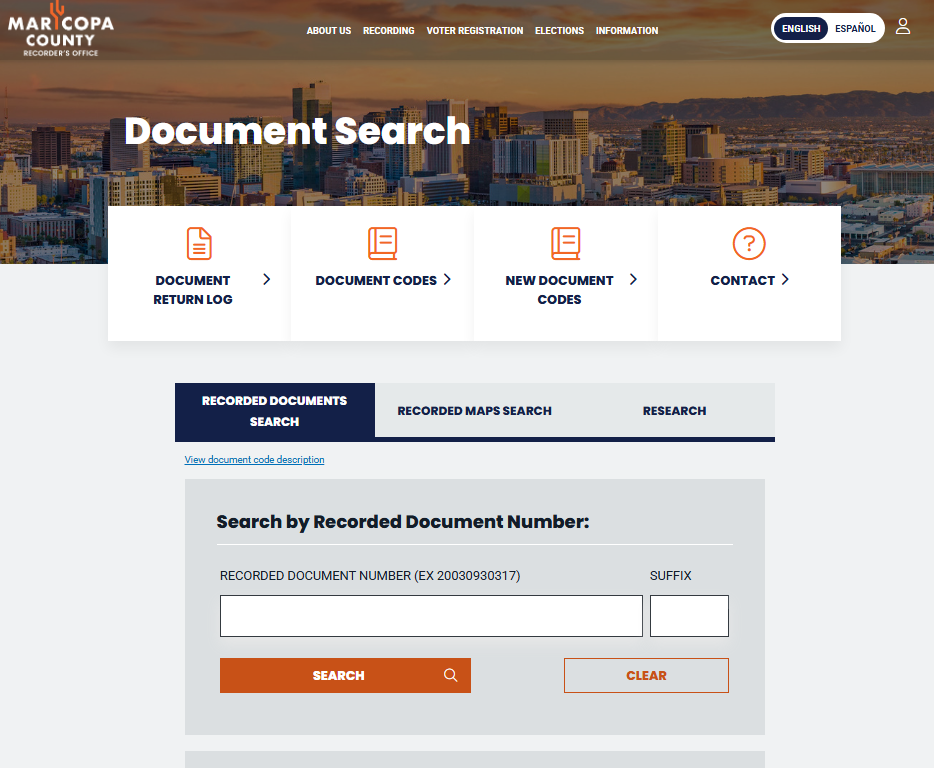
- Selecting the official recorder database portal
- Choosing a search category
- Entering the required property detail
- Reviewing matching recorded documents
- Opening deed records for ownership history
The online document search system shows recorded land records such as warranty deeds, quitclaim deeds, and transfer history. Each record includes the recording date, document number, and property reference details.
Name search method for property deeds
The name-based search method focuses on property owners listed in recorded documents. This method works well when the property owner’s name is known or partially known. Users enter a last name or full name into the search field. The system then returns matching deed records tied to that individual or entity.
Steps in name search:
- Enter last name or full legal name
- Apply filters for document type, such as deed or lien
- Sort results by recording date or document number
- Review matching property entries
Search results often include multiple records if the name is common. Each record may show different properties linked to the same person or organization.
Parcel number search for precise property lookup
Parcel number search delivers one of the most accurate methods for finding property records. Each parcel number represents a unique property identifier within Maricopa County. This method works well for tax records, legal documents, and real estate verification.
Steps for parcel-based search:
- Enter the full parcel number into the search field
- Confirm formatting matches county record style
- Review the property summary page
- Open deed history for the full transaction record
Parcel search results usually display fewer but more precise matches. Each entry links directly to recorded land records tied to that specific property. The property lookup system uses parcel identifiers to connect legal documents, ownership transfers, and recorded filings. This structure reduces confusion when multiple properties share similar owner names.
Subdivision search for location-based deed records
Subdivision search focuses on properties grouped within planned developments or neighborhoods. This method helps users locate deeds when parcel numbers or owner names are not available. Subdivision names are entered into the search tool to filter recorded property data by geographic grouping.
Common steps include:
- Enter subdivision or community name
- Review the list of matching properties
- Select individual parcel or address record
- Open deed history for the selected property
Subdivision-based results often show multiple parcels within the same development. Each parcel includes separate deed records and ownership history.
What Are Deed Records in Maricopa County?
Deed records in Maricopa County are official documents that show how ownership of real estate changes from one party to another. These records confirm who legally owns a property at a specific point in time. They are maintained by the Maricopa County Recorder’s Office and form part of the public real estate documentation system.
Definition of Deed Records in Maricopa County
Deed records in Maricopa County, AZ, refer to recorded legal documents that track ownership transfer of real estate. These records show how a property moves from a seller to a buyer or from one owner to another. Each deed becomes part of the county’s permanent title history. This record helps confirm who holds legal rights to a property at any moment.
These documents usually include:
- Names of the grantor and grantee
- Property legal description
- Date of ownership transfer
- Signatures validating the transaction
- Recording stamp from the county office
The term deed records Maricopa County, AZ is often used when people search for official property ownership information. Deed records also connect to broader real estate documentation systems. They work alongside tax records, liens, and other filings that shape a full property profile.
Types of Property Deeds in Maricopa County
Different property deeds exist depending on how ownership changes and what protections are included in the transfer. Each type carries different legal effects.
Common deed types include:
Warranty Deed
A warranty deed offers strong protection to the buyer. The seller confirms they hold a clear title and can legally transfer ownership.
Quitclaim Deed
A quitclaim deed transfers any ownership interest without guarantees. It is often used between family members or trusted parties.
Special Warranty Deed
This deed limits the seller’s responsibility to the period they owned the property. It does not cover earlier ownership issues.
Trustee’s Deed
Used in foreclosure or trust situations, this deed transfers ownership through a trustee acting under legal authority.
| Deed Type | Protection Level | Common Use Case |
|---|---|---|
| Warranty Deed | High | Standard home sale |
| Quitclaim Deed | Low | Family transfers |
| Special Warranty | Medium | Commercial transactions |
| Trustee’s Deed | Case-based | Foreclosure or trust sales |
Each deed becomes part of the official title history and supports clear ownership transfer records.
Types of Property Deeds You Can Find
Property deeds in Maricopa County show how land ownership records move from one party to another. These documents record ownership transfer and define rights tied to a property title. The Maricopa County Recorder’s Office keeps these land ownership records for public review and verification. Three main deed types appear most often in property title records: warranty deed, quit claim deed, and special warranty deed. Each deed shows a different level of protection and ownership history.
Warranty Deed and Full Ownership Transfer Records
A warranty deed shows the strongest form of ownership transfer in Maricopa County records. It confirms that the seller holds a clear property title and has legal rights to transfer it. This deed type gives strong protection to the buyer. It confirms that no hidden claims or disputes exist on the land ownership records.
Common features include:
- Clear the title history from the seller
- Legal promise against past ownership issues
- Full transfer of ownership rights
- Strong buyer protection in property transactions
Warranty deeds often appear in home sales and long-term real estate deals. Title companies rely on them to confirm a clean ownership transfer. Search results in the recorder system often show warranty deeds in residential property sales. These records help trace property title history across years.
Quit Claim Deed and Simple Ownership Transfer Records
A quit-claim deed shows a direct transfer of ownership interest without guarantees on the property title status. It is often used between family members or trusted parties. This deed type transfers whatever ownership rights a person holds at that moment. No promise is made about land ownership records or past claims.
Points include:
- Transfers interest without title verification
- Common in family property transfers
- Used for adding or removing names on the property title
- No protection against prior claims
Quit-claim deeds appear often in divorce cases, inheritance transfers, and informal agreements. They record ownership transfer quickly without title checks. Maricopa County land ownership records show these deeds as simple filings. They confirm name changes on property title records without legal guarantees.
Special Warranty Deed and Limited Ownership Protection
A special warranty deed sits between a warranty deed and a quit-claim deed in terms of protection level. It confirms ownership transfer with limited promises about the property title. This deed only covers issues that happened during the seller’s ownership period. Past ownership history is not fully covered.
Main features include:
- Limited warranty on title history
- Protection only during the seller’s ownership period
- Common in commercial property deals
- Used in foreclosure or bank-owned sales
Special warranty deeds appear in business real estate transactions in Maricopa County records. They show partial protection in land ownership records.
How Ownership Transfer Works in Maricopa County
Property ownership transfer in Maricopa County follows a structured legal recording process handled by the Maricopa County Recorder’s Office. This process updates official property records and confirms the change of ownership in public records. It also requires proper title change documentation before any transfer becomes legally valid. Ownership transfer in Maricopa County happens through a recorded deed, which acts as the legal proof of new ownership. The legal recording process creates an official public record that reflects the updated property holder.
Steps: Property Ownership Transfer Process
The property ownership transfer process in Maricopa County follows a clear sequence. Each step supports legal clarity and prevents disputes.
- Preparation of Deed Document
A deed is prepared with correct legal names, property description, and transfer terms. Common deed types include a warranty deed and a quitclaim deed. - Signing and Notarization
All parties sign the deed in front of a notary public. This step confirms identity and willingness to transfer rights. - Submission for Recording
The signed deed is submitted to the Maricopa County Recorder’s Office. This submission starts the legal recording process. - Payment of Recording Fee
A standard recording fee applies. Fees vary based on document type and page count. - Indexing in Public Records
The Recorder’s Office reviews and indexes the deed. Once recorded, it becomes part of the official property records. - Title Change Documentation Update
After recording, the ownership details are updated in county systems, and tax-related records may reflect the new owner.
This structured process supports accurate property ownership transfer and reduces future title disputes.
Recording Requirement for Legal Validity
The recording requirement plays a central role in Maricopa County property transactions. A deed without recording does not hold strong legal standing against third parties.
Points about recording requirements:
- Recorded deeds become part of official property records
- Unrecorded deeds may lead to ownership conflicts
- Recording creates a public notice of ownership change
- The Maricopa County Recorder’s Office maintains certified record integrity
The legal recording process acts as the final validation step for property ownership transfer. It confirms that title change documentation has been officially recognized under county law.
Legal Validation of Property Ownership Transfer
Legal validation occurs once the deed is successfully recorded. This step confirms that the ownership transfer is legally recognized in Maricopa County.
Validation includes:
- Assignment of recording number
- Entry into certified public records
- Indexing under property parcel details
- Permanent storage of deed records
Once validated, the new owner holds recognized rights under county property law. This validation also supports future transactions like sales, refinancing, or inheritance processing.
How to Download or Order Deed Copies
Deed copies in Maricopa County can be obtained through official channels maintained by the Maricopa County Recorder’s Office. These records form part of deed records maricopa county az and are treated as certified public records. They serve as official property documents for legal, financial, and informational use. Deed copies are available in both standard and certified formats. Certified copies carry official county certification and are often required for legal or banking purposes.
Online Copy System for Document Retrieval
The Maricopa County Recorder’s Office provides a digital system for document retrieval. Users can search by name, parcel number, or document number to locate property records.
Common steps in online retrieval:
- Search property using owner name or parcel ID
- Select the recorded deed from the search results
- Choose copy type
- Complete payment for document fees
- Download or request delivery
This system supports fast retrieval of official property documents without physical office visits. It also helps users review historical property ownership transfer records.
Certified Copies of Deed Records
Certified copies carry official validation from the Recorder’s Office. These copies include a stamp or seal confirming authenticity.
Certified copies are commonly used for:
- Court proceedings
- Mortgage or refinancing
- Property disputes
- Title insurance requirements
Certified records confirm that the document matches original public property records held by the county. These copies hold stronger legal standing compared to standard printouts.
Fees Overview for Deed Copies
Fees for deed copies vary based on format and certification level. The Maricopa County Recorder’s Office sets standard pricing for document retrieval.
Typical fee structure:
| Document Type | Description | Fee Range |
|---|---|---|
| Standard copy | Non-certified deed record | Low per page cost |
| Certified copy | Official stamped document | Higher per document |
| Search request | Staff-assisted lookup | Additional service fee |
Payment is usually required at the time of request, whether online or in person. Fees support record maintenance and certified public records management.
Fees for Recorder & Deed Records
Fees at the Maricopa County Recorder’s Office cover the cost of filing, storing, and providing official public records. These charges apply to document recording, deed recording, and certified copies of property records. The total cost depends on document type, page count, and the type of service requested. Different fee categories apply for recording and copying services.
Recording Fees for Deeds and Documents
Recording fees apply when submitting deeds, liens, affidavits, or other property-related documents to the Recorder’s Office. These fees follow Arizona state rules and are collected per document and per page.
The common fee structure includes:
- Standard recording fee per document submission
- Per-page charges for documents with multiple pages
- Additional indexing fees for names beyond a set limit
- Special processing fees for oversized or non-standard documents
Example fee breakdown
| Service Type | Fee Type | Cost Basis |
|---|---|---|
| Deed recording | Base recording fee | Per document |
| Multi-page deed | Per-page charge | Each page after first |
| Extra indexing | Name indexing fee | Per additional name |
Fees may change based on statute updates or administrative adjustments.
Copy Fees for Recorded Documents
Copy fees apply when requesting paper or certified copies of recorded documents from the Recorder’s Office. These copies are often used for legal, property, or title purposes.
Common charges include:
- Plain copies for general reference use
- Certified copies with official stamp and validation
- Per-page copy cost for multi-page records
- Search or retrieval charges for older archived records
Certified copies usually cost more than standard copies because they carry official validation used in legal and property transactions.
FAQs About Maricopa County Recorder Deeds
Property deed questions often arise for buyers, owners, and legal researchers in Maricopa County. These FAQs explain how to find deed owners, whether deeds are public records, and how far back property records go in the county system. The information helps support property verification, title research, and ownership history checks.
How to find the deed owner in Maricopa County?
Deed owner details are found through recorded property documents maintained by the county recorder system using tools like the grantor-grantee index. Searches usually rely on an owner name, parcel number (APN), property address, or instrument number tied to the recorded deed. Each deed shows the transfer between buyer and seller, which helps confirm current and past ownership history. Recorded documents such as warranty deeds, quitclaim deeds, and grant deeds provide legal proof of ownership changes. These records often include legal property descriptions, recording dates, and chain of title details. Together, they help verify who owns a property and how ownership has changed over time in Maricopa County.
Is the deed a public record in Maricopa County?
Yes, property deeds in Maricopa County are public records maintained by the county recorder for transparency in real estate transactions. Anyone can review basic deed information through official recording systems without needing special approval or permission. This supports property research and legal ownership verification. Public deed records generally include buyer and seller names, property legal descriptions, recording dates, and document reference numbers. However, sensitive financial details and certain private information remain protected under the law. These public records are widely used for title searches, property validation, and real estate due diligence.
How long do Maricopa County deed records go back?
Maricopa County maintains property deed records for many decades using both digital systems and archived storage. Recent records are available through searchable online databases, while older documents are stored in microfilm or physical archives. Some properties may have recorded history extending back more than a century. These records exist in multiple formats, including online indexes for modern filings, archived microfilm for older deeds, and physical copies for historic transactions. This long-term record system helps trace ownership chains, confirm historical transfers, and support title insurance and property research needs.
How can property deed copies be obtained in Maricopa County?
Property deed copies can be obtained through the county recorder’s official recording system by searching the document and requesting a certified or non-certified copy. Searches are typically done using a parcel number, owner name, or recording number tied to the property record. Once the correct document is located, users can download or request copies depending on record type and availability. These copies are commonly used for title verification, legal documentation, refinancing, and property ownership proof.
What details are included in a recorded deed?
A recorded deed in Maricopa County contains key property transfer details that confirm ownership and the legal description of the land. These documents serve as official proof of who transferred the property and when the transaction was recorded.
Typical deed details include:
- Grantor (seller) and grantee (buyer) names
- Legal property description
- Recording date and document number
- Type of deed used for transfer
These details help establish the chain of title, which is important for real estate transactions, ownership verification, and property history review.